
Miami’s disrespectful takeover of Virginia Key Beach Trust is sudden — and suspect | Editorial
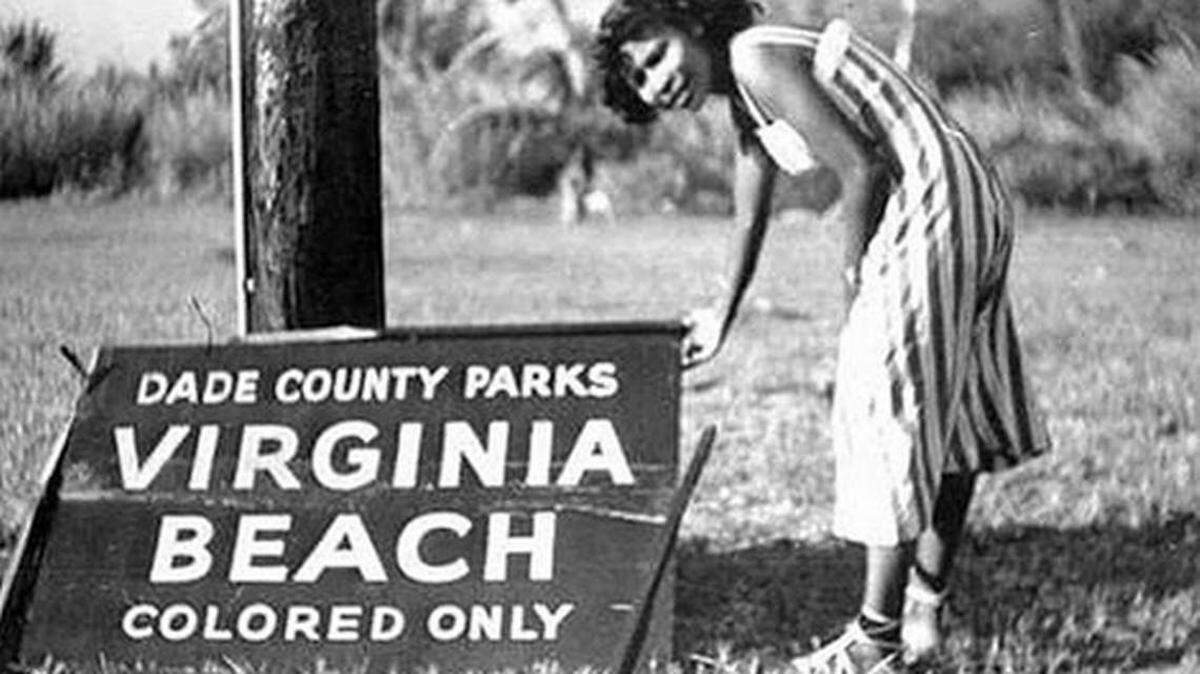
If there’s one positive thing that has come out of the Miami City Commission’s hurtful decision two weeks ago to oust the entire board of the Virginia Key Trust and name themselves trustees, it’s the renewed attention to the fact that Miami still doesn’t have the $20 million Black history and civil rights museum that voters were promised, almost two decades after the money for it was allocated.
The museum is supposed to honor the legacy of Black Miami. It’s set to be built in an important and symbolic spot: Virginia Key Beach, the city’s historically Black beach, the first one that Black residents were officially allowed to use during Jim Crow-era segregation.
Commissioners’ wholesale dismissal of the majority-Black board of the Virginia Key Trust, only to replace it with one that will have, at most, three Black members out of seven, seems stunningly out of step with the entire premise. To reiterate: It takes away construction oversight for a museum honoring the civil-rights journey of Black people and puts it under the majority control of others.
How is that even something we have to talk about in 2022? It isn’t right. It’s disrespectful. It verges on repeating the indignities imposed on Blacks in the past.
Dozens of speakers from Miami’s Black communities opposed the idea at the Oct. 13 commission meeting. They made no headway. And after the vote, when a coalition of Black leaders sent Mayor Francis Suarez a letter asking him to veto the measure, their request, similarly, got nowhere.
The vote had been 4-1 — with only Commissioner Ken Russell opposed — which means Suarez’s veto could have been overridden by another vote. And yet, Suarez could have gone on the record as opposing this unfair and unwise move. He could have made a principled stand, vetoing the measure to make a clear point: Any board overseeing construction of a civil-rights museum should be majority Black. He could have used his bully pulpit to force another discussion on this important point.
Instead, to our disappointment — and to the disappointment of Black Miamians — he said nothing.
Then there are the other circumstances surrounding the decision that need to be considered. Over the summer, Trust chairman Patrick Range came out against an ill-advised plan pushed by Commissioner Joe Carollo to relocate homeless people to tiny houses on Virginia Key, a proposal made without consulting the Trust.
Homeless plan
The plan won approval from the commission anyway but, fortunately, it’s now on hold, following a rightful roar of outrage from the public over concerns including the environment, the distance to services for anyone relocated there and a general lack of vetting the idea.
It wasn’t long before Virginia Key was back in the commission’s sights. A few weeks ago, commissioners began discussing a city audit of the Trust. This audit had been in the works since 2019, but had dragged on until now, ostensibly because of staffing shortages and the pandemic.
Whatever the reasons for the multi-year delay, commissioners now seemed extremely interested in the audit and the Trust itself. (This, even though commissioners Carollo and Alex Diaz de la Portilla don’t seem to have felt that way before: They left their appointments to the Trust board unfilled.)
Before the audit was even complete — and, significantly, before the public could lay eyes on it — commissioners started talking about “malfeasance” and mismanagement on the Trust’s board. Diaz de la Portilla said in a Sept. 13 meeting that members of the Trust had gotten their hands “caught in the cookie jar,” according to the Miami New Times. When the audit finally became public, there was no evidence of stealing or misappropriation of money.
Instead, it focused on issues of record keeping and expenses, such as failing to get enough insurance for special events; not selecting vendors in accordance with city code; not accounting for expenses correctly; not submitting board meeting minutes to the city clerk.
Sloppiness, in other words. Important to fix, of course. (A number of the recommendations had already been implemented by the time the final report was released.) But also not the kind of thing that warranted removing every person on the Trust board.
Why not just work with the board to fix any remaining issues, rather than dumping all six members unceremoniously — along with their institutional memory and their ties to the Black community? The punishment did not fit the crime.
Commissioners have said the decision to oust the board wasn’t related to the public clash over putting a homeless encampment on the island — though anyone who knows Carollo knows he holds a grudge like nobody’s business. They did cite the audit and also the lack of progress toward actual construction of a museum as reasons for the change. Suarez now says he plans to work with Miami-Dade Mayor Daniella Levine Cava to move the museum plans forward. We would certainly hope so.
Shared responsibility
Commission chairwoman Christine King, the only Black member of the Miami Commission, said she backed the idea of removing the board — based on their lack of progress toward construction. We agree that the museum is long overdue. The bulk of the money for this was approved by voters in 2004. But if lack of progress was looming so large, why weren’t commissioners hammering it long before now? The city, county and Trust all must play a role in pushing this to completion.
And if the delays on the project are truly commissioners’ biggest concern with the Trust, they could have exercised their powers to replace a few of the members with new ones from Miami’s Black community with special expertise in areas like project management, construction and accounting.
All of that makes sense only if your goal really is to get this project done. Virginia Key is valuable land with an unobstructed shoreline. In previous years, it was at the center of a tug-of-war between developers and preservationists. We cannot help but fear — with no proof, only the experience that living in Miami gives us — that there is a long play in here somewhere to let developers in the door.
King, who has been in office less than a year, told the Editorial Board she has no doubt that a year from now, the new Trust board — five city commissioners and the two Black community members she said she will appoint — will have moved the museum project forward faster than the old board would have.
We’ll be watching.