
DeSantis, quick to suspend Democrats, finally gives Miami-Dade’s Joe Martinez equal treatment | Editorial
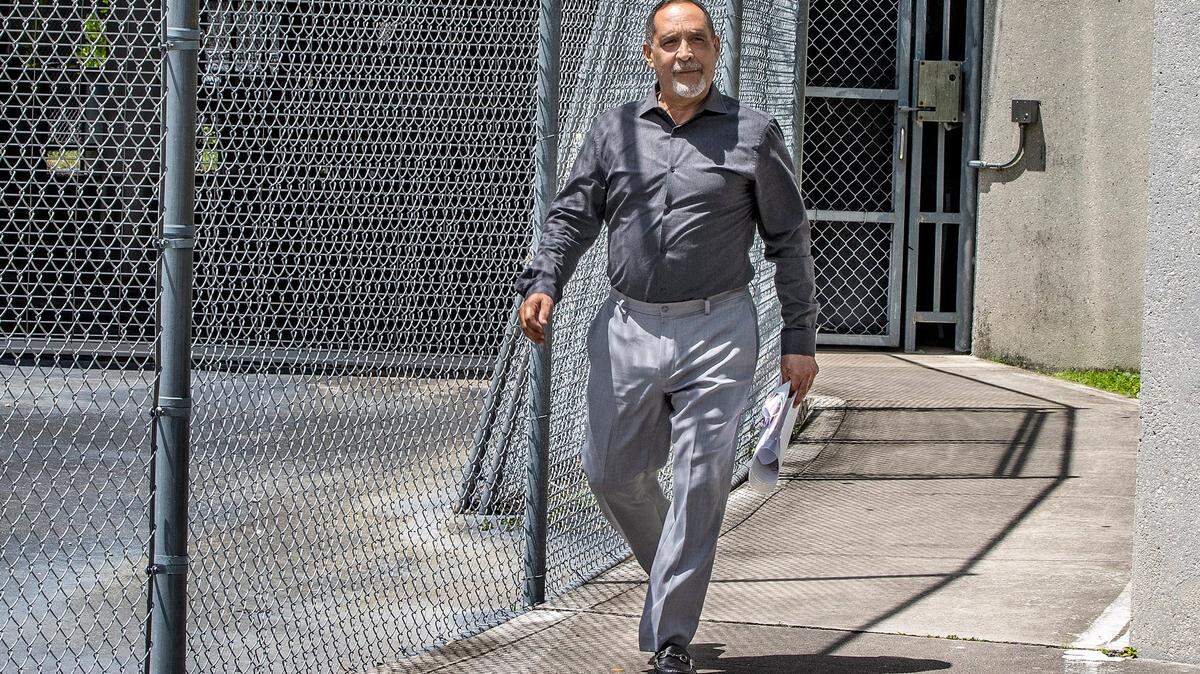
For a governor who has used the suspension of local elected officials to put Republicans in control of Democratic areas of Florida, Gov. Ron DeSantis acted like your run-of-the-mill governor when he suspended Miami-Dade County Commissioner Joe Martinez on Tuesday.
Martinez’s removal from office doesn’t affect the party balance on the non-partisan commission. He’s a conservative Republican representing a red district in west Miami-Dade. DeSantis will certainly appoint another conservative to fill the seat. For that reason there was trepidation that the governor — so gung-ho on suspending a Democratic Tampa Bay area prosecutor and four School Board members in blue Broward County — would drag his feet. That he waited three weeks after the commissioner was arrested on felony charges on Aug. 30 stands in contrast with the week DeSantis waited after the release of a grand jury report to get rid of the school board members and flip control of the board to his appointees.
Under the Florida Constitution, DeSantis didn’t have to remove Martinez. But doing that was, nevertheless, the right choice and within his authority. Suspending elected officials accused of a crime is normal for governors. What’s not normal is the political circus DeSantis created with the removal of Hillsborough County State Attorney Andrew Warren for vowing not to prosecute abortion cases.
Unlike Martinez, Warren was ousted for what he said, not what he allegedly did. No abortion cases were before Warren’s office, and the state’s 15-week abortion ban is being challenged in court under the claim it violates the state Constitution. DeSantis’ move clearly was political, and Warren filed a pending lawsuit to get reinstated.
In an appeal to the governor’s hunger for political clashes, Martinez tried to frame his arrest as a hit job by Miami-Dade State Attorney Katherine Fernandez Rundle, a Democrat. Her office accuses him of accepting $15,000 in exchange for sponsoring a law more than five years ago to help a shopping plaza that had been repeatedly slapped with fines for code violations.
“As an outspoken member of the Commission, Commissioner Martinez has publicly disagreed with the State Attorney on important issues,” said a statement from Martinez’s legal team released late last month. The statement also said the question of whether a political conflict between Fernandez Rundle and Martinez led to his prosecution “is a matter that will be presented to Florida Governor DeSantis,” the Herald reported.
It looks like that even to the pugilistic governor, Martinez’s argument fell flat.
Martinez will have the chance to prove his case in court. If he’s cleared, he should be reinstated and finish his term. In the meantime, removing a commissioner accused of corruption is, to quote the governor’s own suspension order, “in the best interests of the residents of Miami-Dade County, and the citizens of the State of Florida.”
BEHIND THE STORY
MOREWhat's an editorial?
Editorials are opinion pieces that reflect the views of the Miami Herald Editorial Board, a group of opinion journalists that operates separately from the Miami Herald newsroom. Miami Herald Editorial Board members are: opinion editor Amy Driscoll and editorial writers Isadora Rangel and Mary Anna Mancuso. Read more by clicking the arrow in the upper right.
What's the difference between an op-ed and a column?
How does the Miami Herald Editorial Board decide what to write about?
The Editorial Board, made up of experienced opinion journalists, primarily addresses local and state issues that affect South Florida residents. Each board member has an area of focus, such as education, COVID or local government policy. Board members meet daily and bring up an array of topics for discussion. Once a topic is fully discussed, board members will further report the issue, interviewing stakeholders and others involved and affected, so that the board can present the most informed opinion possible. We strive to provide our community with thought leadership that advocates for policies and priorities that strengthen our communities. Our editorials promote social justice, fairness in economic, educational and social opportunities and an end to systemic racism and inequality. The Editorial Board is separate from the reporters and editors of the Miami Herald newsroom.
How can I contribute to the Miami Herald Opinion section?
The Editorial Board accepts op-ed submissions of 650-700 words from community members who want to argue a specific viewpoint or idea that is relevant to our area. You can email an op-ed submission to oped@miamiherald.com. We also accept 150-word letters to the editor from readers who want to offer their points of view on current issues. For more information on how to submit a letter, go here.
This story was originally published September 20, 2022 at 4:39 PM.