
Florida, home of many a Proud Boy, a hotbed for white supremacy. The rest of us can’t stand silent | Editorial
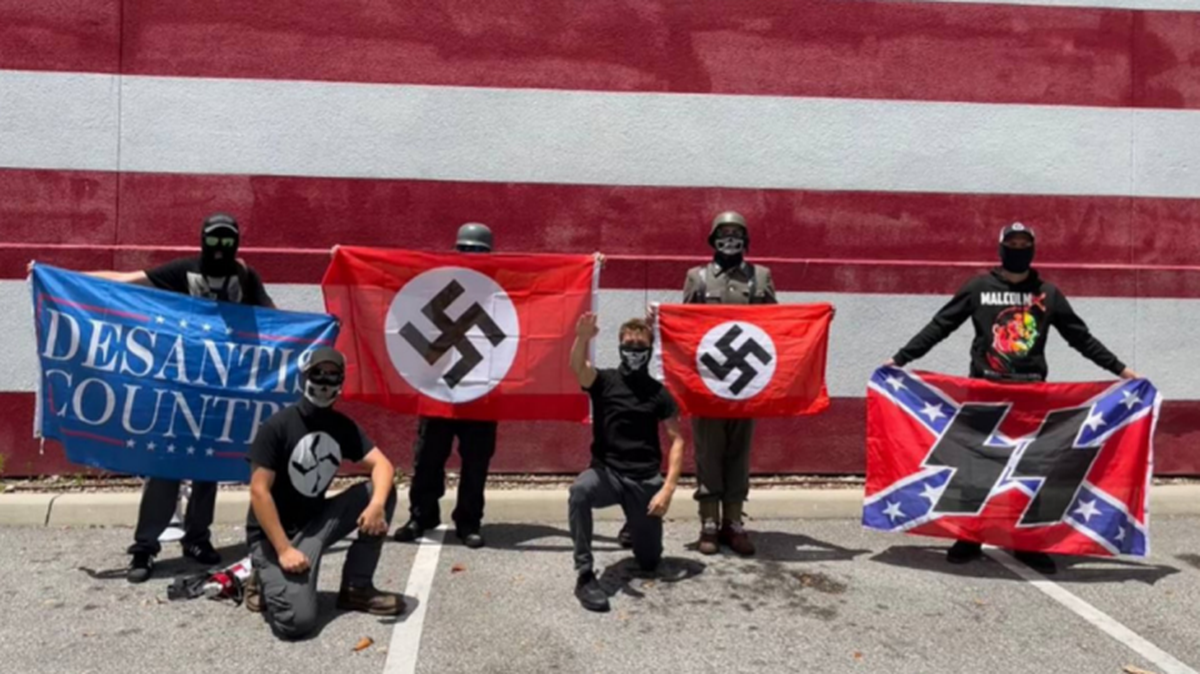
White supremacists and extremists don’t always wear white robes and burn crosses. They don’t necessarily meet in dingy headquarters away from civilized society
They are marching on Capitol Hill. They are flying Nazi flags over interstate overpasses in Florida. They’ve distributed anti-Semitic fliers in Miami Beach, home to a large Jewish population. They have demonstrated outside Disney World, a lighting rod for cultural wars after the company opposed a state parental rights law critics dubbed “Don’t say gay.”
Groups with names like the “White Lives Matter” network, the “Goyim Defense League” and the “New Jersey European Heritage Association” once were relegated to the dark corners of the web. More and more, they feel entitled to publicize their darkest thoughts and beliefs.
Those who have sounded the alarm about the rise of extremism in the Sunshine State have often been dismissed as hysterical liberals. Even as we learned about the Proud Boys’ close ties to Miami Republican politics, in addition to their prominent role in the Jan. 6 attacks, many state leaders remained mum. The Anti-Defamation League describes the Proud Boys as a “right-wing extremist group with a violent agenda” and “some members espouse white supremacist and anti-Semitic ideologies,” which is why it was so rattling to see them show up in force at a recent Miami-Dade School Board meeting.
A new Anti-Defamation League report shows that Florida has seen a dramatic rise in anti-Semitic incidents — a 50% increase in 2021 compared to the previous year — and hate crimes. Nationwide, anti-Semitic acts also rose but at a slower pace of 34% increase. The organization also found that between 2020 and 2022, there were 400 instances of white supremacy propaganda distribution — 95% of those anti-Semitic — in the state.
Many will easily jump to the conclusion that we’re placing the blame on Donald Trump and Gov. Ron DeSantis, who have focused on the same red-meat issues that also rally extremists, like immigration, racial resentment (through dog whistles like “critical race theory”) and an anti-LGBTQ agenda. But neither Trump or DeSantis invented anti-Semitism and extreme ideology.
Many books and dissertations will be written on whether Trump reignited the country’s history of racial animosity, or if he’s just a symptom of it. That anti-Semitism is on the rise in much of the Western world, as a study by Tel Aviv University found this year, hints at something deeper than MAGA. Trump and DeSantis have been strong supporters of Israel. DeSantis signed laws requiring schools to certify to the state they teach about the Holocaust and to protect students from anti-Semitism.
At the same time, we cannot ignore that the GOP has an extremism problem — and an even bigger problem disavowing it within its ranks. Florida has the largest number of people arrested in connection with the Jan. 6 attacks, according to the ADL. There was a “significant increase in violent rhetoric in right-wing online spaces” after the FBI search of Trump’s Mar-a-Lago estate, the report found.
Trump’s call to the Proud Boys to “stand back and stand by” during a 2020 debate was celebrated in the group’s social media circles. It speaks for itself that some prominent GOP elected officials, like Georgia U.S. Rep. Marjorie Taylor Greene, attended the America First Political Action Conference. The white-supremacist event purposely coincided with a popular gathering of conservatives happening nearby in Orlando. That the American First conference is named after a famous Trump campaign slogan is not by chance. When a series of neo-Nazi demonstrations in Orlando took place in January, DeSantis deflected questions about it, accusing Democrats of trying to “smear” him with the Jewish community and calling demonstrators “jackasses” and “malcontents.”
The Proud Boys’ growing prominence inside the Miami-Dade County Republican Party prompted the Herald Editorial Board to ask GOP candidates during our election-recommendation process what they make of the group’s influence. One of them fumbled her response, and did not strongly disavow extremism, so we changed our mind about recommending her in a Florida House primary.
Let’s not forget some Democrats have openly flirted with anti-Semitism, and that hatred doesn’t always come from the political right. The ADL report also highlights activity in Florida by Black nationalist groups like Nation of Islam, whose leader “espoused anti-LGBTQ+ and anti-white bigotry.” Michigan Democratic U.S. Rep. Ilhan Omar used an old anti-Semitic trope when she implied that money was behind U.S. support for Israel. Many lawmakers in her own party publicly condemned her.
“To that end — officials and community leaders must denounce hate especially when it emanates from a group or political party that they identify with,” the ADL report states. “Denouncing bigotry from an opponent is simple; doing so when it comes from an ally requires courage — and now more than ever, we need courageous leaders.”
Words that disavow hatred and extremism matter as much as the extremist acts themselves. It’s time for Florida’s leaders — across the state and here at home in Greater Miami — to speak up.
BEHIND THE STORY
MOREWhat's an editorial?
Editorials are opinion pieces that reflect the views of the Miami Herald Editorial Board, a group of opinion journalists that operates separately from the Miami Herald newsroom. Miami Herald Editorial Board members are: opinion editor Amy Driscoll and editorial writers Isadora Rangel and Mary Anna Mancuso. Read more by clicking the arrow in the upper right.
What's the difference between an op-ed and a column?
How does the Miami Herald Editorial Board decide what to write about?
The Editorial Board, made up of experienced opinion journalists, primarily addresses local and state issues that affect South Florida residents. Each board member has an area of focus, such as education, COVID or local government policy. Board members meet daily and bring up an array of topics for discussion. Once a topic is fully discussed, board members will further report the issue, interviewing stakeholders and others involved and affected, so that the board can present the most informed opinion possible. We strive to provide our community with thought leadership that advocates for policies and priorities that strengthen our communities. Our editorials promote social justice, fairness in economic, educational and social opportunities and an end to systemic racism and inequality. The Editorial Board is separate from the reporters and editors of the Miami Herald newsroom.
How can I contribute to the Miami Herald Opinion section?
The Editorial Board accepts op-ed submissions of 650-700 words from community members who want to argue a specific viewpoint or idea that is relevant to our area. You can email an op-ed submission to oped@miamiherald.com. We also accept 150-word letters to the editor from readers who want to offer their points of view on current issues. For more information on how to submit a letter, go here.
This story was originally published September 15, 2022 at 9:47 AM.