
Homeowners keep paying a high price for Florida’s dysfunctional insurance market | Editorial
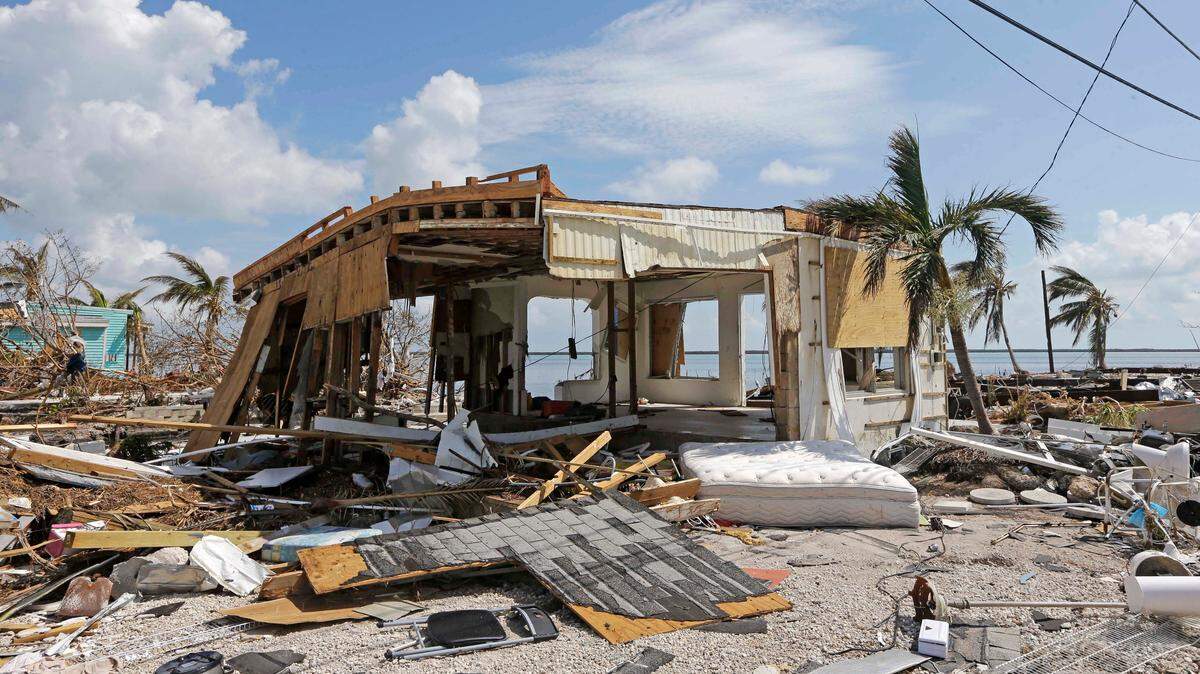
It’s mid-August, deep into the hurricane season and Florida’s insurance market is in trouble.
If you feel like you’ve heard that before, well, you have. For years, in fact. But in the past couple of years, things have gotten worse.
Lawmakers know this. The Florida Legislature held a special session on the state’s insurance crisis a few months ago. Gov. Ron DeSantis signed the resulting measures into law in an effort to slow the spiraling market.
And still, premiums are up, while insurance companies keep going out of business. The latest is Coral Gables-based Weston Property & Casualty, with 22,000 policyholders, about 9,400 in South Florida. It’s the fifth company this year to go under in Florida. The record was eight in a year, and that was after Hurricane Andrew, which blew through in 1992.
Now we learn that the state insurance market has been operating for years in a way that leaves it vulnerable to a meltdown: Florida relies on a single company, Ohio-based Demotech Inc., to certify the majority of Florida insurers. The risk attached to that became apparent a few weeks ago when the company sent out notices saying it might downgrade roughly two dozen companies — moves that could have triggered a housing crisis at a critical time for both homeowners (hurricane season) and politicians (election season).
State government scrambled to respond. Luckily for homeowners, it came up with a temporary solution that will likely push off most of the problems for now, the most critical time.
But then, in a move sure to shake confidence in the market, the state also publicly attacked Demotech. Florida’s Chief Financial Officer Jimmy Patronis called it a “rogue ratings agency” — though no one seems to be disputing the idea Florida insurers are failing. The president of Demotech, Joe Petrelli, clapped back, saying the level of rancor was “unprecedented.”
Florida Insurance Commissioner David Altmaier weighed in as well, calling the state’s reliance on Demotech a “monopolistic” situation.
Sniping and dysfunction, of course, do nothing to fix Florida’s complex and failing insurance market. During the special session, lawmakers took a stab at reducing the incidence of fraudulent roofing claims, a worsening issue that many have blamed for at least part of the rising cost of insurance.
And that action may help — but it’s not much consolation to the homeowners who were counting on Weston insurance company this hurricane season and now have to find a new carrier in a matter of weeks.
It’s up to the Legislature, the governor and the state’s insurance office to take on the big-picture challenge of how to bring costs down and coverage up — whether that’s with Demotech or not — and not just for one year or one special session, but for the long haul. The special session was a start, but somehow, that day of full-on reckoning never comes in Florida. We just patch the insurance market together and hand it off to the next set of lawmakers.
Consumers, meanwhile, are stuck with insurance costs that are triple the national average, rising during DeSantis’ term from an average premium of $1,988 in 2019 to $4,231 this year.
On the specific issue of Demotech, Florida is in something of a bind. The company is basically the only one willing to provide ratings for small insurers, ratings those insurers need to cover homes with federally backed mortgages, mainly Fannie Mae and Freddie Mac. If Demotech lowered the ratings on a bunch of insurance companies, as it initially said it might, the downgraded companies would no longer be able to handle those federally backed mortgages, sending a sudden wave of customers into the marketplace during hurricane season.
Banks could “force place” homeowners into new insurance — whatever the bank can find — policies that would no doubt cost more and cover less. And a lot more homeowners would likely end up in state-run Citizens Property Insurance, the “insurer of last resort” created by the state in 2002 to cover homes that private insurance won’t. Citizens already has more than one million policies.
So coming up with a short-term solution to allow insurers to stay afloat by using state-run agencies to back them up makes sense. It doesn’t, of course, come to grips with the larger question of how to keep the Florida market stable or make insurance more affordable. It is just another — if much needed — Band-Aid.
Here’s our not-so-bold prediction: Hostilities between Florida and Demotech will play out for a while, receding as lawmakers kick the insurance can down the road until they are safely past elections. And Florida homeowners will keep paying the price.
But here is our question: At what point is a crisis no longer a crisis — and simply the accepted way of doing business?
BEHIND THE STORY
MOREWhat's an editorial?
Editorials are opinion pieces that reflect the views of the Miami Herald Editorial Board, a group of opinion journalists that operates separately from the Miami Herald newsroom. Miami Herald Editorial Board members are: opinion editor Amy Driscoll and editorial writers Isadora Rangel and Mary Anna Mancuso. Read more by clicking the arrow in the upper right.
What's the difference between an op-ed and a column?
How does the Miami Herald Editorial Board decide what to write about?
The Editorial Board, made up of experienced opinion journalists, primarily addresses local and state issues that affect South Florida residents. Each board member has an area of focus, such as education, COVID or local government policy. Board members meet daily and bring up an array of topics for discussion. Once a topic is fully discussed, board members will further report the issue, interviewing stakeholders and others involved and affected, so that the board can present the most informed opinion possible. We strive to provide our community with thought leadership that advocates for policies and priorities that strengthen our communities. Our editorials promote social justice, fairness in economic, educational and social opportunities and an end to systemic racism and inequality. The Editorial Board is separate from the reporters and editors of the Miami Herald newsroom.
How can I contribute to the Miami Herald Opinion section?
The Editorial Board accepts op-ed submissions of 650-700 words from community members who want to argue a specific viewpoint or idea that is relevant to our area. You can email an op-ed submission to oped@miamiherald.com. We also accept 150-word letters to the editor from readers who want to offer their points of view on current issues. For more information on how to submit a letter, go here.
This story was originally published August 17, 2022 at 1:35 PM.