
Even ex-presidents aren’t above the law. The party of law and order should know that | Editorial
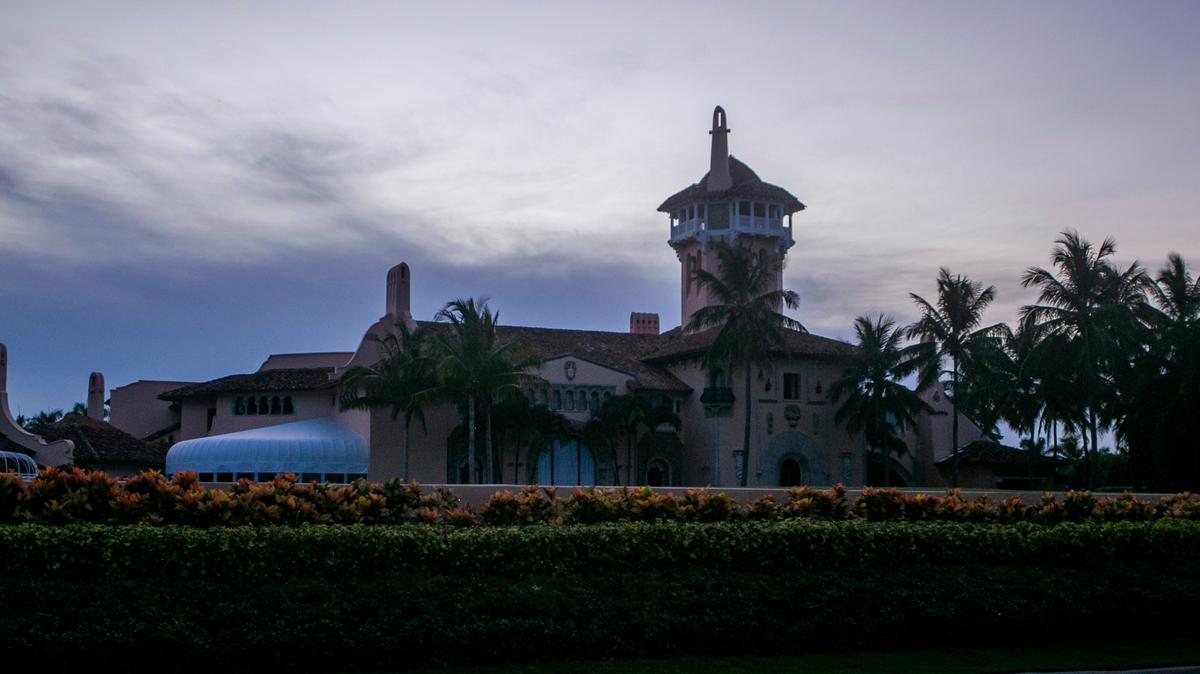
The FBI raid on Donald Trump’s Florida mansion, apparently aimed at finding confidential documents the ex-president may have taken from the White House, had barely finished before the cries from the GOP rose up: Abuse of power. Defund the FBI. Investigate the Justice Department.
This, from the party that won’t condemn the Jan. 6 attack on the U.S. Capitol as an attempt to overthrow the government, even when the mob threatened to hang Vice President Mike Pence. This, from the party that went after Democrats for trying to “defund the police.” This, from the party that purports to be all about law and order.
And this, from a party rallying around a man who displayed such scorn for his own country’s Presidential Records Act that he routinely ripped up official documents and apparently even tried to flush them down toilets on Air Force One.
The Presidential Records Act requires the preservation of a president’s memos, letters, notes and other communication to be stored at the archives as historical records. Presidential records belong to the people, not to any individual president. And yet Trump’s attempts to destroy presidential documents were so commonplace, the government had to employ people to regularly tape those papers back together again.
His disdain for the law was widely known. But it’s the search of his Palm Beach home — where authorities knew he’d already wrongly kept other top secret records — that’s the abuse of power?
Fifteen boxes of documents
We don’t know yet what the agents found when they executed the warrant and searched the ex-president’s home and his safe Monday night. But we do know, as previously reported, that the National Archives had to wrest at least 15 boxes of documents from Trump in January that reportedly contained classified documents and other important presidential papers such as correspondence with North Korean leader Kim Jong Un, former President Barack Obama’s letter to Trump and that infamous “Sharpie” map about the track of Hurricane Dorian.
At the time, Trump said there was no nefarious intent and insisted he had engaged in “collaborative and respectful” discussions with the National Archives. But how long could “collaborative” discussions take? He’d been out of office a year by then. And why did he have the documents to begin with?
The archives referred the case to the Justice Department and, in June, investigators visited Mar-a-Lago seeking more potentially classified documents, CNN has reported. Among the investigators at the Palm Beach mansion, according to the New York Times: a Justice Department counterintelligence official.
Political ramifications
Monday was stunning in many ways. The FBI raid on a former president’s house was unprecedented, especially with an FBI led by Christopher Wray, a Trump appointee.
And the political ramifications could be enormous. The GOP is already using it to stir up the base for the mid-terms, while the former president will no doubt use it to boost his expected run for another presidential term — something that Democrats and some Republicans want to squelch. He certainly lost no time in casting himself as the victim in an email to supporters, less than 24 hours after the raid: “Please rush in a donation IMMEDIATELY to publicly stand with me against this NEVERENDING WITCH HUNT.”
The pressure on Trump is building. On Tuesday, the day after the raid, a federal appeals court ruled that the House can gain access to his tax returns, though that will no doubt be appealed. And it appears the Mar-a-Lago search is separate from the Jan. 6 investigation by the Justice Department, which has also been stepped up in recent weeks.
No one is supposed to be above the law in this country, not even an ex-president. Among the many dangers in all of this is that Trump could be illegally holding documents that could compromise national security.
But for Trump, and by extension, the GOP, the bigger danger is that with a full and complete record of his presidency, the people of this country will actually be able to hold him and his party accountable.
BEHIND THE STORY
MOREWhat's an editorial?
Editorials are opinion pieces that reflect the views of the Miami Herald Editorial Board, a group of opinion journalists that operates separately from the Miami Herald newsroom. Miami Herald Editorial Board members are: opinion editor Amy Driscoll and editorial writers Isadora Rangel and Mary Anna Mancuso. Read more by clicking the arrow in the upper right.
What's the difference between an op-ed and a column?
How does the Miami Herald Editorial Board decide what to write about?
The Editorial Board, made up of experienced opinion journalists, primarily addresses local and state issues that affect South Florida residents. Each board member has an area of focus, such as education, COVID or local government policy. Board members meet daily and bring up an array of topics for discussion. Once a topic is fully discussed, board members will further report the issue, interviewing stakeholders and others involved and affected, so that the board can present the most informed opinion possible. We strive to provide our community with thought leadership that advocates for policies and priorities that strengthen our communities. Our editorials promote social justice, fairness in economic, educational and social opportunities and an end to systemic racism and inequality. The Editorial Board is separate from the reporters and editors of the Miami Herald newsroom.
How can I contribute to the Miami Herald Opinion section?
The Editorial Board accepts op-ed submissions of 650-700 words from community members who want to argue a specific viewpoint or idea that is relevant to our area. You can email an op-ed submission to oped@miamiherald.com. We also accept 150-word letters to the editor from readers who want to offer their points of view on current issues. For more information on how to submit a letter, go here.
This story was originally published August 9, 2022 at 4:44 PM.