
Though $3 million for UF civics program is a mystery, its tie to DeSantis’ Christian agenda isn’t | Editorial
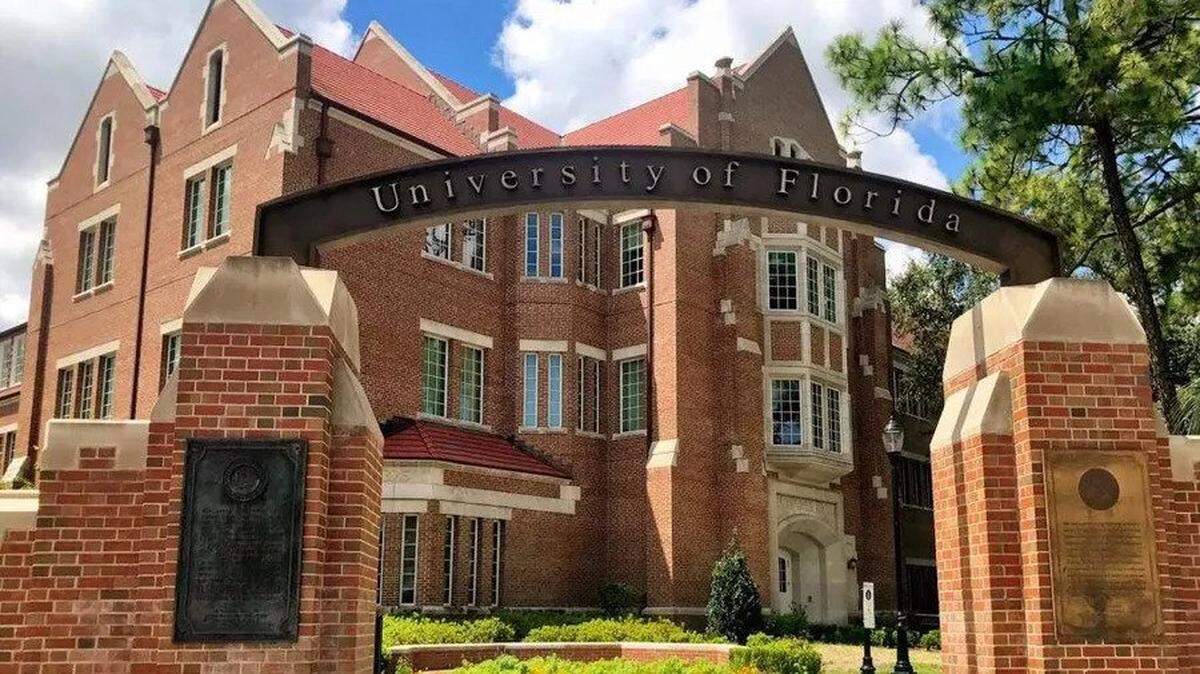
There’s a mystery surrounding the state budget’s allocation of $3 million to a new civics program at the University of Florida. The university didn’t ask for the funding. The Republican lawmaker who requested the money told the Miami Herald he did so on behalf of an organization he doesn’t “know really much about.”
But it strains credulity that no one really knows why and how the money ended up in the state budget — especially when it involves civics education, a focal point of Gov. Ron DeSantis’ push to force a conservative Christian point of view about the nation’s founding in public education.
That UF is opening a new academic center focused on civics courses itself isn’t the problem. The Hamilton Center for Classic and Civics Education’s mission will be to educate university students in the “principles, ideals and institutions of the American political order,” and the “foundations of responsible leadership and informed citizenship.” Understanding our nation’s history — all of it — and values is crucial for a healthy democracy.
It’s the secrecy behind this initiative that should bother taxpayers. Very little is known about the Council on Public University Reform, which requested the funding. But what was reported in a Herald story this week raises the question of whether this is yet another way for Florida Republicans to funnel tax dollars to conservative Christian groups.
The Council has existed for less than a year since its incorporation in Delaware. It has no website, virtually no information about it online and no working phone, the Herald reported. Yet it’s influential enough to get $3 million into Florida’s state budget and survive DeSantis’ veto pen (DeSantis vetoed less money for things like contraceptives for low-income women). How did the Council enlist lobbying powerhouse Ballard Partners and a former DeSantis chief of staff to represent its interests at the state Capitol?
What a head-scratcher — or is it?
It turns out that the man representing the Council on Public University Reform, Joshua Holdenried, has a long history of working with religious and conservative groups. He’s currently pursuing a master’s degree at a private religious school in Michigan called Hillsdale College. The small school has an outsized influence in conservative circles and reshaping public education through a network of charter schools. It was one of the organizations Florida partnered with to train high school teachers on a new civics curriculum, which rattled some educators for whitewashing slavery and proclaiming that the Founding Fathers didn’t want a separation between church and state. Hillsdale also has ties to Florida’s rejection of dozens of math textbooks because they included references deemed to be critical race theory and other “prohibited topics” (two book reviewers were affiliated with the college).
No matter how taxpayers ended up footing those $3 million, there’s no mystery of what the bigger picture is: a concerted effort to use public education for ideological wars.
BEHIND THE STORY
MOREWhat's an editorial?
Editorials are opinion pieces that reflect the views of the Miami Herald Editorial Board, a group of opinion journalists that operates separately from the Miami Herald newsroom. Miami Herald Editorial Board members are: opinion editor Amy Driscoll and editorial writers Isadora Rangel and Mary Anna Mancuso. Read more by clicking the arrow in the upper right.
What's the difference between an op-ed and a column?
How does the Miami Herald Editorial Board decide what to write about?
The Editorial Board, made up of experienced opinion journalists, primarily addresses local and state issues that affect South Florida residents. Each board member has an area of focus, such as education, COVID or local government policy. Board members meet daily and bring up an array of topics for discussion. Once a topic is fully discussed, board members will further report the issue, interviewing stakeholders and others involved and affected, so that the board can present the most informed opinion possible. We strive to provide our community with thought leadership that advocates for policies and priorities that strengthen our communities. Our editorials promote social justice, fairness in economic, educational and social opportunities and an end to systemic racism and inequality. The Editorial Board is separate from the reporters and editors of the Miami Herald newsroom.
How can I contribute to the Miami Herald Opinion section?
The Editorial Board accepts op-ed submissions of 650-700 words from community members who want to argue a specific viewpoint or idea that is relevant to our area. You can email an op-ed submission to oped@miamiherald.com. We also accept 150-word letters to the editor from readers who want to offer their points of view on current issues. For more information on how to submit a letter, go here.
This story was originally published July 14, 2022 at 6:15 PM.