
Even Trump wouldn’t pardon Matt Gaetz for Jan. 6. Voters shouldn’t either | Editorial
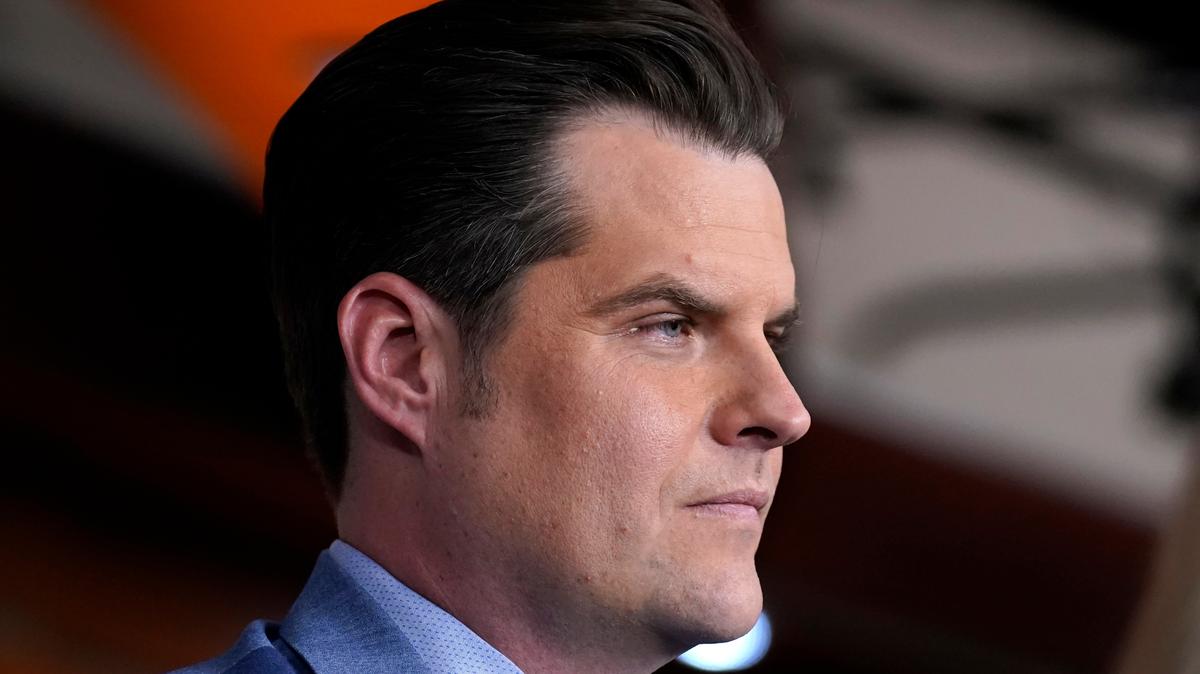
A handful of Republican members of Congress sought preemptive pardons from President Donald Trump for their activities in the lead-up to last year’s Capitol insurrection, according to Thursday’s testimony from White House aides to the Jan. 6 committee.
And none was more prominent than Florida’s Matt Gaetz. Even in a virtual insurrectionists’ caucus of Trump sycophants begging for pardons — reportedly including Reps. Andy Biggs of Arizona, Louie Gohmert of Texas, Scott Perry of Pennsylvania, Marjorie Taylor Greene of Georgia and Mo Brooks of Alabama and possibly others — Gaetz distinguished himself.
He asked for a sweeping blanket of a pardon, one that would cover “from the beginning of time up until today, for any and all things,” according to former Trump White House lawyer Eric Herschmann in a videotaped interview.
Gaetz, the Panhandle congressman who has been under a cloud of suspicion for more than a year as a federal investigation for sex trafficking continues, started pushing for a pardon in early December 2020, according to Cassidy Hutchinson, an aide to White House Chief of Staff Mark Meadows, in testimony aired during the meeting.
He apparently didn’t want just any pardon, either, comparing the one he hoped to get with the one that Gerald Ford gave former President Richard Nixon, who resigned from office after the Watergate scandal — though Herschmann pointed out that Nixon’s pardon “was never nearly that broad.”
Perhaps Nixon’s pardon wouldn’t have applied to, say, possible sex crimes with underage girls.
Gaetz offered a weak response on Twitter after the hearing, writing: “The January 6 Committee is an unconstitutional political sideshow. It is rapidly losing the interest of the American people and now resorts to siccing federal law enforcement on political opponents.”
Oh, we’re far from bored, Representative Gaetz.
As Rep. Adam Kinzinger, one of two Republicans on the Democrat-led select committee, said Thursday: “The only reason you ask for a pardon is if you think you’ve committed a crime.”
BEHIND THE STORY
MOREWhat's an editorial?
Editorials are opinion pieces that reflect the views of the Miami Herald Editorial Board, a group of opinion journalists that operates separately from the Miami Herald newsroom. Miami Herald Editorial Board members are: opinion editor Amy Driscoll and editorial writers Isadora Rangel and Mary Anna Mancuso. Read more by clicking the arrow in the upper right.
What's the difference between an op-ed and a column?
How does the Miami Herald Editorial Board decide what to write about?
The Editorial Board, made up of experienced opinion journalists, primarily addresses local and state issues that affect South Florida residents. Each board member has an area of focus, such as education, COVID or local government policy. Board members meet daily and bring up an array of topics for discussion. Once a topic is fully discussed, board members will further report the issue, interviewing stakeholders and others involved and affected, so that the board can present the most informed opinion possible. We strive to provide our community with thought leadership that advocates for policies and priorities that strengthen our communities. Our editorials promote social justice, fairness in economic, educational and social opportunities and an end to systemic racism and inequality. The Editorial Board is separate from the reporters and editors of the Miami Herald newsroom.
How can I contribute to the Miami Herald Opinion section?
The Editorial Board accepts op-ed submissions of 650-700 words from community members who want to argue a specific viewpoint or idea that is relevant to our area. You can email an op-ed submission to oped@miamiherald.com. We also accept 150-word letters to the editor from readers who want to offer their points of view on current issues. For more information on how to submit a letter, go here.
This story was originally published June 23, 2022 at 7:46 PM.