
Miami’s Cuban exiles denounce sale of Radio Mambí. Here’s why: | Editorial
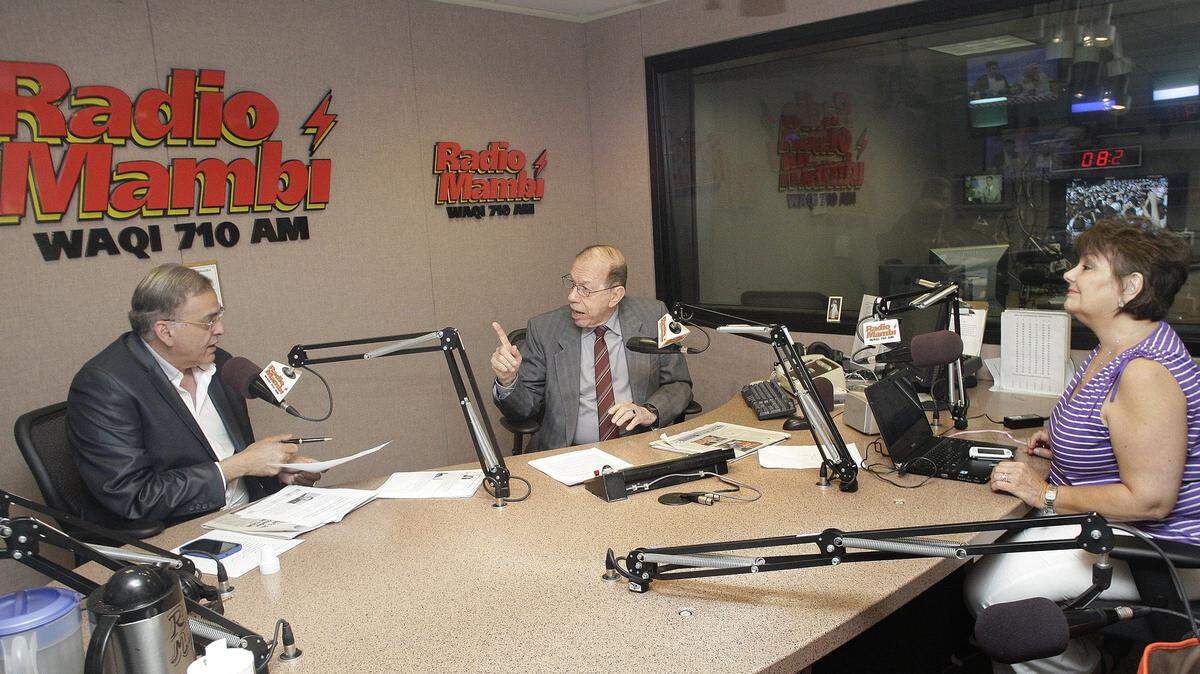
A change may be on the horizon for Miami’s well-known Spanish-language radio market. But Cuban exiles are already gearing up to fight back.
A group of Latino investors last week offered $60 million to purchase Miami’s best-known so-called “Cuban radio” station, Radio Mambí, among other Spanish-language stations across the country.
Radio Mambí is one of the 18 AM and FM stations being sold by the TelevisaUnivision network, and the media group, purchasing the stations in Miami, New York, Los Angeles and Las Vegas, is the newly formed Latino Media Network.
It’s commendable that the new network owners say they want to keep the stations in Latino hands, but there’s something different this time. It’s Miami, so politics is coming into play.
The makeup of the new ownership is unique for the Miami market. Two Latina social entrepreneurs, Stephanie Valencia and Jess Morales Rocketto, launched the Latino Media Network and described it to Forbes magazine as a “new media content creation, talent incubation and distribution company, aimed at reaching the Hispanic market, initially focused on audio.”
But the long list of Latino Media Network. investors is mostly made up of Democrats, from celebrities such as actress and activist Eva Longoria, to George Soros, a liberal billionaire hated by Republicans, to former Univision anchor Maria Elena Salinas and former Miami Dade College president Eduardo Padrón. Some live in Florida, many don’t.
But while most of the nation’s Hispanics are Democrats, older Cubans, the station’s primary audience, and many younger Cuban Americans are staunchly Republican and they like their radio on the “right” side.
Blame their Republican bent on President John F. Kennedy’s betrayal of Cuban exiles during the 1961 Bay of Pigs invasion and on their strong anti-communist stance because of the suffering caused by Fidel Castro’s 1959 revolution.
So the political component in the sale of the station is alarming to the conservative-leaning Cuban-exile audience of Radio Mambí.
As the FCC studies the sale for approval, that political angle will likely become a factor.
On Monday, Radio Mambí listeners took to the station’s airwaves to express their concerns that the true aim of this purchase is to silence Republican Cuban exiles, a powerful group that almost cost President Joe Biden the county .
Radio Mambí personality Ninoska Perez opened her afternoon show’s phones lines and was flooded with listeners who called for halting the sale..
“People who listen to this station must realize that this purchase is an attempt by the Democratic Party and President Biden to silence us,” said one listener. “We must come up with a Plan B.
Perez told the audience the station talent has been told that there will be no major changes.
On Wednesday, Cuban exile leaders will hold a news conference at the Bay of Pigs Museum to express their concerns.
Ratings are still a concern for the new owners. For decades, Spanish-language stations have succeeded where English-language radio sometimes failed. That’s because listeners are loyal the entire broadcasting day, and they consider radio personalities local celebrities. Names like Perez, Oscar Haza and Tomás Regalado are well-known. In past years, so were Armando Perez Roura, Tomas Garcia Fuste and Martha Flores.
Give a listen and you’ll learn Miami’s faithful radio audience loves political chatter.
Also true is that the monster ratings and the heyday of Spanish-language radio in Miami, the 1970s, 1980s and 1990s, are long over. Their battles over the airwaves with Castro and the Cuban government were legendary back then. And like other media outlets, no matter the language, Spanish-language radio has seen a decline in audience — especially as Miami’s legacy Cuban-exile community, once their primary audience, has dwindled..
An in the current heated political atmosphere, many Spanish-language stations are being called out for their lack of accountability, accused, largely by Democrats, of spreading disinformation that plays right into conservative ideology,
Last year, a report by Prospero Latino, a communications company, and Florida Rising, a progressive organization, called out three shows on Radio Mambí as being the most “egregious.” Democrats, and their perceived leftist-leaning ways, are often called out in Miami’s conservative Spanish-language airwaves, much to the liking of their audience.
And therein will lie the challenge to the new owners, finding their audience. That, and keeping their side of the story fact-based and credible themselves.
BEHIND THE STORY
MOREWhat's an editorial?
Editorials are opinion pieces that reflect the views of the Miami Herald Editorial Board, a group of opinion journalists that operates separately from the Miami Herald newsroom. Miami Herald Editorial Board members are: opinion editor Amy Driscoll and editorial writers Isadora Rangel and Mary Anna Mancuso. Read more by clicking the arrow in the upper right.
What's the difference between an op-ed and a column?
How does the Miami Herald Editorial Board decide what to write about?
The Editorial Board, made up of experienced opinion journalists, primarily addresses local and state issues that affect South Florida residents. Each board member has an area of focus, such as education, COVID or local government policy. Board members meet daily and bring up an array of topics for discussion. Once a topic is fully discussed, board members will further report the issue, interviewing stakeholders and others involved and affected, so that the board can present the most informed opinion possible. We strive to provide our community with thought leadership that advocates for policies and priorities that strengthen our communities. Our editorials promote social justice, fairness in economic, educational and social opportunities and an end to systemic racism and inequality. The Editorial Board is separate from the reporters and editors of the Miami Herald newsroom.
How can I contribute to the Miami Herald Opinion section?
The Editorial Board accepts op-ed submissions of 650-700 words from community members who want to argue a specific viewpoint or idea that is relevant to our area. You can email an op-ed submission to oped@miamiherald.com. We also accept 150-word letters to the editor from readers who want to offer their points of view on current issues. For more information on how to submit a letter, go here.
This story was originally published June 6, 2022 at 6:00 AM.