
DeSantis puts end to petty revenge he started against school districts’ mask mandates | Editorial
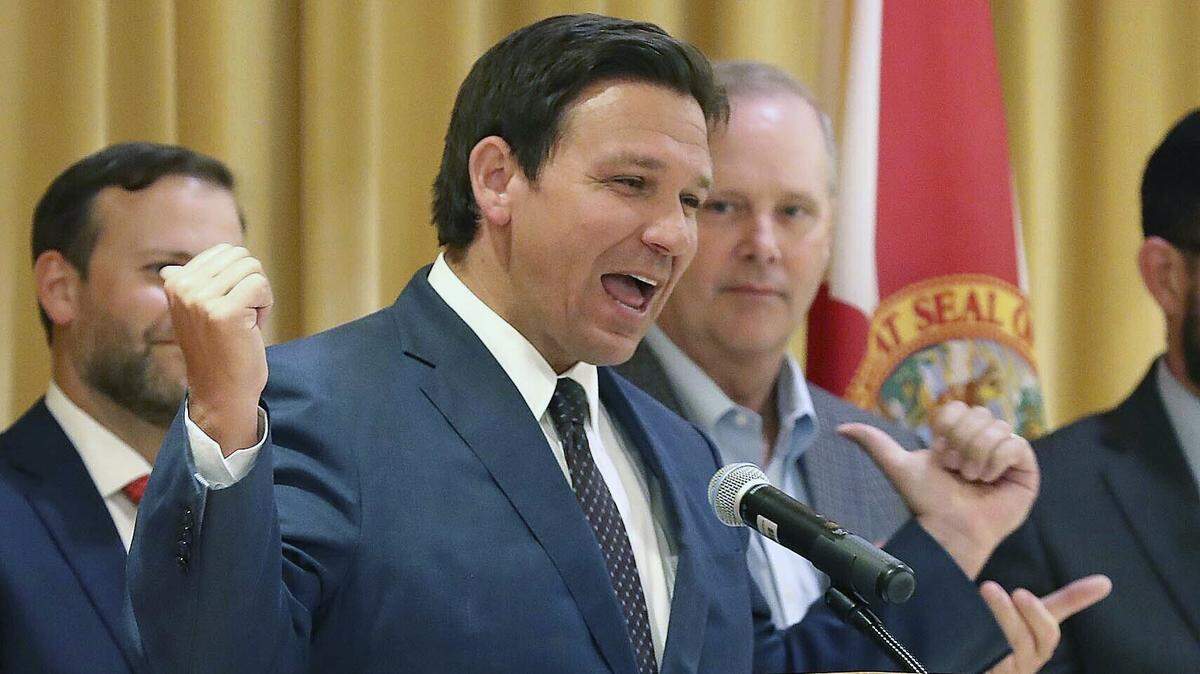
Florida Republicans’ witch hunt against school districts who imposed mask mandates last year is finally over — thanks to the governor who started it.
Gov. Ron DeSantis was at one point on board with imposing financial penalties on those districts for defying his orders. But it looks like even he understands the optics of punishing students struggling with COVID-19 pandemic-related learning losses in an election year.
DeSantis announced $30 million in state budget vetoes on Thursday, cutting important South Florida infrastructure projects and some lawmakers’ pet projects. Not surprisingly, he kept in place a spending bonanza for his own politically-charged priorities, such as $12 million to relocate migrants to other states. But DeSantis displayed the common sense his Republican allies in the Legislature lacked when they used their control over the state’s purse strings to seek revenge.
DeSantis directed Education Commissioner Manny Diaz to ignore a plan that would have prohibited districts like Miami-Dade and Broward from tapping into $200 million for the state’s School Recognition Program. The program rewards schools that show academic improvement. DeSantis wrote in a letter that his “plain reading” of state law found that districts’ actions can’t be held against individual schools, WUSF reported.
That’s surprising for a governor who’s had no qualms about pushing the boundaries of his authority. For example, he forced lawmakers to pass a congressional redistricting map that helps the GOP and hurts Black representation in North Florida. We bet lawmakers are fuming, but what are they going to do against their all-powerful leader?
Perhaps DeSantis is just a stickler for the law, as he should be. Of perhaps he sees the limits of his war with schools over masks and the teaching of race and the LGBTQ community.
DeSantis might not pay the political price for his anti-mask actions, even though he stomped on local district’s ability to do what they believed necessary to protect students and staff from the delta variant. But lawmakers who pushed for this vindictive measure should. They include Senate President Wilton Simpson, who’s running for commissioner of agriculture, and state Rep. Randy Fine. Fine initially wanted to impose even harsher sanctions by cutting $200 million from those school districts, including the one he represents in Central Florida’s Brevard County.
Fine apparently didn’t know the governor had blocked lawmakers’ meddling with the School Recognition Program. On Thursday, he tweeted, in part, “BREAKING: The reckoning has arrived.” He later took that post down, according to WUSF.
The real reckoning should be for lawmakers who are too vindictive to put their constituents first.
BEHIND THE STORY
MOREWhat's an editorial?
Editorials are opinion pieces that reflect the views of the Miami Herald Editorial Board, a group of opinion journalists that operates separately from the Miami Herald newsroom. Miami Herald Editorial Board members are: opinion editor Amy Driscoll and editorial writers Isadora Rangel and Mary Anna Mancuso. Read more by clicking the arrow in the upper right.
What's the difference between an op-ed and a column?
How does the Miami Herald Editorial Board decide what to write about?
The Editorial Board, made up of experienced opinion journalists, primarily addresses local and state issues that affect South Florida residents. Each board member has an area of focus, such as education, COVID or local government policy. Board members meet daily and bring up an array of topics for discussion. Once a topic is fully discussed, board members will further report the issue, interviewing stakeholders and others involved and affected, so that the board can present the most informed opinion possible. We strive to provide our community with thought leadership that advocates for policies and priorities that strengthen our communities. Our editorials promote social justice, fairness in economic, educational and social opportunities and an end to systemic racism and inequality. The Editorial Board is separate from the reporters and editors of the Miami Herald newsroom.
How can I contribute to the Miami Herald Opinion section?
The Editorial Board accepts op-ed submissions of 650-700 words from community members who want to argue a specific viewpoint or idea that is relevant to our area. You can email an op-ed submission to oped@miamiherald.com. We also accept 150-word letters to the editor from readers who want to offer their points of view on current issues. For more information on how to submit a letter, go here.