
Politics as usual 2, taxpayers 0, in Miami’s ‘ghost job’ scandal. Surprised? | Editorial
When the scandal blew up at Miami City Hall last year, the fallout was quick — but it didn’t last.
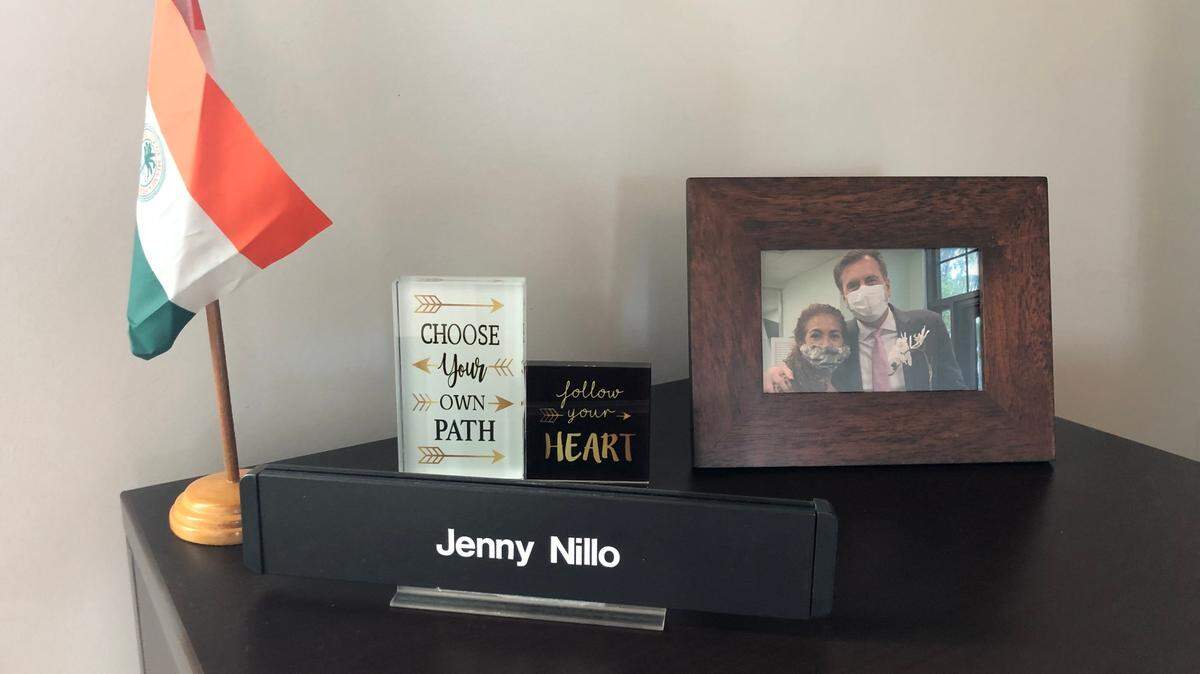
Jenny Nillo, a community liaison at the Omni Community Redevelopment Agency and a longtime family friend of Commissioner Alex Diaz de la Portilla, was fired from her job in March 2021 after she was seen by investigators swilling gas-station beers in her city-issued car and running errands for Diaz de la Portilla instead of doing her CRA job.
Diaz de la Portilla, chairman of the CRA at the time, had helped her get the job, along with a city car to which she wasn’t entitled. Police got involved when allegations surfaced that it was a “ghost job.”
In newly released Florida Department of Law Enforcement records, Nillo tells investigators that she bought wine and tequila and spent an hour at Díaz de la Portilla’s home in the middle of a workday morning because he’s asked her to buy the alcohol and pick up his dry cleaning.
When Nillo was fired, Diaz de la Portilla also paid a price, though a small one. The City Commission stripped him of his CRA chairmanship amid a bitter public exchange, with one commissioner, Joe Carollo, with his typical overkill, calling Diaz de la Portilla “the biggest disappointment of my entire political history” and adding that, “You make me want to vomit.”
And yet this year, the endlessly forgiving commission returned Diaz de la Portilla as chairman of the CRA, which has a tax-funded budget of about $66.5 million. And Nillo, after being fired from her $53,000-a-year CRA job, also landed on her feet, thanks to her friend in high places. Diaz de la Portilla hired her in a $40,000-a-year job as a liaison in his office.
In Miami, the players change places, but one thing remains constant: No one is standing up for taxpayers.
The FDLE concluded that the commissioner’s conduct didn’t rise to the level of a crime. Yet the agency noted, in very pointed wording, that the actions involved “may have been immoral, unethical or [an] exploitation of his powers.” The case remains under investigation by the Miami-Dade Commission on Ethics & Public Trust, as it should. The Miami-Dade State Attorney’s Office also reviewed allegations in the case and didn’t open a corruption investigation.
We are all for second chances. Nillo, who had been convicted of mortgage fraud in 2018 and sentenced to three years in prison, has clearly gotten that and much more, on the taxpayers’ dime. And just because the FDLE found no basis for criminal charges doesn’t mean there’s nothing wrong here. The FDLE records reveal a deeply problematic situation that hasn’t gotten better simply because politicians have moved on.
Nillo remains on the city payroll. Diaz de la Portilla is back to overseeing the CRA. And we are left with a bitter taste in our mouths and the sense that Miami politicians run the city to benefit themselves and their cronies, but not the people who pay their salaries or put them in office.
BEHIND THE STORY
MOREWhat's an editorial?
Editorials are opinion pieces that reflect the views of the Miami Herald Editorial Board, a group of opinion journalists that operates separately from the Miami Herald newsroom. Miami Herald Editorial Board members are: opinion editor Amy Driscoll and editorial writers Isadora Rangel and Mary Anna Mancuso. Read more by clicking the arrow in the upper right.
What's the difference between an op-ed and a column?
How does the Miami Herald Editorial Board decide what to write about?
The Editorial Board, made up of experienced opinion journalists, primarily addresses local and state issues that affect South Florida residents. Each board member has an area of focus, such as education, COVID or local government policy. Board members meet daily and bring up an array of topics for discussion. Once a topic is fully discussed, board members will further report the issue, interviewing stakeholders and others involved and affected, so that the board can present the most informed opinion possible. We strive to provide our community with thought leadership that advocates for policies and priorities that strengthen our communities. Our editorials promote social justice, fairness in economic, educational and social opportunities and an end to systemic racism and inequality. The Editorial Board is separate from the reporters and editors of the Miami Herald newsroom.
How can I contribute to the Miami Herald Opinion section?
The Editorial Board accepts op-ed submissions of 650-700 words from community members who want to argue a specific viewpoint or idea that is relevant to our area. You can email an op-ed submission to oped@miamiherald.com. We also accept 150-word letters to the editor from readers who want to offer their points of view on current issues. For more information on how to submit a letter, go here.
This story was originally published June 1, 2022 at 5:21 PM.