
Miami-Dade Mayor Levine Cava’s free trip to Qatar smells. She should have stayed home | Editorial
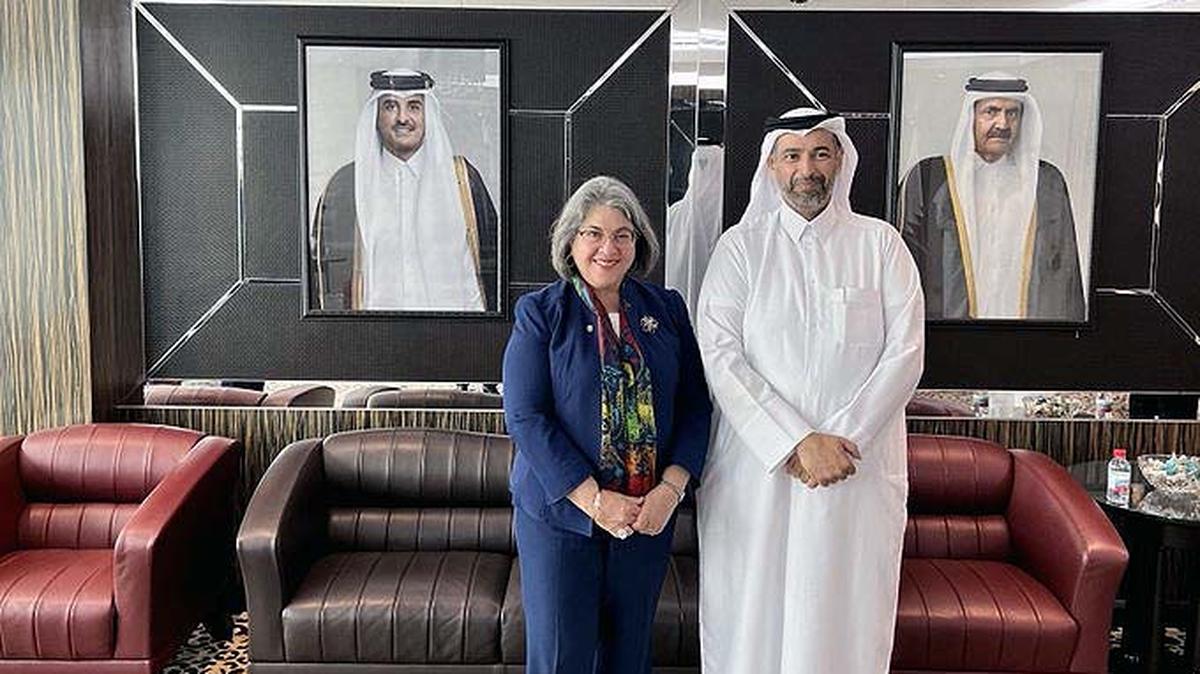
Miami-Dade Mayor Daniella Levine Cava took a free trip.
A VIP trip to Qatar in the Persian Gulf.
A trip with a price tag of $5,000 for the mayor and staffers and other county and Miami officials.
A trip paid for by the Qatar government, which, coincidentally, employs the mayor’s former campaign manager and close confidante, Christian Ulvert, who also was on the trip.
Ulvert told the Editorial Board there was nothing unique about Levine Cava’s invitation. “Qatar’s U.S. Ambassador has invited many other U.S. mayors to visit his country,” Ulvert said, adding that his connection to the trip is tangential. Fine.
And yes, no taxpayer money is being spent, but what about the invaluable optics?
On Monday, Miami Herald government reporter Douglas Hanks wrote an article about her trip. The mayor tweeted that day she was meeting with government officials. Our main concern is that she was boosting Ulvert’s business cred.
Here’s the official response from the county:
“The purpose of the Mayor’s trip is to interact with Qatari government officials and business leaders with a focus on that nation’s hosting of the 2022 FIFA World Cup as our county is seeking to host the 2026 FIFA World Cup.
“The trip also includes opportunities to explore potential future business or cultural partnerships between Qatar and Miami-Dade County, as well as opportunities to share best practices and collaborate on critical resilience efforts,” her office said.
But this trip came at a time when Qatar is also drawing protests for its human-rights record for criminalizing same-sex relationships and alleged mistreatment of migrant workers. Some of them have died building World Cup infrastructures, news accounts report.
The mayor’s spokesperson goes on to clarify that taxpayer money is not going into this, as if that is the only concern.
“The costs of the travel, including airfare, ground transportation, lodging and meals, will be paid for by the Embassy of Qatar in the U.S.,” she wrote in response to questions from Hanks.
As if that made this trip OK.
Our question is: Who is advising the mayor?
Yes, we get that there is no taxpayer money going into this venture. We’re not naive. That’s often the case when officials take fact-finding trips on official business. But somehow, this one feels wrong, showing poor judgment to go on a trip financed by a client of your campaign manager with a delegation that includes a paid lobbyist who has the mayor’s ear.
It turns out Qatar, which is governed by a ruling family and functions as a monarchy, has already given Miami-Dade financial assistance. Ulvert said that during the early days of the pandemic, in June 2020, Qatar’s U.S. ambassador, for whom he works, donated $1 million to six community nonprofit Miami-Dade community organizations. The county should have probably turned down that money, which could have strings attached.
Levine Cava was the highest ranking, but not the only politician, using baffling common sense in making this trip, according to a list released by her office. Others included: Miami-Dade commissioners Oliver Gilbert and Keon Hardemon; Miami city commissioners Alex Díaz de la Portilla and Christine King; Levine Cava chief of staff Johanna Cervone; James McQueen, a former Hardemon top aide who is now head of Miami’s Overtown Community Redevelopment Agency; and Jacqui Cardona, a lobbyist and consultant for the Embassy of Qatar.
All this courtesy of the oil and natural gas wealthy Qatar government — which of course, wants absolutely nothing in return. At the very least, they can claim legitimacy by being visited by one of South Florida’s best known and popular mayors.
On Wednesday, the mayor issued another statement explaining why she made the trip to Qatar:
“Our country has well-established economic ties with Qatar, and Miami-Dade shares a commitment to innovation and collaboration as we tackle major challenges like climate change and diversifying our economies for the future. This week’s trip follows my recent meeting with the Qatari ambassador in Miami-Dade and builds on our existing relationship around critical issues of infrastructure, resilience and economic development,” she wrote.
A day earlier, the mayor begin to hear criticism of her trip. On Tuesday, the mayor tweeted a photo of herself with the Qatar minister who oversees public work:
“I sat down with His Excellency Abdulla bin Abdulaziz bin Turki Al Subaie to learn about Doha’s world-class public transit systems and to explore ways we can partner on transit investments,” Levine Cava wrote.
Levine Cava’s tweet was answered with some “likes” but also some “dislikes:”
“Are you going to meet with Kim Jong Un next?” @MiamiLorax asked the mayor.
Thursday, Ulvert sent the Editorial Board links and photos of other mayors across the country who accepted free trips to Qatar. Among the photos was one of Miami Mayor Francis Suarez, who visited Qatar in June 2021.
We don’t know the details of Suarez’s trip, and we don’t see that as persuasive justification for that of the county mayor. We think she should have given this free trip a second look — then given it a pass.
Editor’s note: This editorial was updated to reflect subsequent comments from Miami-Dade Mayor Levine Cava.
BEHIND THE STORY
MOREWhat's an editorial?
Editorials are opinion pieces that reflect the views of the Miami Herald Editorial Board, a group of opinion journalists that operates separately from the Miami Herald newsroom. Miami Herald Editorial Board members are: opinion editor Amy Driscoll and editorial writers Isadora Rangel and Mary Anna Mancuso. Read more by clicking the arrow in the upper right.
What's the difference between an op-ed and a column?
How does the Miami Herald Editorial Board decide what to write about?
The Editorial Board, made up of experienced opinion journalists, primarily addresses local and state issues that affect South Florida residents. Each board member has an area of focus, such as education, COVID or local government policy. Board members meet daily and bring up an array of topics for discussion. Once a topic is fully discussed, board members will further report the issue, interviewing stakeholders and others involved and affected, so that the board can present the most informed opinion possible. We strive to provide our community with thought leadership that advocates for policies and priorities that strengthen our communities. Our editorials promote social justice, fairness in economic, educational and social opportunities and an end to systemic racism and inequality. The Editorial Board is separate from the reporters and editors of the Miami Herald newsroom.
How can I contribute to the Miami Herald Opinion section?
The Editorial Board accepts op-ed submissions of 650-700 words from community members who want to argue a specific viewpoint or idea that is relevant to our area. You can email an op-ed submission to oped@miamiherald.com. We also accept 150-word letters to the editor from readers who want to offer their points of view on current issues. For more information on how to submit a letter, go here.
This story was originally published May 26, 2022 at 12:21 PM.