
After Buffalo massacre, will conservatives still add fuel to white supremacists’ fire? | Editorial
After every mass shooting we ask: How did this young man slip through the cracks for so long — until he snapped?
Mass shooters don’t usually simply “snap,” according to an FBI study published in 2018. Most spend significant time planning their violent acts. They are also mostly white men or boys frequently motivated by grievances. We’ve seen that movie play out in Florida when Nikolas Cruz, a teen with a history of disciplinary issues and disturbing behavior, killed 17 people at Marjory Stoneman Douglas High School in Parkland.
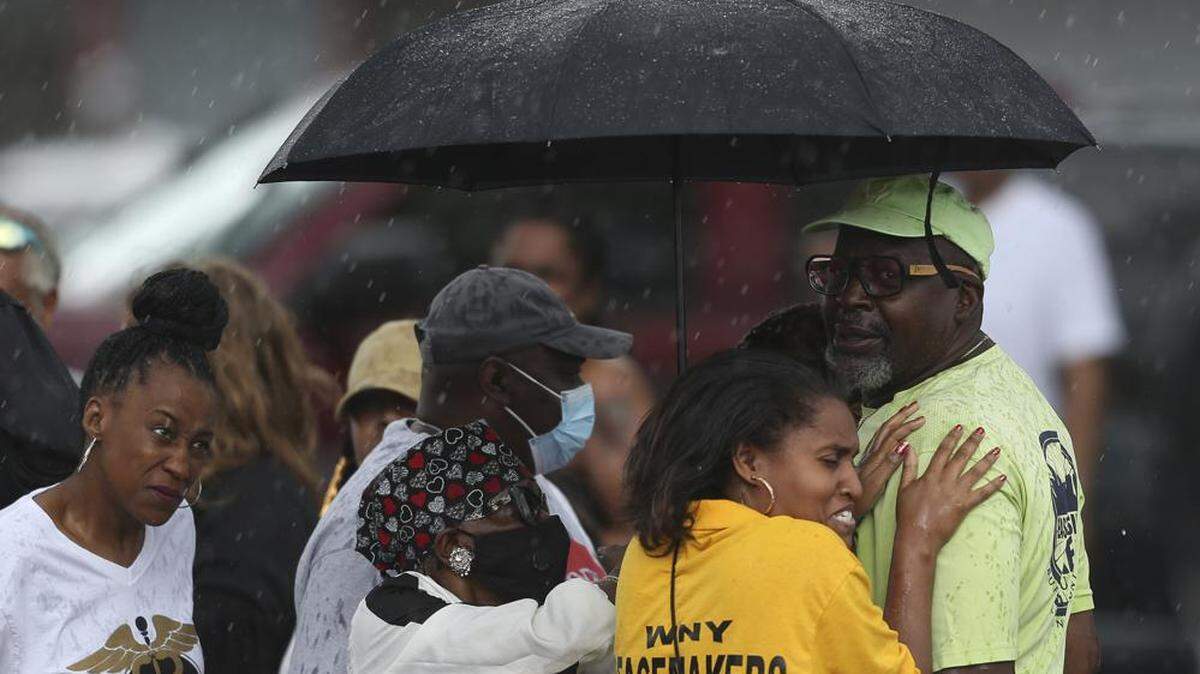
This year’s deadliest shooting, at a supermarket in Buffalo, New York, fits a similar profile. But it has an alarming overlay. The grievances allegedly motivating the suspected gunman were based on race.
Before pundits and politicians say we need to pay more attention to mental health (and we do), they should look closely at how the rise of white supremacy is fueling many random violent acts. Let’s not forget the recent shootings at a Texas Walmart and in New Zealand that killed mostly Hispanics and Muslims, respectively.
White supremacy — the repugnant belief we thought belonged in history books and movies — is back. Payton Gendron, the 18-year-old suspected Buffalo shooter, is said to have been radicalized online, but the ideology has spread beyond the dark corners of the web. Its sanitized version is easily accessible on cable TV’s prime time thanks to media personalities like Fox News host Tucker Carlson.
Troubled young men
Gendron allegedly posted online a document endorsing the “great replacement theory.” Once a racist fringe belief, it claims elites are trying to gain political and economic power by replacing white Americans with people of color through immigration.
There’s little we know at this point about the lead-up to the massacre that left 10 people dead and that authorities say targeted Black people. But we know that, like Cruz, Gendron had been on law enforcement’s radar after making comments threatening to shoot up graduation events at his high school. Authorities took him into custody last June and to a hospital for a mental-health evaluation. What happened next will be dissected for years to come.
In Cruz’s case, at least 30 people had knowledge of his troubling behavior “that was not reported or it was reported but not acted upon,” according to an analysis by the Marjory Stoneman Douglas High School Public Safety Commission.
Mainstream extremism
Even more disturbing than an 18-year-old — or anyone — believing in white supremacy is how some mainstream conservatives have embraced some principles of “replacement theory” — or a version of it that doesn’t sound obviously racist.
Carlson, who reaches more than 3 million viewers every night, has brought up variations of the theory in more than 400 of his show’s episodes since 2016, according to a New York Times analysis. In September, he said President Biden encouraged immigration “to change the racial mix of the country” and “to reduce the political power of people whose ancestors lived here.”
Other conservatives who have echoed some of the tenets of great replacement theory in their anti-immigrant rhetoric include Fox hosts Jeanine Pirro and Laura Ingraham and the No. 3 Republican in the U.S. House, Rep. Elise Stefanik of New York.
We can’t directly blame these public figures for Gendron’s acts and there’s no evidence that he watched or followed them. But they have helped normalize dangerous rhetoric — no matter how much they try to sanitize it.
Instead of addressing its extremism problem, the Republican Party has instead doubled down. For instance, many of its leaders — although not all, let’s be clear — continue to downplay the Jan. 6 attacks and perpetuate the lie that the 2020 elections were stolen. Meanwhile, Florida Gov. Ron DeSantis protected white people’s sensitivities by signing a law that prohibits teachers and corporate trainers from talking about race in a way that makes white students and employees feel guilty.
How do we stop the next mass shooter? We probably never will prevent all of them. But if we’re going to expect more from schools, government and law enforcement, we must also demand that our political and media leaders do better.
BEHIND THE STORY
MOREWhat's an editorial?
Editorials are opinion pieces that reflect the views of the Miami Herald Editorial Board, a group of opinion journalists that operates separately from the Miami Herald newsroom. Miami Herald Editorial Board members are: opinion editor Amy Driscoll and editorial writers Isadora Rangel and Mary Anna Mancuso. Read more by clicking the arrow in the upper right.
What's the difference between an op-ed and a column?
How does the Miami Herald Editorial Board decide what to write about?
The Editorial Board, made up of experienced opinion journalists, primarily addresses local and state issues that affect South Florida residents. Each board member has an area of focus, such as education, COVID or local government policy. Board members meet daily and bring up an array of topics for discussion. Once a topic is fully discussed, board members will further report the issue, interviewing stakeholders and others involved and affected, so that the board can present the most informed opinion possible. We strive to provide our community with thought leadership that advocates for policies and priorities that strengthen our communities. Our editorials promote social justice, fairness in economic, educational and social opportunities and an end to systemic racism and inequality. The Editorial Board is separate from the reporters and editors of the Miami Herald newsroom.
How can I contribute to the Miami Herald Opinion section?
The Editorial Board accepts op-ed submissions of 650-700 words from community members who want to argue a specific viewpoint or idea that is relevant to our area. You can email an op-ed submission to oped@miamiherald.com. We also accept 150-word letters to the editor from readers who want to offer their points of view on current issues. For more information on how to submit a letter, go here.
This story was originally published May 16, 2022 at 7:33 PM.