
Gov. DeSantis took his MAGA hat off and put Floridians first. Finally | Editorial
Gov. Ron DeSantis demonstrated in the past week that there are two ways to stand up to corporate power in Florida.
There’s the petty, anti-democratic way, punishing Disney for speaking out against the bill critics have labeled “don’t say gay.”
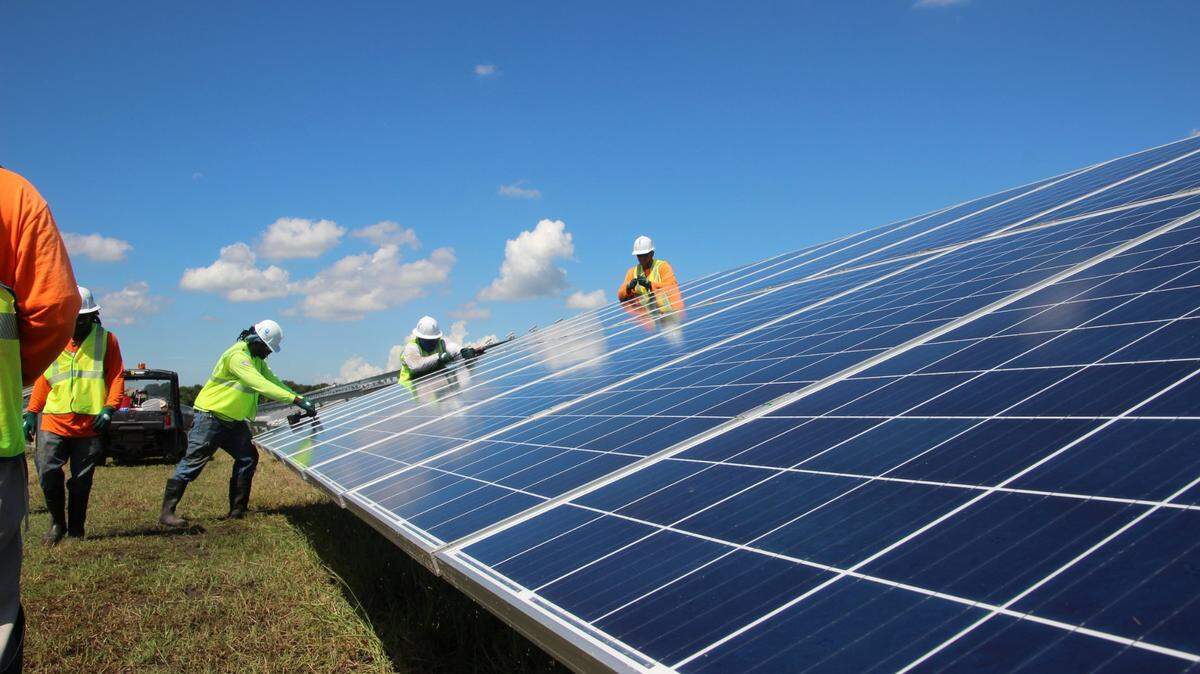
Then there’s the pro-consumer way. DeSantis vetoed a bill pushed by Florida Power & Light that would have undermined solar-power expansion in the Sunshine State. It was a good move.
In the first case, DeSantis acted out of spite last week by rushing lawmakers to pass a bill to dissolve a special district that governs Walt Disney World. In the second case, political calculus might have still been part of his decision, but at least the governor acted in the best interest of Floridians and clean energy.
‘Net metering’
House Bill 741 represented what financial and political power can accomplish. It was written by FPL lobbyists, and the company followed up with donations to the Senate sponsor’s political committee. The bill would have allowed utilities to impose fees on businesses and homeowners who install solar panels. Starting in 2024, users also would have received fewer financial credits for selling excess energy back to their electric utilities through a practice known as “net metering.”
The veto represents a stunning loss for FPL, which has pulled out all the stops over decades to control solar-power generation. It was a victory for DeSantis — in particular with voters who aren’t among his staunch conservative base, but who care about the environment and the rising costs of living and energy.
“Given that the United States is experiencing the worst inflation in 40 years and that customers have seen steep increases in the price of gas and groceries, as well as escalating bills, the state of Florida should not contribute to the financial crunch that our citizens are experiencing,’’ DeSantis wrote in his veto letter.
Unlike his attack on Disney, which was all made-for-cable-news vitriol and retribution, DeSantis sounds like a reasonable state leader, echoing what many critics of the legislation have been saying for months.
FPL’s side
FPL says non-solar utility customers are subsidizing rooftop-panel owners. Florida utilities estimate they will spend $700 million to pay for solar credits between 2017 and 2025. While DeSantis acknowledged that HB 741 would “impose additional charges to recover lost revenues,” he also concluded that, “The amount that may be recovered . . . is speculative and would be borne by all customers.”
There’s still a debate over whether net metering hurts or helps utilities and its customers. Studies suggest that the benefits solar users provide to the power grid outweigh the costs associated with net metering. Instead of getting to the bottom of this discussion, lawmakers chose to base their legislation on the claims and data presented by FPL and other utilities.
Caught flat-footed by the governor’s veto, Rep. Lawrence McClure, the bill’s House sponsor, gave a head-scratching explanation for his bill.
“We’re dealing with different economic conditions here in May than we had in March,’’ when the Legislature approved the measure, he told the Herald.
So, there was no inflation in March. Really?
McClure said he expects lawmakers to return with a new version of the bill next year. Whether inflation still is a concern when that happens, lawmakers better get Floridians a better deal.
BEHIND THE STORY
MOREWhat's an editorial?
Editorials are opinion pieces that reflect the views of the Miami Herald Editorial Board, a group of opinion journalists that operates separately from the Miami Herald newsroom. Miami Herald Editorial Board members are: opinion editor Amy Driscoll and editorial writers Isadora Rangel and Mary Anna Mancuso. Read more by clicking the arrow in the upper right.
What's the difference between an op-ed and a column?
How does the Miami Herald Editorial Board decide what to write about?
The Editorial Board, made up of experienced opinion journalists, primarily addresses local and state issues that affect South Florida residents. Each board member has an area of focus, such as education, COVID or local government policy. Board members meet daily and bring up an array of topics for discussion. Once a topic is fully discussed, board members will further report the issue, interviewing stakeholders and others involved and affected, so that the board can present the most informed opinion possible. We strive to provide our community with thought leadership that advocates for policies and priorities that strengthen our communities. Our editorials promote social justice, fairness in economic, educational and social opportunities and an end to systemic racism and inequality. The Editorial Board is separate from the reporters and editors of the Miami Herald newsroom.
How can I contribute to the Miami Herald Opinion section?
The Editorial Board accepts op-ed submissions of 650-700 words from community members who want to argue a specific viewpoint or idea that is relevant to our area. You can email an op-ed submission to oped@miamiherald.com. We also accept 150-word letters to the editor from readers who want to offer their points of view on current issues. For more information on how to submit a letter, go here.
This story was originally published April 28, 2022 at 4:45 PM.