
When he finishes with the ‘techno bull,’ Miami’s mayor better grab some other issues by the horns | Editorial
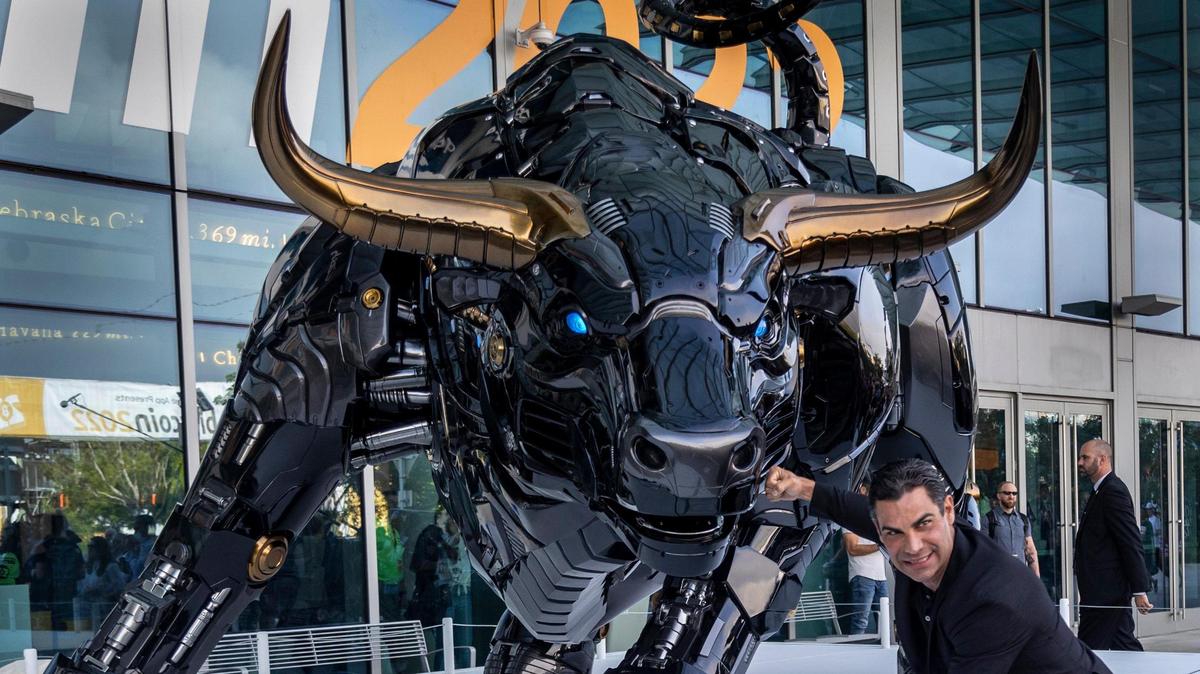
Miami Mayor Francis Suarez was front and center Wednesday touting a Miami-branded cryptocurrency, brokering a deal to turn taxpayer property into a David Beckham-backed soccer stadium and promoting Miami as the country’s next tech hub.
It’s obvious the mayor knows how to use his rising star to push for issues dear to him. Of particular interest are the ones that attract a lot of attention from outside South Florida and Silicon Valley tech bros.
Too bad that when bad stuff is hitting the fan at City Hall, the mayor is MIA.
Most recently, Suarez’s constituents in Coconut Grove were fighting against a plan to redraw the city’s political boundaries. New districts are required every decade when U.S. Census population updates are released.
We didn’t hear a word from Suarez during the process. Where was the energetic mayor we watched this week wearing Bitcoin-branded sneakers at the unveiling of the “Miami Bull,” a futuristic statue in Miami Beach modeled after Wall Street’s iconic “Charging Bull?” The art work is meant to represent Miami’s standing as the “future of finance,” as Suarez put it.
The first time Suarez said something publicly about the redistricting maps was after he allowed them to go into effect over the weekend. He neither signed nor vetoed the maps. He expressed no public opinion beforehand. What a cop-out.
Last week, the Herald Editorial Board, the NAACP and a group of Grove residents asked him to veto the new districts that the City Commission approved with a 3-2 vote in late March. To account for Miami’s growth over the past decade, the map divides Coconut Grove into three districts and moves 100 households in the historic Black West Grove to a different district. The Grove historically had been entirely in District 2. The new map dilutes residents’ political power at a time when the Black Grove is under pressure from gentrification.
The consultants who drew the map also appeared to go to great pains to draw boundaries that added Commissioner Joe Carollo’s $1.3 million house into his district.
Miami-Dade NAACP branch President Danielle Pierre told the Editorial Board on Wednesday that Suarez didn’t respond to her email requesting the veto.
We didn’t expect Suarez to reject the maps. He needs four of five commission votes on April 28 to approve what he’s really passionate about: a deal he’s negotiated with developers to turn a city-owned golf course into Miami Freedom Park. The $1 billion complex would house a soccer stadium for Inter Miami, the team co-owned by Beckham. Vetoing the redistricting map could have led the mercurial commission to turn against Suarez.
The mayor’s office released a statement on Monday saying that, after talking to the city’s redistricting consultant, he “concluded this was the only product that could pass the commission.” Suarez asked the consultant to review residents’ concerns and he “felt the consultant’s analysis comprehensively answered many of the concerns addressed.”
OK. But what if the mayor had decided to engage with the process months ago, when Grove residents first raised issues with the maps? Suarez doesn’t have a vote on the commission, but can use his bully pulpit and political influence to advocate for certain causes. It’s what he’s done with the stadium and tech, issues that give him national standing and headlines in Forbes magazine.
We’ve seen this disappearing act before. Suarez was nowhere to be found when his hand-picked Police Chief Art Acevedo — whom he hailed as the “Michael Jordan of police chiefs” — became the focus of a City Commission circus that culminated in his firing last year. Suarez came out of hiding when the circus tents had folded, only to say that he, too, agreed it was time for Acevedo to go after six months on the job.
We’re not saying residents might not also benefit from Suarez’s grand vision for the city, though taxpayers deserve a better stadium deal. To be fair, Suarez also has also tackled important local issues recently. In February, he announced his plan to use $5.25 million to offer assistance for Miamians facing rent increases. In a city that’s Ground Zero for the impacts of climate change, Suarez breaks with many in the Republican Party in acknowledging the need to reduce greenhouse-gas emissions. He attended the United Nations climate change conference last year to talk to U.S. mayors about how cities can lead the charge on that.
We like the mayor’s ambitious goals, but Suarez appears caught up in the 30,000-foot view of the city. He needs to come down to Earth. Miamians would appreciate his taking as much interest in less sexy, street-level, quality-of-life issues as he does in cryptocurrency and flashy stadiums.
BEHIND THE STORY
MOREWhat's an editorial?
Editorials are opinion pieces that reflect the views of the Miami Herald Editorial Board, a group of opinion journalists that operates separately from the Miami Herald newsroom. Miami Herald Editorial Board members are: opinion editor Amy Driscoll and editorial writers Isadora Rangel and Mary Anna Mancuso. Read more by clicking the arrow in the upper right.
What's the difference between an op-ed and a column?
How does the Miami Herald Editorial Board decide what to write about?
The Editorial Board, made up of experienced opinion journalists, primarily addresses local and state issues that affect South Florida residents. Each board member has an area of focus, such as education, COVID or local government policy. Board members meet daily and bring up an array of topics for discussion. Once a topic is fully discussed, board members will further report the issue, interviewing stakeholders and others involved and affected, so that the board can present the most informed opinion possible. We strive to provide our community with thought leadership that advocates for policies and priorities that strengthen our communities. Our editorials promote social justice, fairness in economic, educational and social opportunities and an end to systemic racism and inequality. The Editorial Board is separate from the reporters and editors of the Miami Herald newsroom.
How can I contribute to the Miami Herald Opinion section?
The Editorial Board accepts op-ed submissions of 650-700 words from community members who want to argue a specific viewpoint or idea that is relevant to our area. You can email an op-ed submission to oped@miamiherald.com. We also accept 150-word letters to the editor from readers who want to offer their points of view on current issues. For more information on how to submit a letter, go here.
This story was originally published April 7, 2022 at 12:17 PM.