
Florida GOP has cozied up to corporations for years. Now it wants to punish ‘woke’ Disney? | Editorial
Republicans just wrapped up a legislative session in which they they did favors for big corporate donors like Florida Power & Light Co. and the sugar industry.
But now, suddenly — after the Walt Disney Co. pledged to end campaign donations in Florida over its opposition to the bill opponents call “Don’t say gay” — they are anti-corporate crusaders.
Please.
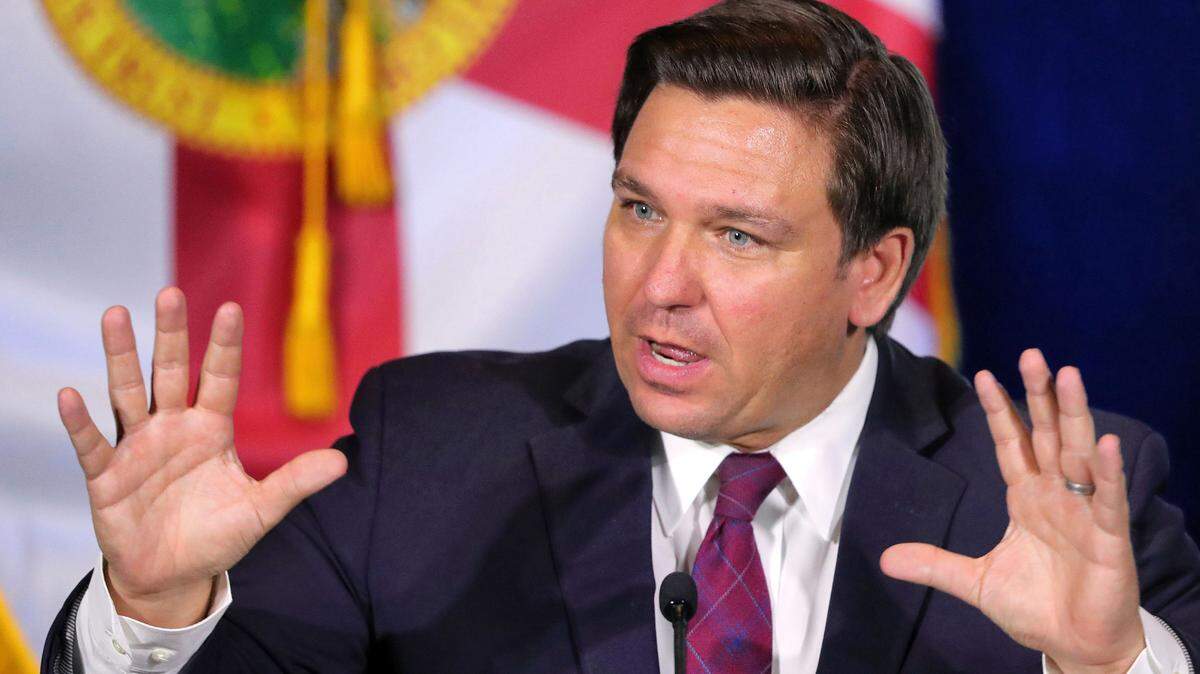
“As a matter of first principle, I don’t support special privileges in law, just because a company is powerful, and they’ve been able to wield a lot of power,” Gov. Ron DeSantis said Thursday in West Palm Beach.
Or just because a company is “woke” is probably what he meant to say. Of course, the governor has a derisive definition of the term. We say “woke” is shorthand for treating others with a measure of respect, with little regard for how they show up.
If DeSantis truly wants to end “special privileges” then lawmakers will have their work cut out for them, revisiting every corporate giveaway embedded in Florida law. They could begin by looking into 99% of companies in the state that avoid paying corporate income taxes, as the Orlando Sentinel reported in 2019.
Republicans are already concocting ways to wield their revenge on Disney, a powerhouse in Florida politics that donated almost $5 million in 2020 to DeSantis, political candidates and both parties. State Rep. Spencer Roach, R-Fort Myers, tweeted he’s been talking with fellow lawmakers about repealing a 1967 law that “allows Disney to act as its own government” in Orange County.
We support Republicans — and Democrats — revisiting laws that support special interests at the expense of everyday Floridians. But they’re not looking to right the wrongs of the past. They are using government to inflict harm on private entities that don’t support their ideology.
This looks an autocracy, not DeSantis’ “free state of Florida.”
‘Bad’ corporations
As consumers and employees pressure corporations to take a stand on pressing issues, we will see more of this kind of performative politics by Republicans.
The point is to keep CEOs sending them checks while keeping them cowed into silence.
Disney worked behind the scenes to stop House Bill 1557, but the company was late in the game in opposing it publicly. The bill, signed by DeSantis on March 28, banned classroom instructions on sexual orientation and gender identity in grades K-3.
Make no mistake — though the GOP acts as if Mickey Mouse is the incarnation of “wokeism,” corporate influence in Tallahassee is thriving.
For two years in a row, Republicans and Democrats did the bidding of sugar growers such as U.S. Sugar Corp. Last year, they shielded farmers from lawsuits related to cane burning, which causes respiratory issues among residents of the poor and majority Black Glades region south of Lake Okeechobee.
DeSantis signed that bill into law — because what’s wrong with giving kids asthma when the real threat to society is that they might learn in school that people can be anything other than straight?
This year, in a last-minute maneuver, the Legislature made another concession to Big Sugar that creates more hurdles for state water managers in charge of Everglades restoration, as the Sun Sentinel Editorial Board reported.
If DeSantis truly is against “special privileges,” he should veto Senate Bill 2508 and push to repeal the cane-burning law he signed last year.
Lawmakers from both parties have also been allies in FPL’s quest to curb the expansion of rooftop solar panels. This year they approved a controversial bill that phases out financial incentives for homeowners who install those panels. FPL helped craft the initial version of the bill and followed up with campaign contributions to the sponsor, the Herald reported.
That’s another opportunity for DeSantis to make a bold statement through a veto.
Disney friends
Disney, of course, also is on the list of the state’s corporate beneficiaries.
When DeSantis pushed to ban social-media platforms from removing political candidates last year, he signed a bill that creates an exemption for Disney’s streaming platform (that law is currently held up in court). Now he’s doing an about-face, saying the exemption was “embarrassing” and that he wants to repeal it. But emails obtained by former Orlando Sentinel reporter Jason Garcia, who now runs the website Seeking Rents, show that a top DeSantis aide worked with lawmakers to help Disney obtain that “special privilege.”
In 2019, Disney successfully pushed to change legislation that would have exposed hotels to lawsuits if they didn’t do enough to prevent human trafficking at their facilities. The company also successfully convinced lawmakers to change laws dealing with how theme parks must deal with the belongings visitors leave behind, Florida Trend magazine reported.
All of this, by the way, happened during DeSantis’ term.
But that was then. Florida Republicans today are vowing to end the pay-to-play system that has ruled Tallahassee and politics in general. But, they won’t. They will continue to cozy up to big donors as long as those donors don’t dare oppose the party in its culture wars.
We’ve seen how DeSantis & Co. abuse their political power and mistreat those whom they consider the enemy. It’s chilling to see how they are willing to punish a company they’ve considered a friend.
This isn’t accountability, it’s revenge politics — hypocritical and dangerous.
BEHIND THE STORY
MOREWhat's an editorial?
Editorials are opinion pieces that reflect the views of the Miami Herald Editorial Board, a group of opinion journalists that operates separately from the Miami Herald newsroom. Miami Herald Editorial Board members are: opinion editor Amy Driscoll and editorial writers Isadora Rangel and Mary Anna Mancuso. Read more by clicking the arrow in the upper right.
What's the difference between an op-ed and a column?
How does the Miami Herald Editorial Board decide what to write about?
The Editorial Board, made up of experienced opinion journalists, primarily addresses local and state issues that affect South Florida residents. Each board member has an area of focus, such as education, COVID or local government policy. Board members meet daily and bring up an array of topics for discussion. Once a topic is fully discussed, board members will further report the issue, interviewing stakeholders and others involved and affected, so that the board can present the most informed opinion possible. We strive to provide our community with thought leadership that advocates for policies and priorities that strengthen our communities. Our editorials promote social justice, fairness in economic, educational and social opportunities and an end to systemic racism and inequality. The Editorial Board is separate from the reporters and editors of the Miami Herald newsroom.
How can I contribute to the Miami Herald Opinion section?
The Editorial Board accepts op-ed submissions of 650-700 words from community members who want to argue a specific viewpoint or idea that is relevant to our area. You can email an op-ed submission to oped@miamiherald.com. We also accept 150-word letters to the editor from readers who want to offer their points of view on current issues. For more information on how to submit a letter, go here.
This story was originally published April 1, 2022 at 4:36 PM.