
Florida legislators broke their promise of Surfside condo reforms. Tackle it in the special session | Editorial
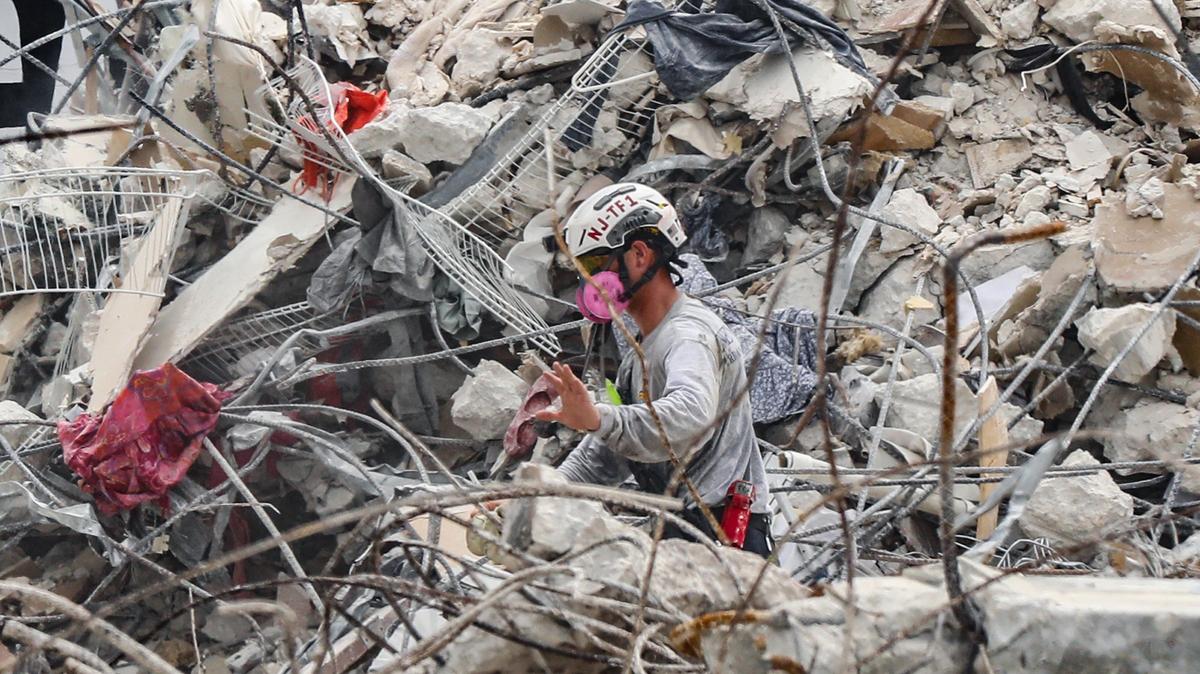
It’s been three weeks since the Florida Legislature ended its 2022 regular session. And we are still trying to wrap our minds around the idea that lawmakers didn’t pass anything — not a single scrap of legislation — designed to address the problems revealed by the horrific collapse of the Champlain Towers South condo in Surfside.
It’s breathtaking, the idea that 98 people can die in this horrible way — killed in a pancaking building in the middle of the night without warning — and the state Legislature fails to pass any reforms. It’s a tragedy on top of a tragedy. It’s a dereliction of duty. What could possibly be more important?
It’s not as though lawmakers didn’t have time. They had a 60-day session (which ended up stretching an extra day, to March 14). And the collapse happened back on June 24. That’s more than nine months ago. And with each day that passes, we all know what happens: Interest in doing anything wanes just a little bit more, as new and more pressing concerns take over.
Don’t give up
There’s still one responsible course of action left. Lawmakers need to take up condo reforms in the special session later this month. They owe it to all of us — in this community and others — who watched that unforgettable video of the building simply falling down and wondered if there were more condo time bombs waiting to go off.
There are about 1.5 million condos in Florida, with more than half in buildings over 30 years old. Their residents deserve to be safe. This cannot wait until 2023.
That’s not to say that lawmakers didn’t try. There was a lot of hard work that went on when the Legislature met, no doubt about it, with Rep. Danny Perez from Miami-Dade County and Sen. Jennifer Bradley from Orange Park taking the lead. There were House and Senate versions of bills under discussion right to the end of the session. The two sides negotiated. But there was no resolution, and that’s what counts.
We believe that Perez and Bradley were frustrated, as was clear from interviews with CBS4’s Jim DeFede after the session. And yet the inability to get reforms over the finish line speaks even more to a lack of interest by legislative leadership and the governor.
Gov. Ron DeSantis’ enthusiasm for legislation is unbridled when it’s about other issues, like fighting Disney over the “Don’t say gay” bill. Or the “Stop WOKE” act. Or congressional redistricting maps that damage minority representation. Or anything else that fans the flames of anger, a prime motivating tactic for the GOP in an election year.
But how about the families of the Surfside dead, waiting to see what the state will do to prevent another tragedy? Or the people still in condos that may need critical inspections or maintenance? By all means, let’s lean back in the rocking chair, smoke our pipe and mull that one over for a year or two.
Inspections and reserves
The basic issues under discussion in Tallahassee were worthy ones: building inspections; waiving of financial reserves meant for maintenance; and transparency on condo documents and disclosures. There are plenty of obstacles to passing reforms on all three, of course. That is always the case, and yet legislation is passed all the time. It can’t be an excuse here.
On the issue of inspections, Miami-Dade County, Broward County and a number of cities already have been addressing how often to require them, and making inspections more frequent. We’re glad our local officials have stepped in, but that’ll be cold comfort if there’s a disaster in another town that could have been prevented with a statewide approach.
There are questions of whether there should be more frequent inspections for buildings closer to the water, because of saltwater’s effects on buildings. That might be the right thing to do. The state surely has access to engineers to answer those questions. Again, that can’t be a reason to do nothing.
On reserves, the issues are stickier. Condos need to hold money in reserve when they know critical maintenance will be needed. Many condos had been waiving that requirement as a way to make living there cheaper, pushing off maintenance for the next group of owners or the ones after that. The Miami-Dade grand jury report on Champlain Towers recommended no waivers at all.
The House and Senate differed on that point, with the Senate version allowing for waivers under certain circumstances. The House version, with Perez driving the negotiations, included no allowance for that, giving condo associations several years to ramp up. His stance — no compromise on safety — is admirable but, ultimately, short-sighted in this instance. People are living in condos right now with no reserves or inadequate reserves. The time to address it is now.
There are other substantial disagreements that must be settled regarding reserves, including how to handle low-income residents who can’t afford a big assessment, how much time should be allowed to transition from no reserves to full reserves and if a partial waiver of reserves should ever be allowed.
Grand jury report
But there is no dearth of information on these and other Surfside-related issues. We suggest lawmakers take another look at the reports that have been generated on the collapse. In addition to the Miami-Dade grand jury’s 43-page report, there were also task forces from the Florida Bar and engineering associations addressing reforms. The experts associated with those reports would be a fine place to find answers. (The National Institute of Standards and Technology, the group that investigated the World Trade Center collapse, won’t be done with its Surfside review for months or years. We cannot wait for that.)
Transparency on documents for condo owners and residents — which, it must be noted, covers renters — should be relatively easy to agree on. When you’re in a communal building, documents that spell out maintenance issues and violations should be available. Period. Lawmakers could have passed that piece, at least.
State Sen. Jason Pizzo, from North Miami Beach, who floated some of these reforms or similar ones before the session, told the Editorial Board that he thinks House and Senate legislators deeply regret their failure to reach an agreement. “I think they are equally upset at not getting it done,” he said, adding that the path forward will need to be a “balancing act” between needed reforms and hard realities.
We can agree with that. We know it won’t be easy. But we still remember all those vows for action when this first happened. It’s time to make good on them. Condo reforms must go forward during the special session that starts April 19.
There’s a gaping hole in the skyline when a 12-story building falls to the ground, a void in the horizon that hurts to look at. Right now, the response of the Florida Legislature to that tragedy is all too similar: a whole lot of nothing.
BEHIND THE STORY
MOREWhat's an editorial?
Editorials are opinion pieces that reflect the views of the Miami Herald Editorial Board, a group of opinion journalists that operates separately from the Miami Herald newsroom. Miami Herald Editorial Board members are: opinion editor Amy Driscoll and editorial writers Isadora Rangel and Mary Anna Mancuso. Read more by clicking the arrow in the upper right.
What's the difference between an op-ed and a column?
How does the Miami Herald Editorial Board decide what to write about?
The Editorial Board, made up of experienced opinion journalists, primarily addresses local and state issues that affect South Florida residents. Each board member has an area of focus, such as education, COVID or local government policy. Board members meet daily and bring up an array of topics for discussion. Once a topic is fully discussed, board members will further report the issue, interviewing stakeholders and others involved and affected, so that the board can present the most informed opinion possible. We strive to provide our community with thought leadership that advocates for policies and priorities that strengthen our communities. Our editorials promote social justice, fairness in economic, educational and social opportunities and an end to systemic racism and inequality. The Editorial Board is separate from the reporters and editors of the Miami Herald newsroom.
How can I contribute to the Miami Herald Opinion section?
The Editorial Board accepts op-ed submissions of 650-700 words from community members who want to argue a specific viewpoint or idea that is relevant to our area. You can email an op-ed submission to oped@miamiherald.com. We also accept 150-word letters to the editor from readers who want to offer their points of view on current issues. For more information on how to submit a letter, go here.
This story was originally published April 4, 2022 at 1:31 PM.