
Florida GOP draws new boundaries for congressional districts — and for DeSantis | Editorial
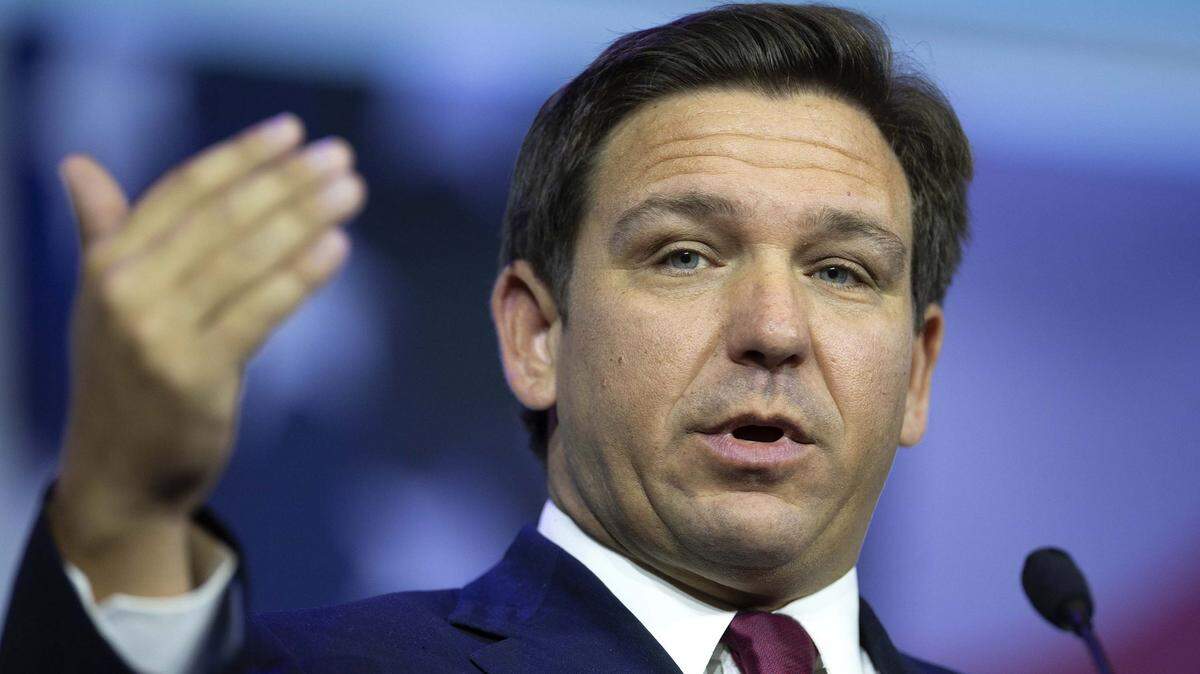
For once, Republican lawmakers are standing up to Gov. Ron DeSantis, at least a little bit.
This glimpse of a legislative backbone emerged during a critically important process: the once-a-decade redrawing of boundary lines for congressional districts that will reshape the political landscape in Florida.
The redistricting process already was inherently flawed. Every 10 years, lawmakers must redraw the lines for legislative districts, which can affect their own reelection chances. They’re also in charge of setting new boundaries for Florida’s congressional seats. That’s where DeSantis saw an opportunity, taking the unprecedented step of introducing his own congressional map to more aggressively favor Republicans.
It would draw district lines to boost Republican districts from 16 to 18, while reducing historically Black seats by two, statewide. That would include dismantling Florida’s 5th Congressional District in North Florida, held by Democratic Rep. Al Lawson. DeSantis says the district is an unconstitutional gerrymander — though the state Supreme Court approved it in the past.
His strong-arming for GOP gain — while diluting the Black vote — isn’t just difficult for legislators, who must run for reelection this fall. It also undermines the underlying principle here, that lawmakers are supposed to draw fair districts for all voters, not just Republicans. When we talk about voter apathy and people being turned off by politics in this country, remember this moment.
Two possible maps
Republican lawmakers tried, as usual, to placate the governor, taking the unusual step of approving a “primary” map, plus a back-up map. The first map shrinks Lawson’s District 5 to a small area in Jacksonville, a nod to DeSantis. The second — if the courts reject the first one — reestablishes much of District 5.
But that wasn’t enough for DeSantis. He threatened on Twitter to veto the maps, calling them “DOA.” He followed that with a statement at a news conference in Jacksonville, saying, “I don’t bluff.”
Sounds like he’s thinking about his national political profile at the expense of the state. For a possible presidential contender, any congressional seats the GOP can add in Florida would be a big plus as the party tries to regain control of the U.S. House in November.
The only way for lawmakers to overcome his veto would be with a two-thirds vote of the Republican-dominated Legislature, a body that has rolled over for the governor on almost every other occasion. We don’t have high hopes.
If neither side backs down and lawmakers reach an impasse with the governor, the Florida courts might end up drawing the district lines. Two lawsuits have already been filed, one in Leon County and another in a federal court, the Northern District of Florida, asking the courts to decide where to draw the lines. Either way, a map for Florida’s 28 congressional districts — the state picked up one new district because of an increase in population — must be in place by June 17, the last date candidates can qualify for the congressional elections.
This attack on minority representation must be resisted in every way possible, with the first line of defense being the Legislature. We think it’s encouraging that they’re putting a sliver of daylight between themselves and the governor on this one.
Perhaps they’ve just remembered that, in a check-and-balance system of government, they’re supposed to provide the “check,” so a single branch (the executive branch, in this case) doesn’t hijack the decision-making. Or perhaps they’re just looking out for their own interests in the future when they might be open to accusations of diminishing the power of minority voters in Florida.
Whatever the case, Florida lawmakers are drawing the boundaries, all right. But not just for Congress. In this one instance, they’re drawing a line between themselves and a powerful GOP governor.
It’s about time.
BEHIND THE STORY
MOREWhat's an editorial?
Editorials are opinion pieces that reflect the views of the Miami Herald Editorial Board, a group of opinion journalists that operates separately from the Miami Herald newsroom. Miami Herald Editorial Board members are: opinion editor Amy Driscoll and editorial writers Isadora Rangel and Mary Anna Mancuso. Read more by clicking the arrow in the upper right.
What's the difference between an op-ed and a column?
How does the Miami Herald Editorial Board decide what to write about?
The Editorial Board, made up of experienced opinion journalists, primarily addresses local and state issues that affect South Florida residents. Each board member has an area of focus, such as education, COVID or local government policy. Board members meet daily and bring up an array of topics for discussion. Once a topic is fully discussed, board members will further report the issue, interviewing stakeholders and others involved and affected, so that the board can present the most informed opinion possible. We strive to provide our community with thought leadership that advocates for policies and priorities that strengthen our communities. Our editorials promote social justice, fairness in economic, educational and social opportunities and an end to systemic racism and inequality. The Editorial Board is separate from the reporters and editors of the Miami Herald newsroom.
How can I contribute to the Miami Herald Opinion section?
The Editorial Board accepts op-ed submissions of 650-700 words from community members who want to argue a specific viewpoint or idea that is relevant to our area. You can email an op-ed submission to oped@miamiherald.com. We also accept 150-word letters to the editor from readers who want to offer their points of view on current issues. For more information on how to submit a letter, go here.
This story was originally published March 11, 2022 at 4:07 PM.