
Rick Scott’s plan isn’t about “rescuing” America. It’s much more mercenary than that | Editorial
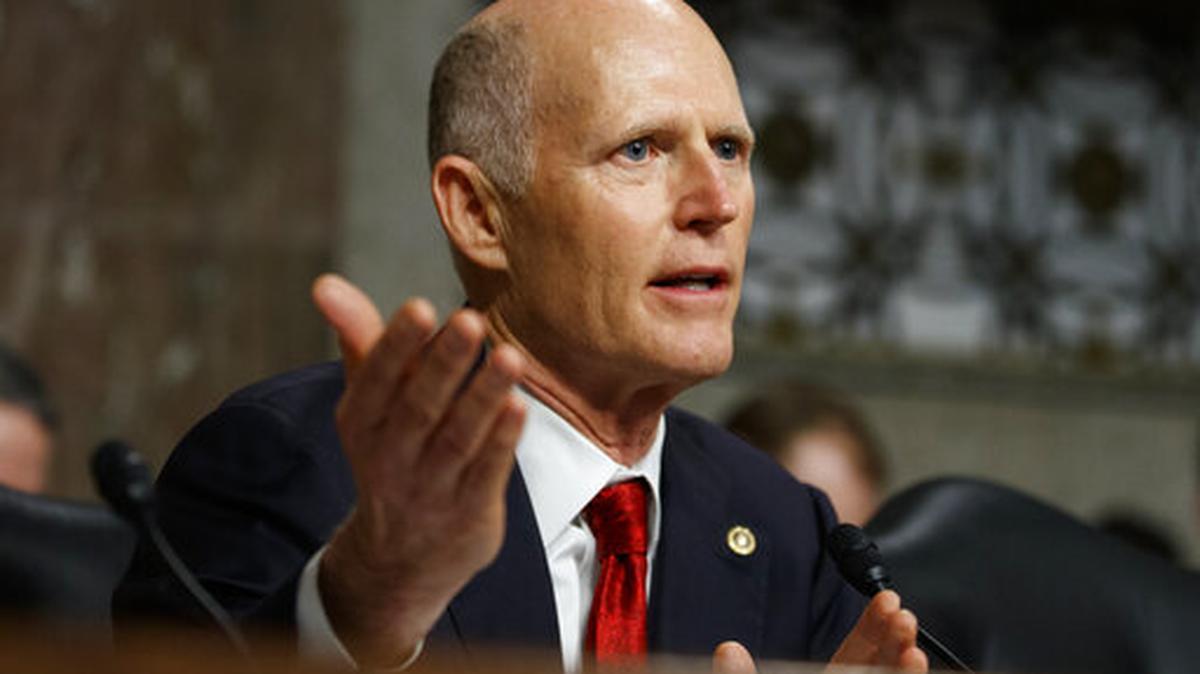
Florida Sen. Rick Scott has an 11-point plan to “rescue” America. For the “Too Long; Didn’t Read” crowd, we’ll summarize: He’s trying to scare people silly.
Scott published his proposal, complete with a visual of the Declaration of Independence in flames, a day or two before the Conservative Political Action Conference in Orlando this week.
That’s a proving ground for a lot of GOP hopefuls and, no doubt, his true audience for this document, especially if he’s thinking of a presidential run. Of course, he’d have to differentiate himself from other Republicans considering a bid for the White House, and that also seemed to be part of the message. In a my-fellow-Americans note accompanying the plan, he predicted his ideas would be ridiculed by shadowy opponents including the “woke” left and “Washington insiders” (though he is a sitting senator, and therefore an insider) and that his thoughts would also “strike fear in the heart of some Republicans. At least I hope so.”
Political theater aside, the former Florida governor has thoughts, mostly about the culture wars. He wants to officially declare men and women biologically different. He wants to raise taxes on low-income earners, without regard to the financial difficulties many faced during the pandemic.
He wants to stop asking questions about about racial demographic categories on government forms, vowing that, “No government policy will be based on race.” He wants to make sure children recite the Pledge of Allegiance, though they already do. He wants to build that same old border wall and name it after Donald Trump. (Trying to placate anyone?) He wants to cut the federal workforce by 25% because, “For you to have more, Washington must have less” — not necessarily a terrible idea, but predictably couched as an anger-inducing, zero-sum game.
Fanning the flames
Those are not all 11 of his thoughts. In fact, according to his press release, those 11 points contain 128 policy proposals, though we did not count. But you get the idea. This is about fanning the flames of fear, a GOP specialty these days, plus cruelty and a large dose of pretending we live in a post-racial world: “We are going to eliminate racial politics in America,” he wrote — a rich white guy in power. Easy for him to say.
And it’s about exploiting people’s feelings of deprivation. If you are unhappy or feel downtrodden, there must be someone to blame, whether it’s Washington or the elite or people of color. Pick your target, but make sure you get mad.
Scott wants Floridians to be afraid and then to be angry, because that is an emotion the people in power can harness for their own political gains. (That impulse doesn’t, however, distinguish him from other Republicans eyeing the White House, no matter what he may hope.) We reached out to his office to ask him more about his plan but were redirected to the plan online.
Here’s the basic warning we want to offer about Scott’s plan: Fear works. It motivates voters. Politicians know that. It is up to us —all of us — to call it out. Here’s a start.
It’s not “woke” to say you want to respect people for their gender. It’s just the right thing to do.
The same applies to teaching the difficulties that African Americans and other Black and brown people have faced in this country — it’s just necessary. We need a shared sense of history if we hope to keep the United States united.
It’s not un-American to quantify our diversity by listing race or ethnicity on government forms, especially in a country built by immigrants and the enslaved. Refusing to acknowledge who is living here doesn’t magically make racism and discrimination go away. It just sends us back to the 1950s.
Scott’s plan isn’t about governing. It’s not some glorious vision for “rescuing” America. No, this is about something much more mercenary. It’s about stoking anger and division as a political strategy. It’s about getting elected and staying elected, pure and simple. And no amount of smoke and mirrors — not even from a flaming Declaration of Independence — can cover that up.
BEHIND THE STORY
MOREWhat's an editorial?
Editorials are opinion pieces that reflect the views of the Miami Herald Editorial Board, a group of opinion journalists that operates separately from the Miami Herald newsroom. Miami Herald Editorial Board members are: opinion editor Amy Driscoll and editorial writers Isadora Rangel and Mary Anna Mancuso. Read more by clicking the arrow in the upper right.
What's the difference between an op-ed and a column?
How does the Miami Herald Editorial Board decide what to write about?
The Editorial Board, made up of experienced opinion journalists, primarily addresses local and state issues that affect South Florida residents. Each board member has an area of focus, such as education, COVID or local government policy. Board members meet daily and bring up an array of topics for discussion. Once a topic is fully discussed, board members will further report the issue, interviewing stakeholders and others involved and affected, so that the board can present the most informed opinion possible. We strive to provide our community with thought leadership that advocates for policies and priorities that strengthen our communities. Our editorials promote social justice, fairness in economic, educational and social opportunities and an end to systemic racism and inequality. The Editorial Board is separate from the reporters and editors of the Miami Herald newsroom.
How can I contribute to the Miami Herald Opinion section?
The Editorial Board accepts op-ed submissions of 650-700 words from community members who want to argue a specific viewpoint or idea that is relevant to our area. You can email an op-ed submission to oped@miamiherald.com. We also accept 150-word letters to the editor from readers who want to offer their points of view on current issues. For more information on how to submit a letter, go here.
This story was originally published February 23, 2022 at 5:54 PM.