
Arbery’s killers used N-word, other racist slurs. Stop pretending they’re outliers | Editorial
African Americans have been warning of the perils of driving while Black, shopping while Black and, most recently, jogging while Black.
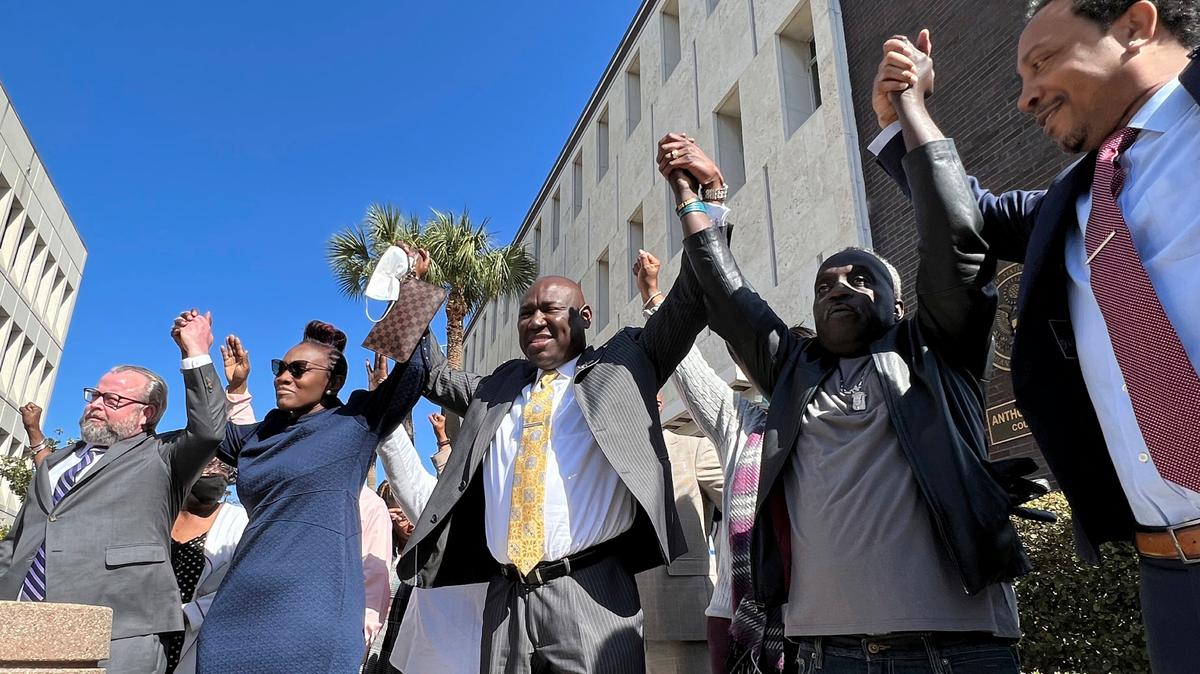
But to the dismay of those who believe we live in a color-blind society after the election — and re-election — of a Black president, Tuesday’s guilty verdict in the federal hate-crime trial of Ahmaud Arbery’s killers reminds us just how untrue that is.
In 2020, in broad daylight, three men chased a Black jogger down the quiet streets of a Georgia suburb and shot him to death. We now know this wasn’t just an unfortunate run-in between neighborhood vigilantes and the 25-year-old. A jury has found the three men felt entitled to deprive Arbery of his right simply to exist because of their views of Black people.
This conviction leaves no room for arguing, as happens far too often after police-involved shootings of unarmed Black people, that the victim’s race was inconsequential. Despite our immense progress over the past decades, race is far from being an invisible feature in American society.
The trial involved testimony from 20 witnesses and dozens of text messages and social-media posts by the defendants with racially-derogatory remarks. It debunked the defense’s claims that the men believed they saw Arbery trespass at a home under construction and wanted to conduct a citizen’s arrest. Prosecutors argued there were many instances of trespassing committed by white suspects that didn’t raise the same alarm. They also presented damning evidence of the ease with which the defendants expressed racist views.
Racism on display
There was Travis McMichael’s comment on a Facebook video of a Black man playing a prank on a white person that read, “I’d kill that f---ing n----r.” The woman who testified that, while she served under him in the Coast Guard a decade ago, he called her “n----r lover,” after learning she’d dated a Black man.
Another witness said she heard Greg McMichael rant angrily in 2015, when she mentioned the death of civil rights activist Julian Bond, that “all those Blacks are nothing but trouble.” Evidence also showed that William “Roddie” Bryan used the N-word but he preferred a derogatory characterization of a Black person’s lips, the Associated Press reported.
A lot of Americans probably believe that these types of remarks or characterizations are part of the past or in movies about Jim Crow, shouted in Southern accents.
That is indeed the narrative offered by elected officials, including in Florida, who want to ban critical race theory from schools and classroom discussions about race because it could make white people feel “guilty.” Their belief is that racism isn’t common anymore, that it belongs in history books, not in today’s headlines — and that it is white people who suffer from reverse racism today. The continuing fight for racial justice is now labeled as “woke” and dismissed as a product of a snowflake culture.
Arbery’s family showed that the fight requires energy and advocacy. It was their determination that helped expose the racism that still festers in this country. But the hate-crime portion of the case might have not gone to trial at all if they hadn’t vehemently opposed a guilty plea deal the prosecution had offered the McMichaels.
No longer overlooked
In rejecting the deal, a federal judge forced the Justice Department to make a compelling case that crimes motivated by racial hatred will not be overlooked. Prosecutors had initially tried to take the safer route of offering the McMichaels the chance to take plea deals that would’ve allowed them — though they were already sentenced to life in prison on state murder charges — to serve the first 30 years of their confinement in federal prison, which offers better living conditions than most state prisons.
But a guilty plea wouldn’t have carried the significance that this conviction does. Nor would it have fully exposed the racial animus that motivated these men to commit murder.
No conviction can alleviate the pain for Arbery’s family. But this conviction shows that we must confront the racism that continues to exist, no matter how many politicians want to tell us it doesn’t.
BEHIND THE STORY
MOREWhat's an editorial?
Editorials are opinion pieces that reflect the views of the Miami Herald Editorial Board, a group of opinion journalists that operates separately from the Miami Herald newsroom. Miami Herald Editorial Board members are: opinion editor Amy Driscoll and editorial writers Isadora Rangel and Mary Anna Mancuso. Read more by clicking the arrow in the upper right.
What's the difference between an op-ed and a column?
How does the Miami Herald Editorial Board decide what to write about?
The Editorial Board, made up of experienced opinion journalists, primarily addresses local and state issues that affect South Florida residents. Each board member has an area of focus, such as education, COVID or local government policy. Board members meet daily and bring up an array of topics for discussion. Once a topic is fully discussed, board members will further report the issue, interviewing stakeholders and others involved and affected, so that the board can present the most informed opinion possible. We strive to provide our community with thought leadership that advocates for policies and priorities that strengthen our communities. Our editorials promote social justice, fairness in economic, educational and social opportunities and an end to systemic racism and inequality. The Editorial Board is separate from the reporters and editors of the Miami Herald newsroom.
How can I contribute to the Miami Herald Opinion section?
The Editorial Board accepts op-ed submissions of 650-700 words from community members who want to argue a specific viewpoint or idea that is relevant to our area. You can email an op-ed submission to oped@miamiherald.com. We also accept 150-word letters to the editor from readers who want to offer their points of view on current issues. For more information on how to submit a letter, go here.
This story was originally published February 22, 2022 at 4:33 PM.