
Miami-Dade police oversight panel needs to get it in gear | Editorial
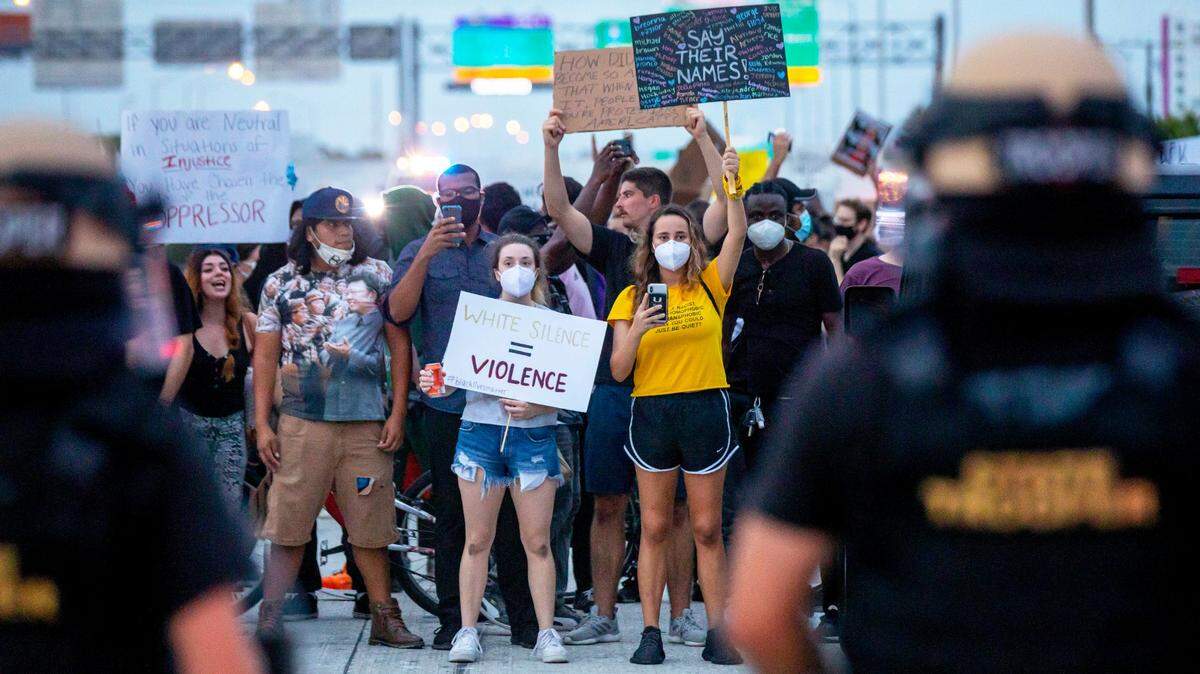
Members of the long-awaited Independent Civilian Panel (ICP), recreated in 2020 to investigate complaints and grievances of abuse filed against Miami-Dade police officers, already are concerned about how long their panel will exist and whether its powers could be watered down.
Come 2024 there will be a new sheriff in Miami-Dade who could restructure, or even disband, the panel. The County Commission has yet to determine the extent of the sheriff’s power, and we don’t think it should extend to the Independent Civilian Panel.
Some commissioners, like Raquel Regalado, recognize how vital the parameters of the sheriff’s authority will be: “This will be the most crucial decision that the board will make” in decades. Regalado is right.
But before then, stakeholders now should begin to bulletproof the panel. For that to happen, the ICP needs to launch itself into its oversight duties, make itself known and prove its worth.
It took 11 years and the murder of George Floyd in Minneapolis for Miami-Dade to reactivate its civilian oversight board, which had been dormant since 2009 because of budgetary issues.
The rebirth of the ICP in 2020 is former Commissioner Barbara Jordan’s final victory before leaving office. She fought hard for it, but had to give up its subpoena powers to see it approved by the commission. Still, she got it done and we commend her.
Missing pieces
At its monthly meeting last week, the civilian panel listened to a report from Vice Chair Pam Perry, who cautioned members of its uncertain future. The statewide, voter-approved constitutional amendment that revived a Miami-Dade sheriff’s office after 54 years “trumps the charter amendment that created this panel,” she said. “Once political pieces fall into place, there will be clarity of the sheriff’s power,” Perry said.
Though the sheriff’s office will not come on board until the 2024 election, anytime “political pieces” have to fall into place in this town, It’s not too early to worry.
An optimistic ICP chair, Loreal Arscott, told the group she had attended a recent stakeholders meeting with Mayor Daniella Levine Cava on the issue of the sheriff and found that everything is “very preliminary.”
Agreed, but guaranteeing the survival of the civilian panel should be on the table now, not at the back end.
Even without subpoena power, the panel is a chance for members of the public who think they have been mistreated by police to air their grievances. At a time when police interactions with community members in general — and Black residents, specifically — its existence is important to help ratchet down hostile encounters.
The panel can help ensure its survival by making itself indispensable to the community. That’s far from true right now. Its existence is more a mystery.
Two years into its formation, the panel is still in the middle of trying to hire an executive director, create bylaws, launch an interactive website and move into new office space, all before it can hear its first case.
But the delays began far earlier, with a dispute among county commissioners over how many attorneys could serve on the panel; each commissioner gets to nominate a member. This unnecessary squabble took months to resolve. On Wednesday, a citizen’s complaint fizzled because the panel had to admit that it had “no infrastructure in place to look into matters” yet.
New director in the wings
The panel’s most significant accomplishment is traveling to an out-of-town training seminar and, more recently, its screening committee identifying a finalist to become its new executive director, a position some had hoped would be filled at the end of last year. But now, the County Commission can’t approve the hiring of Nicolle Barton — the former executive director of the St. Louis Civilian Oversight Board and the current consent-decree coordinator for the city of Ferguson, Missouri — until March.
Barton has an impressive resume. We suspect salary will be an issue for a panel whose county budget is around $740,000 for each of its two years. That’s going to be a squeeze.
Barton told the group via Zoom that they will have to undergo at least 10 weeks of training to be prepared to hear civilian police complaint cases. Another substantial delay, although definitely needed.
Office space is another issue. The panel was told the county had secured the 19th floor of the old county courthouse in downtown Miami, but some members rightly were concerned about asbestos and structural issues plaguing the historic 1928 courthouse at 73 W. Flagler St., which was recently closed, then reopened. Signs indicate that the office space issue will lead to another delay.
Also not a reality yet is an interactive website where residents can easily file their complaints against Miami-Dade police officers.
We know there is a lot of work to be done, and under Arscott’s leadership, the panel is methodically and cautiously plowing ahead. But time is of the essence.
The panel has the support of Florida ACLU attorney Jeanne Baker, who was among the citizens who led the push to revive a police oversight board. Baker attended last week’s meeting and praised the board for its “diligence.”
But the panel must speed up its process. As member Eduardo Dominguez told the panel: “There is a lot of work to be done.”
We agree. So let the work begin.