
‘Don’t Say Gay’ bill is just the beginning of Florida GOP’s cruelty to LGBTQ kids | Editorial
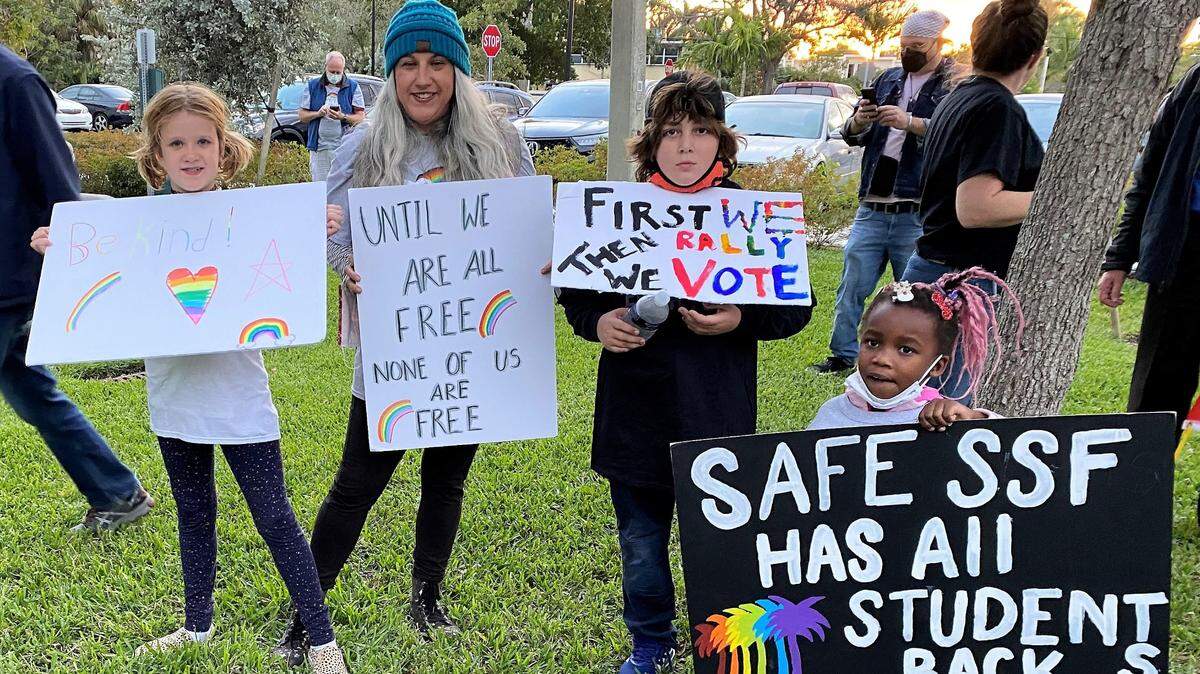
Florida Republican lawmakers have declared war on LGBTQ children — all in the name of freedom and “parental rights.”
Aka, the rights of parents whose views of sex and sexuality are stuck with the GOP in the 1950s.
Lawmakers don’t want to look bigoted and discriminatory, so they will attempt to put lipstick on this pig — because who’s against rights and freedom? — to hide the cruelty behind a slew of anti-LGBTQ legislation introduced this year.
Last year, in the midst of a global pandemic that exposed severe inefficiencies in the state’s unemployment benefits system, lawmakers treated transgender athletes as the real threat to Florida and banned them from women’s sports.
This year’s list begins with the infamous “Don’t Say Gay” bill to ban districts from encouraging conversations about sexuality or gender identity in primary schools. The GOP-led Legislature also is going after sex education and gender-affirming medical care — and, to top it off — lawmakers want elementary schools to post online the book titles available in their libraries. While there’s nothing wrong with transparency, the latter appears intended to fuel the recent push by some parents and conservative groups to ban books related to sexuality and racism, the GOP’s other obsession these days (lawmakers also want to ban classroom discussions about race that make white people feel uncomfortable).
LGBTQ and Black Floridians have become pawns in the Republican strategy to galvanize mostly white voters around divisive social issues. It worked in the Virginia gubernatorial election, where Glenn Youngkin won thanks in part to his “parental choice” appeal to suburban parents. Unfortunately, parental choice in the GOP playbook seems to matter mostly when it applies to white conservative parents.
Paying the price are LGBTQ students who are more vulnerable to mental-health issues and suicide. The “Don’t Say Say” bill also would force schools to out students to their parents if it’s considered to be in relation to a student’s mental, emotional or physical health or well-being.” This seems directly targeted at districts in Broward, Palm Beach and Hillsborough counties, which have policies that prevent staff from divulging a child’s sexual identity to a parent without the child’s consent.
The bill at least makes an exception if “such disclosure would result in abuse, abandonment or neglect of the student.” But what kid will feel comfortable opening up to a school counselor if this becomes law?
Don’t teach the S-word
Then there’s the old conservative boogeyman in schools: sex. Many conservative lawmakers and parents rather believe that teenage hormones don’t exist. So the sponsor of the “Don’t Say Gay” bill, Sen. Dennis Baxley, R-Ocala, also wants to make it harder for schools to teach reproductive health or about sexually transmitted diseases, including HIV/AIDS.
Currently, state law allows parents to make a written request to exempt their children from these classes. SB 1842 would flip that system, prohibiting schools from providing sex ed unless they obtain written consent from the parents. It would be yet another barrier for students to learn about safe sex and would hurt LGBTQ students the most. Despite progress in recent years, HIV continues to disproportionately affect gay and bisexual men who are younger and African American or Latino, according to the Centers for Disease Control and Prevention.
Weaponizing doctors
Baxley also is behind another measure, SB 1820, to allow doctors and insurers to deny providing or paying for medical care because of “religious, moral, or ethical beliefs or principles.” That would include LGBTQ patients. The bill hasn’t moved in the Senate, but its companion HB 747 cleared a House committee last month.
Another bill also would use doctors to further ostracize transgender youth by making it a crime to provide gender-affirming care, such as surgery and puberty blockers, to minors. Luckily, no committee has taken up HB 211, which was filed and failed last year. It doesn’t have a Senate companion.
This is not the first time Republicans use the medical profession to advance their political agenda. A 2011 law restricted what doctors could ask their patients about gun ownership, but parts of it were struck down by a federal appeals court in 2017 for violating the First Amendment.
This is not the first time — or likely the last time, unfortunately — LGBTQ children will be used as scapegoats, either.
BEHIND THE STORY
MOREWhat's an editorial?
Editorials are opinion pieces that reflect the views of the Miami Herald Editorial Board, a group of opinion journalists that operates separately from the Miami Herald newsroom. Miami Herald Editorial Board members are: opinion editor Amy Driscoll and editorial writers Isadora Rangel and Mary Anna Mancuso. Read more by clicking the arrow in the upper right.
What's the difference between an op-ed and a column?
How does the Miami Herald Editorial Board decide what to write about?
The Editorial Board, made up of experienced opinion journalists, primarily addresses local and state issues that affect South Florida residents. Each board member has an area of focus, such as education, COVID or local government policy. Board members meet daily and bring up an array of topics for discussion. Once a topic is fully discussed, board members will further report the issue, interviewing stakeholders and others involved and affected, so that the board can present the most informed opinion possible. We strive to provide our community with thought leadership that advocates for policies and priorities that strengthen our communities. Our editorials promote social justice, fairness in economic, educational and social opportunities and an end to systemic racism and inequality. The Editorial Board is separate from the reporters and editors of the Miami Herald newsroom.
How can I contribute to the Miami Herald Opinion section?
The Editorial Board accepts op-ed submissions of 650-700 words from community members who want to argue a specific viewpoint or idea that is relevant to our area. You can email an op-ed submission to oped@miamiherald.com. We also accept 150-word letters to the editor from readers who want to offer their points of view on current issues. For more information on how to submit a letter, go here.