
Is Brian Flores going to be the new Colin Kaepernick? He shouldn’t be | Editorial
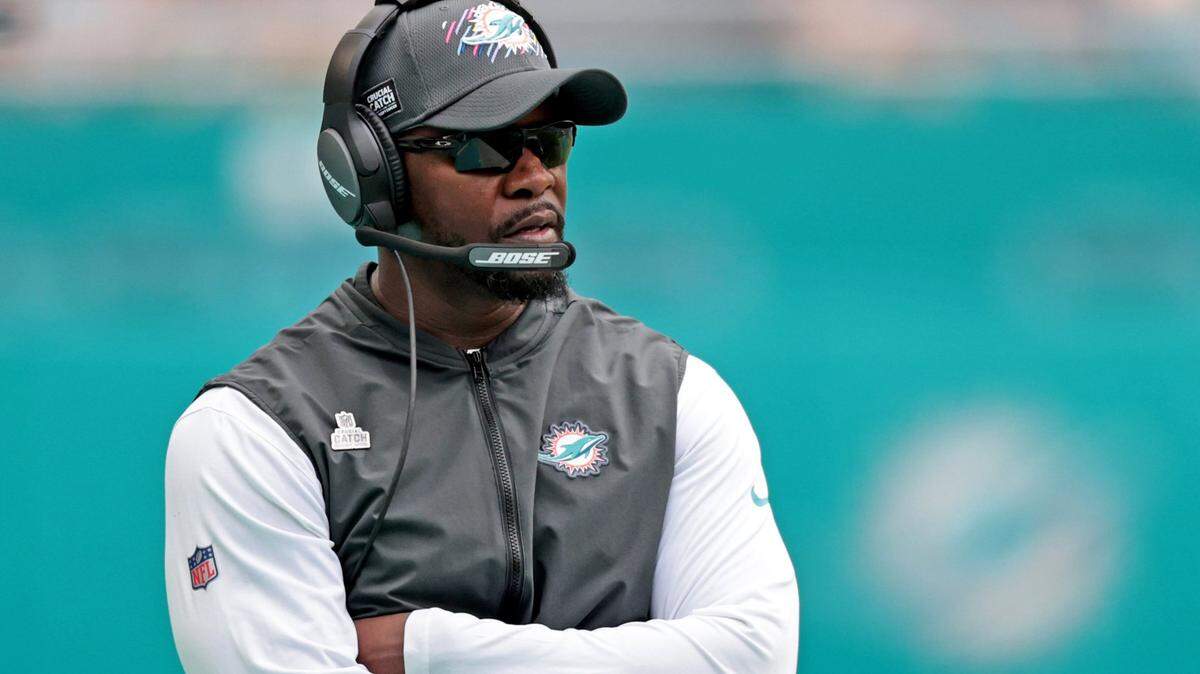
As he paced the sidelines at Miami Dolphins games, it seemed that head Coach Brian Flores’ stern face came from dealing with a losing team and a quarterback controversy.
Turns out Flores might have been struggling with much more, as we learned via a 58-page “take no prisoners’” racial-discrimination lawsuit he filed against the NFL and the Dolphins Tuesday.
Flores, who is Black and whose parents hail from Honduras, alleges racial injustice in the NFL. He also says that Dolphins owner Stephen Ross offered to pay him to lose games to ensure the struggling team got a top draft pick.
He said Ross labeled him as “uncooperative,” a kiss of death in a team atmosphere.
Flores, it appears, was bottling it all in, much like former San Francisco 49ers quarterback Colin Kaepernick has said he did during his years as an NFL player.
After being fired last month and unsuccessful in trying to land another coaching job, Flores responded with his explosive lawsuit against the Dolphins leadership, the NFL and two other teams who interviewed him for jobs he says he was never going to land.
Flores is not the first to allege that the NFL, “is managed like a plantation, with deceitful racism embedded in its hiring practices. We commend him for calling out this League that continues to reap billions on the aching backs of Black athletes.
Every single allegation in Flores’ flame-throwing 58-page lawsuit should be investigated by the FBI, as some sports columnists have already recommended.
If Ross is found to have offered Flores $100,000 for every game he lost in the 2019 season to get a better draft position — compromising the integrity of the NFL with its millions of fans — he could be made to sell the team. It might be time for that anyway. The Dolphins and Ross have denied all of Flores’ allegations.
Is Flores going to become the NFL’s’ new Kaepernick, unofficially banned from the NFL for speaking out?
Wednesday, Flores said he knows his coaching career is on the line during morning show interviews. Yes, he may never coach again. “This is bigger than coaching; this is bigger than me,” Flores said. He’s right to step up.
Flores says that the Dolphins, Broncos and New York Giants “humiliated” him with their insulting minority hiring practices. The interviews were a sham just to cross a team’s requirement to interview a minority off the list. “I filed the lawsuit to create change,” he said.
Flores’ attorney, Douglas Wigdor, who defended six women who accused former Hollywood producer Harvey Weinstein of sexual harassment, said on “CBS Morning Show” that the NFL can either “defend and litigate or correct things.” Wigdor says they can provide proof of Flores’ allegations.
In the NFL world, such insubordination is usually punished by the billionaire owners closing ranks and locking their doors on Flores’ kind, just like they shamelessly did to Kaepernick when, in 2016, to protest against police violence against Blacks, he kneeled during the National Anthem at an NFL preseason game and divided the sport — and the country. Kaepernick was let go by the 49ers and has yet to land another job in the NFL.
It shouldn’t have happened to Kaepernick, and it shouldn’t happen to Flores.
Unfortunately, the NFL is too willing to waste talent, as long as it can maintain its suspect status quo.
BEHIND THE STORY
MOREWhat's an editorial?
Editorials are opinion pieces that reflect the views of the Miami Herald Editorial Board, a group of opinion journalists that operates separately from the Miami Herald newsroom. Miami Herald Editorial Board members are: opinion editor Amy Driscoll and editorial writers Isadora Rangel and Mary Anna Mancuso. Read more by clicking the arrow in the upper right.
What's the difference between an op-ed and a column?
How does the Miami Herald Editorial Board decide what to write about?
The Editorial Board, made up of experienced opinion journalists, primarily addresses local and state issues that affect South Florida residents. Each board member has an area of focus, such as education, COVID or local government policy. Board members meet daily and bring up an array of topics for discussion. Once a topic is fully discussed, board members will further report the issue, interviewing stakeholders and others involved and affected, so that the board can present the most informed opinion possible. We strive to provide our community with thought leadership that advocates for policies and priorities that strengthen our communities. Our editorials promote social justice, fairness in economic, educational and social opportunities and an end to systemic racism and inequality. The Editorial Board is separate from the reporters and editors of the Miami Herald newsroom.
How can I contribute to the Miami Herald Opinion section?
The Editorial Board accepts op-ed submissions of 650-700 words from community members who want to argue a specific viewpoint or idea that is relevant to our area. You can email an op-ed submission to oped@miamiherald.com. We also accept 150-word letters to the editor from readers who want to offer their points of view on current issues. For more information on how to submit a letter, go here.
This story was originally published February 2, 2022 at 3:46 PM.