
How big is Miami Beach’s Spring Break welcome mat this year? We’re about to find out | Editorial
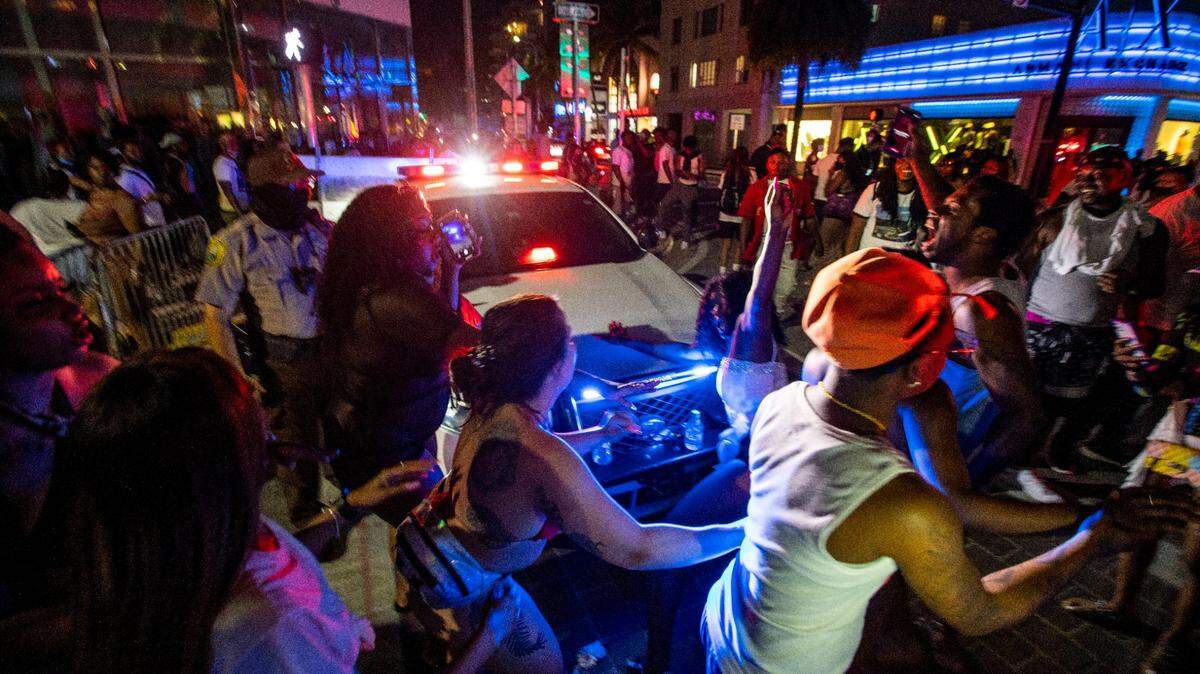
It was an understandable, if poorly thought out, reaction to last year’s wild Spring Break crowds on South Beach: Miami Beach passed an ordinance that was supposed to stop people from interfering with police officers doing their jobs by imposing a 20-foot buffer zone around them.
But the law was almost immediately abused. It was used to arrest people who were filming officers during rough arrests — a serious free-speech problem, for one thing. Also, everyone arrested happened to be young and Black. It took just a month for Miami Beach to do the right thing and stop enforcing the law, ostensibly so officers could receive more training.
Now we learn, from Miami Herald reporter David Ovalle’s story, that the city has quietly dropped the majority of cases brought under the ordinance. Glad to hear it.
There’s still at least one case pending. Still, it’s indefensible to keep prosecuting under a law that produced such bad results, so quickly.
Buffer zone
The ordinance made it illegal to “approach or remain within 20 feet” of a Miami Beach police officer with the “intent to impede, provoke or harass” the officer.
One case in particular drew national attention: Last July, two New York men were arrested at the Royal Palm Hotel as they videotaped police. In the uproar that followed, the charges against both men were dropped by the Miami-Dade state attorney’s office. And five Miami Beach police officers were charged with misdemeanor battery after prosecutors said they used excessive force in making the arrests.
This problematic ordinance remains on the books even now, with the city insisting to the Herald that it “remains confident in the validity of its ordinance and is prepared to defend its constitutionality against any challenge.”
Mayor Dan Gelber told the Editorial Board that the ordinance is designed to create a “modest buffer in scenarios where a crowd is encroaching on police during an arrest, creating problems for both the officers and civilians,” a problem seen particularly during Spring Break. He emphasized that it does not in any way prohibit the filming of officers and that officers are fully trained on its application. But, he added, there has not been a situation recently that required its use.
We know police need to be safe to do their jobs. Imagine trying to handle a crowd of rowdy Spring Breakers or people pouring out of a club late at night. It’s hard work and dangerous. But that law is not the answer.
Tough on crime
There’s a larger picture to take into account, too. Miami Beach is struggling with how to handle the party zone on South Beach, during Spring Break and the rest of the time. A straw-ballot item asking whether drinking hours should be cut back to 2 a.m. received strong support from voters in November. And in December, the City Commission voted to expand its prosecution of misdemeanor crimes, such as criminal mischief and indecent exposure, as part of a tough-on-crime approach to making the city more inviting to families and locals.
Yet the city is also considering hiring social-media influencers to soften the city’s sometimes dictatorial tone when handling visitors. Two slogans under consideration for the month-long Spring Break campaign in March are “Welcome to Miami Beach” and “Take care of our city and it will take care of you.”
That’s certainly a change from the buzzkill warning from a few years back: “Come on vacation, leave on probation.”
Dropping the cases prosecuted under the 20-foot ordinance was the right thing to do. Going after more so-called nuisance crimes to keep partying in check may be necessary, although we can see how it might be open to its own form of abuse. We’ll be watching that one.
But until the city deals with its police buffer-zone law, it still has a problem, if not legally speaking then perception-wise. How big is the welcome mat this year? Spring Break is just a few weeks away, so that question needs a clear answer before the party gets started.