
There still are too many reasons we observe International Holocaust Remembrance Day | Editorial
And why are we observing International Holocaust Remembrance Day today? Because, as we have seen all too clearly, hateful people are intent on erasing history — or repeating it.
The Holocaust was a crime against, most particularly, Jews; millions of non-Jews perished, too. But it was, more broadly, a crime against all of humanity. Of that, there should be no argument. So it’s amazing, eight decades after the horrors of Adolf Hitler’s concentration camps, that there are those who argue — still — that Jews are the source of society’s ills.
That accusation was made this month when Miami Beach residents awoke to find fliers on their lawns spewing virulent anti-Semitic rants, accusing Jews of being the ones behind COVID. Though so many haters no longer cower under white hoods, many still do their dirty work under the cloak of darkness.
The claim was just made again, obliquely, in McMinn County, Tennessee, which on Wednesday banned “Maus” from its public middle schools. It’s Art Spiegelman’s 1986 graphic novel about the Holocaust. School Board members decided, 10-0, that students should be shielded from its profanity and nudity. Of course, the lives of those in concentration camps were not their own, and they were forced to strip at their captors’ whim. Are eighth-graders really unable to handle that truth? Are the curse words worse than the reality of the Holocaust? Or even as bad as what kids hear regularly as “entertainment”?
The hostage-taking at a Texas synagogue this month simply was the latest place of worship to attract anti-Semitic aggression. The massacre in which 11 people were killed during services at the Tree of Life synagogue in Pittsburgh in 2018 remains an open wound today. This week, the accused shooter, Robert Bowers, asked for a change of venue for his trial.
The tragedy may have been the most dramatic manifestation of anti-Semitism in recent years, but it is by no means the only one.
FBI data show that, in 2020, there were 8,263 hate crimes in the United States, an almost 9% increase over the 7,287 reported in 2019. (Remember, police departments voluntarily report such incidents. These numbers could be higher.)
According to the American Jewish Committee’s website, of all reported hate crimes in 2020, 1,174 targeted victims because of their religion and 676 of them — 54.9% of religious bias crimes — targeted Jews. In addition, 53% of hate incidents targeting Jews involved the destruction, damage, or vandalism of property; 33% were instances of intimidation; 6% were simple assaults; 4% were aggravated assaults; 1% were instances of burglary or breaking and entering; and 1% were instances of larceny or theft.
But as anti-Semitism endures on this International Holocaust Remembrance Day, so do the stories and images from that time that emphasize just what’s being remembered.
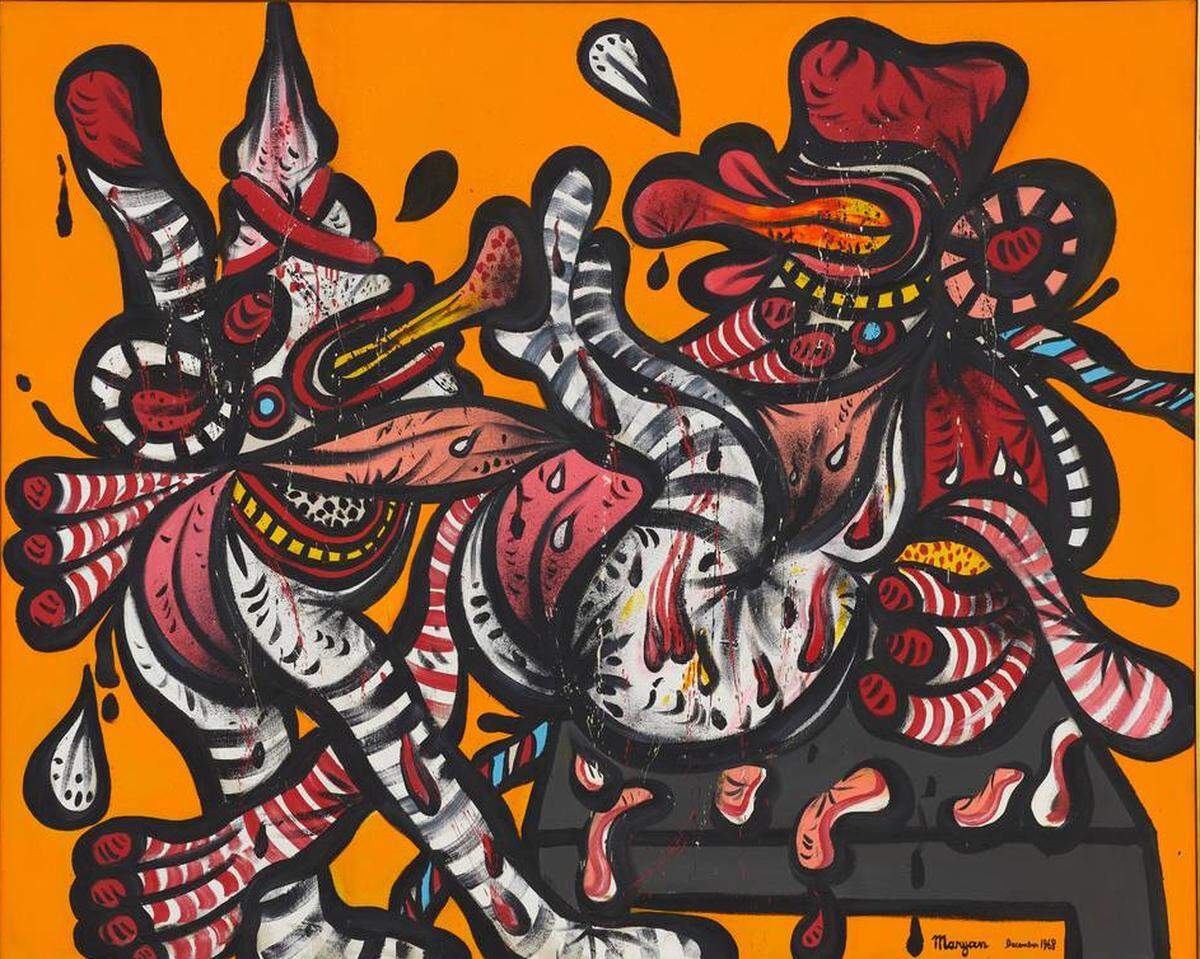
An exhibit at the Museum of Contemporary Art in North Miami, “My Name is Maryan,” features paintings and graphic works by the late artist, Maryan, born Pinkas Bursztyn in 1927 in Poland, the son of Abraham Schindel and Gitla Bursztyn. They were a working-class Jewish family, rounded up by Nazis and imprisoned at various forced-labor camps. Pinkas wound up at the Auschwitz and Birkenau concentration camps. By the time Jews were liberated, he was his family’s only survivor.
The physical toll was obvious — one leg had to be amputated because of the injuries he suffered.
He eventually adopted the name Maryan and, with his art — described by MOCA as a “deeply moving monument to the perseverance of the human spirit and power of art to work through traumatic loss” — worked to exorcise the mental toll of his experiences.
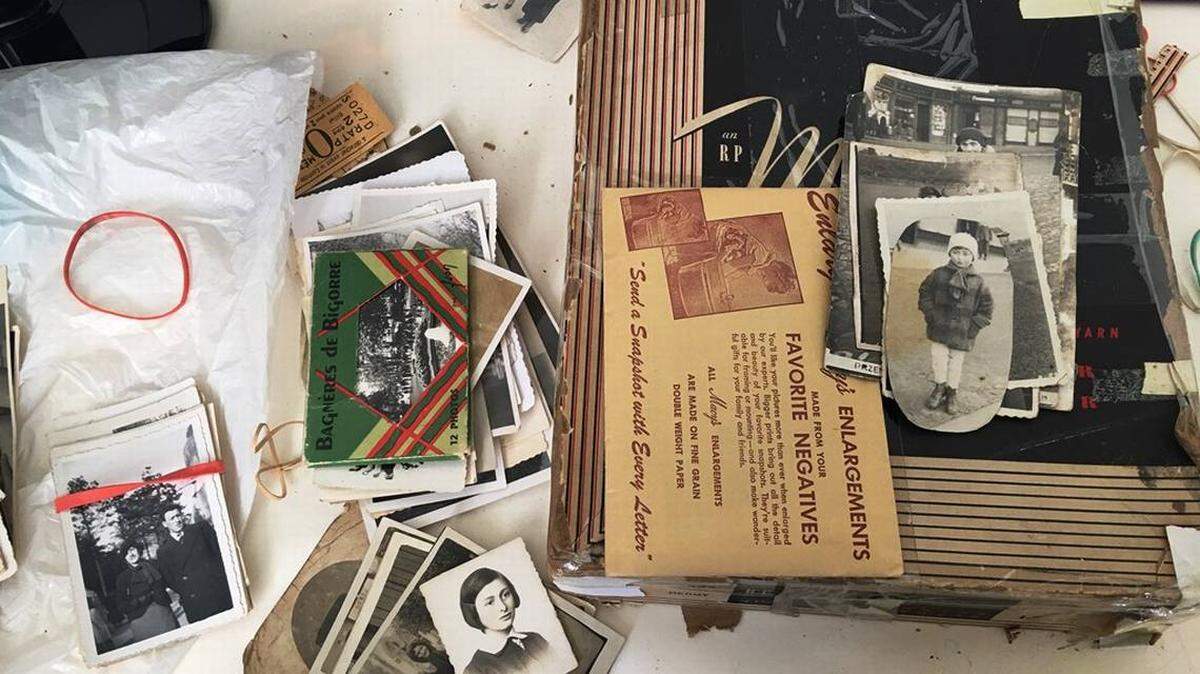
Similarly, a Miami Herald story tells reveals the existence of a long-forgotten box of photographs, unearthed in Silvia Espinosa Schrock’s childhood home in Kendall and discovered to include images of family members and rare photos of Beaune-la-Rolande, an internment camp in France, 55 miles south of Paris. A Google search made the connection. Schrock found a descendant of that family, whose names were written on the back of the photographs.
International Holocaust Remembrance Day observes the 77th anniversary of the liberation of Auschwitz-Birkenau. That was long ago and far away. However, as we see, with anti-Semitism thriving, “long ago” might never be far enough away.
BEHIND THE STORY
MOREWhat's an editorial?
Editorials are opinion pieces that reflect the views of the Miami Herald Editorial Board, a group of opinion journalists that operates separately from the Miami Herald newsroom. Miami Herald Editorial Board members are: opinion editor Amy Driscoll and editorial writers Isadora Rangel and Mary Anna Mancuso. Read more by clicking the arrow in the upper right.
What's the difference between an op-ed and a column?
How does the Miami Herald Editorial Board decide what to write about?
The Editorial Board, made up of experienced opinion journalists, primarily addresses local and state issues that affect South Florida residents. Each board member has an area of focus, such as education, COVID or local government policy. Board members meet daily and bring up an array of topics for discussion. Once a topic is fully discussed, board members will further report the issue, interviewing stakeholders and others involved and affected, so that the board can present the most informed opinion possible. We strive to provide our community with thought leadership that advocates for policies and priorities that strengthen our communities. Our editorials promote social justice, fairness in economic, educational and social opportunities and an end to systemic racism and inequality. The Editorial Board is separate from the reporters and editors of the Miami Herald newsroom.
How can I contribute to the Miami Herald Opinion section?
The Editorial Board accepts op-ed submissions of 650-700 words from community members who want to argue a specific viewpoint or idea that is relevant to our area. You can email an op-ed submission to oped@miamiherald.com. We also accept 150-word letters to the editor from readers who want to offer their points of view on current issues. For more information on how to submit a letter, go here.
This story was originally published January 27, 2022 at 4:30 PM.