
No disrespect to Weston, but new school superintendent should live in Miami-Dade | Editorial
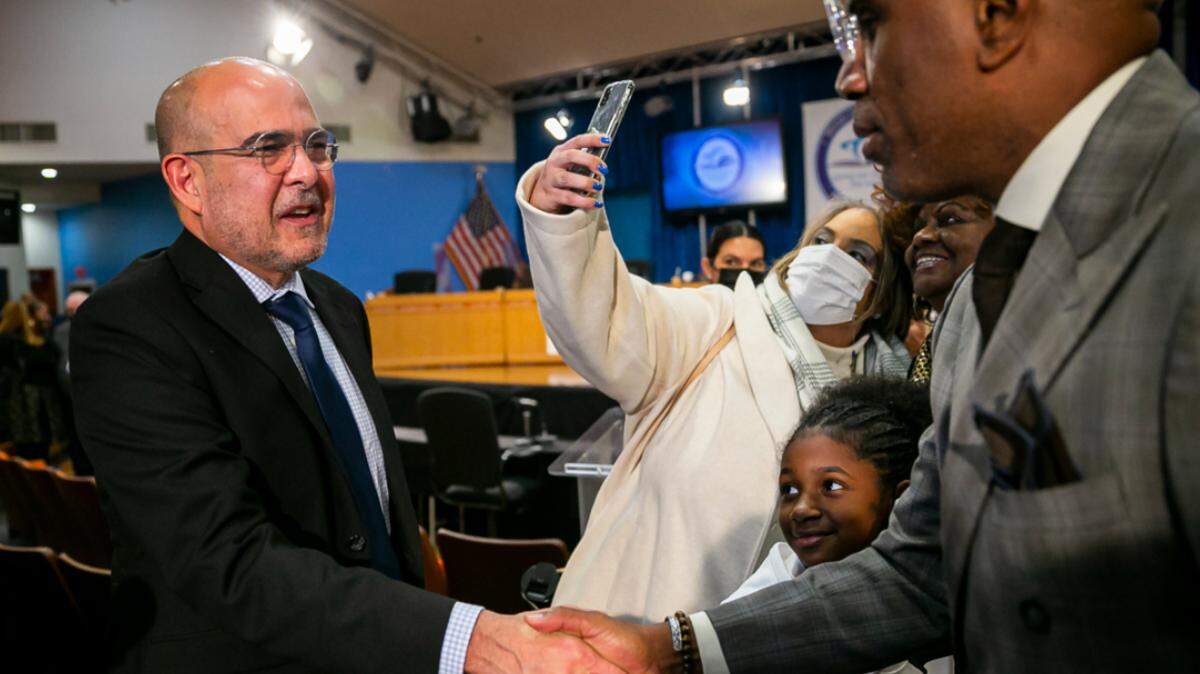
Now that we are past the seriously flawed process of selecting a new Miami-Dade schools superintendent — former deputy superintendent José Dotres won the honor Monday night in a late-night 6-3 vote — the focus moves to crafting his annual contract.
In the final minutes of Monday’s marathon special meeting School Board member Lubby Navarro, who had voted against Dotres, said she wanted to add a requirement to the superintendent’s job description.
“I would want to have the superintendent live in Miami-Dade,” Navarro told the School Board members.
Navarro and a second member, Marta Perez, are in agreement. “Absolutely! The superintendent should live in Miami-Dade,” Perez said.
So do we.
Dotres, currently a deputy superintendent in Collier County, has said he will live in Weston, where he resided when he worked for the Miami-Dade school district until early last year.
He said has no plans to move to Miami, for now.
Keep in mind that Navarro had supported Jacob Oliva for the job. He is a Florida Department of Education Senior Chancellor and a former Flagler County superintendent.
But that doesn’t make her residency concern a dubious one. Navarro wants clause in the new superintendent’s contract mandating that he live in Miami-Dade. Given his seeming reluctance to relocate, Navarro’s proposal is well worth considering.
Dotres, who spent years working in Miami-Dade’s school system, is returning to lead it. He should already know well the demands of this community, its students, families, business leaders and elected officials, including, of course, those on School Board.
And to be truly effective and engaged. he should be immersed in all of it, as a part of this community 24/7. His predecessor, Alberto Carvalho, admittedly, set a high bar of engagement, refusing to let even the era of COVID-19 cow him into virtual leadership.
Dotres should be visible, present and off-camera. We consider him the “mayor” of the school district, and he should exhibit his commitment to people whose lives he will touch by living among them. One Board member is willing to let Dotres live where he wants. Christine Fraga, who also voted for Dotres’ opponent, told the Board: “I do not intend to force anyone to live where they do not want to live.”
Monday, Dotres seemed surprised by Navarro’s request In a deflecting move, Dotres told the board his superintendency isn’t about where he lives, but “about what I’m doing for kids.”
On this one, he’s only half right.
BEHIND THE STORY
MOREWhat's an editorial?
Editorials are opinion pieces that reflect the views of the Miami Herald Editorial Board, a group of opinion journalists that operates separately from the Miami Herald newsroom. Miami Herald Editorial Board members are: opinion editor Amy Driscoll and editorial writers Isadora Rangel and Mary Anna Mancuso. Read more by clicking the arrow in the upper right.
What's the difference between an op-ed and a column?
How does the Miami Herald Editorial Board decide what to write about?
The Editorial Board, made up of experienced opinion journalists, primarily addresses local and state issues that affect South Florida residents. Each board member has an area of focus, such as education, COVID or local government policy. Board members meet daily and bring up an array of topics for discussion. Once a topic is fully discussed, board members will further report the issue, interviewing stakeholders and others involved and affected, so that the board can present the most informed opinion possible. We strive to provide our community with thought leadership that advocates for policies and priorities that strengthen our communities. Our editorials promote social justice, fairness in economic, educational and social opportunities and an end to systemic racism and inequality. The Editorial Board is separate from the reporters and editors of the Miami Herald newsroom.
How can I contribute to the Miami Herald Opinion section?
The Editorial Board accepts op-ed submissions of 650-700 words from community members who want to argue a specific viewpoint or idea that is relevant to our area. You can email an op-ed submission to oped@miamiherald.com. We also accept 150-word letters to the editor from readers who want to offer their points of view on current issues. For more information on how to submit a letter, go here.
This story was originally published January 27, 2022 at 9:32 AM.