
Omicron is straining Miami-Dade’s police, fire-rescue and transit workers. And the rest of us | Editorial
We’re tired.
For almost two years, we’ve stayed home, limited gatherings, worn masks and gotten vaccinated when that became available. Then many of us got boosted and began cautiously — or not so cautiously — returning to the world.
But now the latest round of omicron-fueled COVID is ripping through our ranks, and institutions are struggling to stay afloat. The virus is sidelining our teachers, county workers and some 10% of Miami-Dade County’s police force. Some county corrections officers are on 12-hour shifts, as they struggle to handle 1,400 inmates who are isolated and awaiting test results.
So many bus drivers have to stay home that the county is thinking about transit cuts. Parents are back in that gray zone of trying to decide if it’s safe for their children to go to school, and assisted-living facilities are discouraging visits. Cruises lines once again are dealing with outbreaks on ships. About 7% of the county’s fire and rescue workers are out, even as there is a surge in COVID-related ambulance calls.
It feels as though the basic services that keep society functioning are straining more than ever.
Omicron seems to be less deadly than Delta, whether from vaccines and previous infections or because it is a less-lethal variant. No matter the reason, that is an enormous blessing — if it holds true. It is spreading with such rapidity, no one knows for sure.
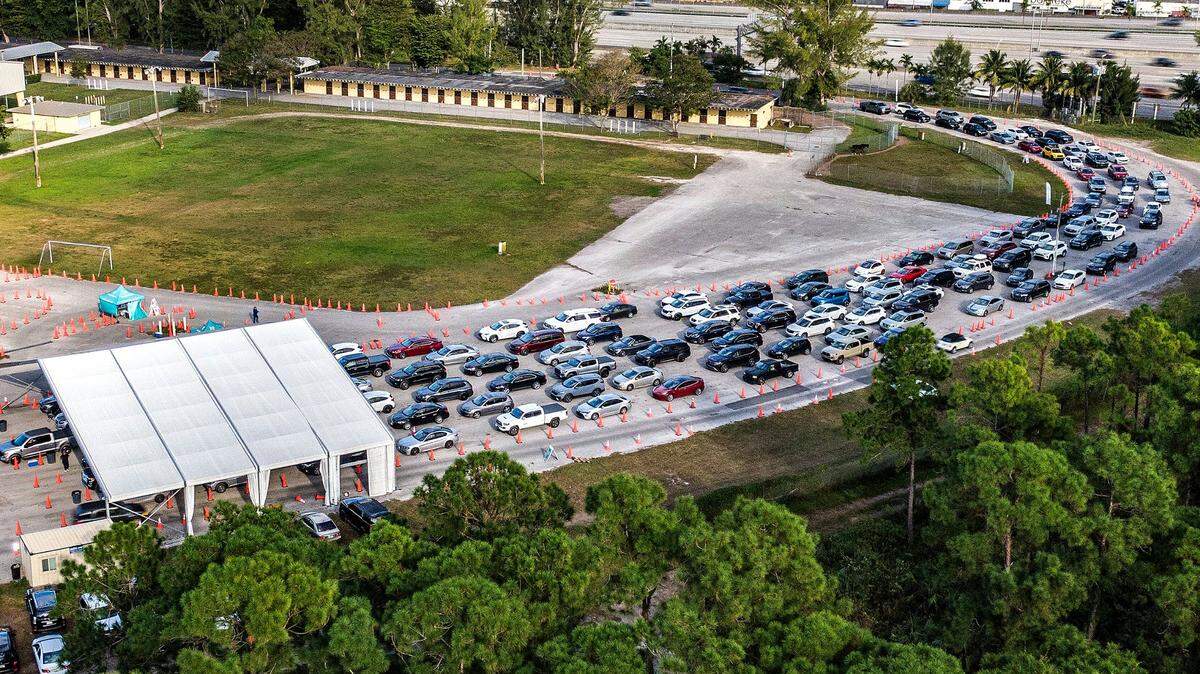
Miami-Dade is breaking its previous records in the numbers of tests administered. That’s also a good sign that we are trying to protect ourselves and others in the community. And we need to. We’re hovering around 35% on transmission rates. Hospitalizations are approaching the numbers from summer’s Delta surge.
What do we do now? More masks, more at-home tests. And more calculations.
Should my child go to school if the teachers are masked? What about going to a restaurant? Or Florida Panthers hockey game? That means a big arena, with lots of air flow, but most of the fans aren’t masking up even as they’re shouting at the refs — and upping the potential for spreading the virus.
Figuring out our risk, and the risks for our loved ones, has become tougher than ever. For now, thanks to the workers in this town, the institutions that keep us going are still functioning.
Let’s hope that the speed of the variant’s rise will mean an equally quick drop. We just need that to happen, and soon.