
Florida can try to whitewash it, but the racism that killed Harry T. Moore isn’t mere history | Editorial
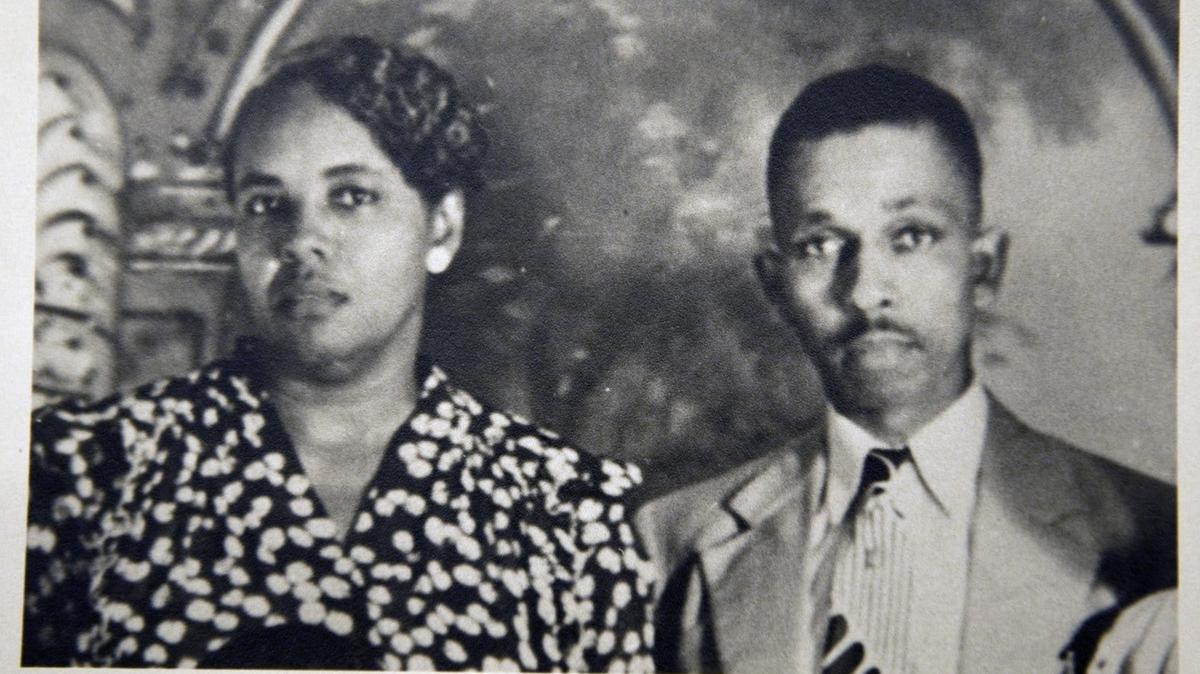
The Christmas-night killing of civil-rights activist Harry T. Moore and his wife, Harriette, 70 years ago was dubbed the “the bomb heard around the world.” The blast of explosives placed under their home in Mims, a quiet community just north of what’s today the Kennedy Space Center, was so loud there are stories of it being heard five miles away.
Their murder, which to this day hasn’t been solved, marked the first assassination of a U.S. civil-rights leader. But the Moores have not become household names usually associated with the movement; their restored home, now a cultural center, isn’t treated as a must-see Florida attraction.
A fight to shed light on their legacy is under way, as the Herald reported Sunday. Meanwhile, there’s another movement to whitewash the violence against Black Americans that took the Moores’ lives — and that to this day is present in more subtle ways but also in obvious ones, like in the killing of Ahmaud Arbery.
These two forces — once calling on the country to reckon with its racist past and present, another that preaches racism is a thing of the past — are on a collision course in Florida.
Thankfully, Brevard County, where the Moores resided, has taken steps to bring their lives — and their deaths — to light. The local school board admitted this year the Moores were unjustly fired from their teaching positions in 1946 because of their activism and has implemented a curriculum to teach local students about them.
However, deeper discussions about the systemic racism the Moores fought against more than 70 years ago — and how it still reverberates in 2021 — is not welcome in Florida classrooms.
Gov. Ron DeSantis this year banned the teaching of “critical race theory” from K-12 schools and wants lawmakers to pass a law allowing parents to sue schools presumably teaching it. Known as CRT, the theory is usually taught at the college level and in law schools. It argues that racism isn’t just manifested in individual interactions and is embedded of American institutions. Terms like “systemic racism” and “equity” training are big no-nos to DeSantis and conservatives who believe talking about how racism has permeated our history makes kids “hate America.”
The intent is to act as if the end of Jim Crow, the passage of the Voting Rights Act and school integration ended the nation’s complicated relationship with race. It’s meant to deny that slavery and white supremacy are inextricable from our founding and culture.
That is why Republicans have also targeted the “The 1619 Project” by the New York Times, which “aims to reframe the country’s history by placing the consequences of slavery and the contributions of Black Americans at the very center of our national narrative.” The objection to the project has got nothing to do with what some critics call a misinterpretation of historical facts but about who gets to shape the narrative of this country.
That’s also behind the push to ban from school libraries books that purportedly promote critical race theory. Among the titles targeted by groups such as Moms for Liberty are “How to be an Antiracist” and a children’s book by Ruby Bridges, a 6-year-old who integrated an elementary school in New Orleans in 1960.
The assassination of the Moores was brutal and fueled by hatred. Perhaps even more brutal was the system of oppression they fought against. Immense progress has happened, and we can say with confidence that a killing like that would have been more fully investigated today. But we cannot pretend that what happened on Christmas night 1951 is mere history, that it has no impact on what happened to George Floyd, Arbery and too many other Americans whose names we will never learn.
BEHIND THE STORY
MOREWhat's an editorial?
Editorials are opinion pieces that reflect the views of the Miami Herald Editorial Board, a group of opinion journalists that operates separately from the Miami Herald newsroom. Miami Herald Editorial Board members are: opinion editor Amy Driscoll and editorial writers Isadora Rangel and Mary Anna Mancuso. Read more by clicking the arrow in the upper right.
What's the difference between an op-ed and a column?
How does the Miami Herald Editorial Board decide what to write about?
The Editorial Board, made up of experienced opinion journalists, primarily addresses local and state issues that affect South Florida residents. Each board member has an area of focus, such as education, COVID or local government policy. Board members meet daily and bring up an array of topics for discussion. Once a topic is fully discussed, board members will further report the issue, interviewing stakeholders and others involved and affected, so that the board can present the most informed opinion possible. We strive to provide our community with thought leadership that advocates for policies and priorities that strengthen our communities. Our editorials promote social justice, fairness in economic, educational and social opportunities and an end to systemic racism and inequality. The Editorial Board is separate from the reporters and editors of the Miami Herald newsroom.
How can I contribute to the Miami Herald Opinion section?
The Editorial Board accepts op-ed submissions of 650-700 words from community members who want to argue a specific viewpoint or idea that is relevant to our area. You can email an op-ed submission to oped@miamiherald.com. We also accept 150-word letters to the editor from readers who want to offer their points of view on current issues. For more information on how to submit a letter, go here.
This story was originally published December 20, 2021 at 1:39 PM.