
On DeSantis’ march to the White House, whites are victims of racism. Okay . . . | Editorial
They are judged by the color of their skin. Harassed and subject to “corporate racism” at work. Taught to feel bad about themselves and to hate their country. Subject to “dark emotions of pessimism and despair.”
Forget the water hoses, the back of the bus and the disparities that, to this day, affect a segment of the U.S. population. The new frontier in the civil-rights movement is the threat white people and children are facing from “Black communism,” “cultural Marxism” and, the biggest monster: “Woke ideology.”
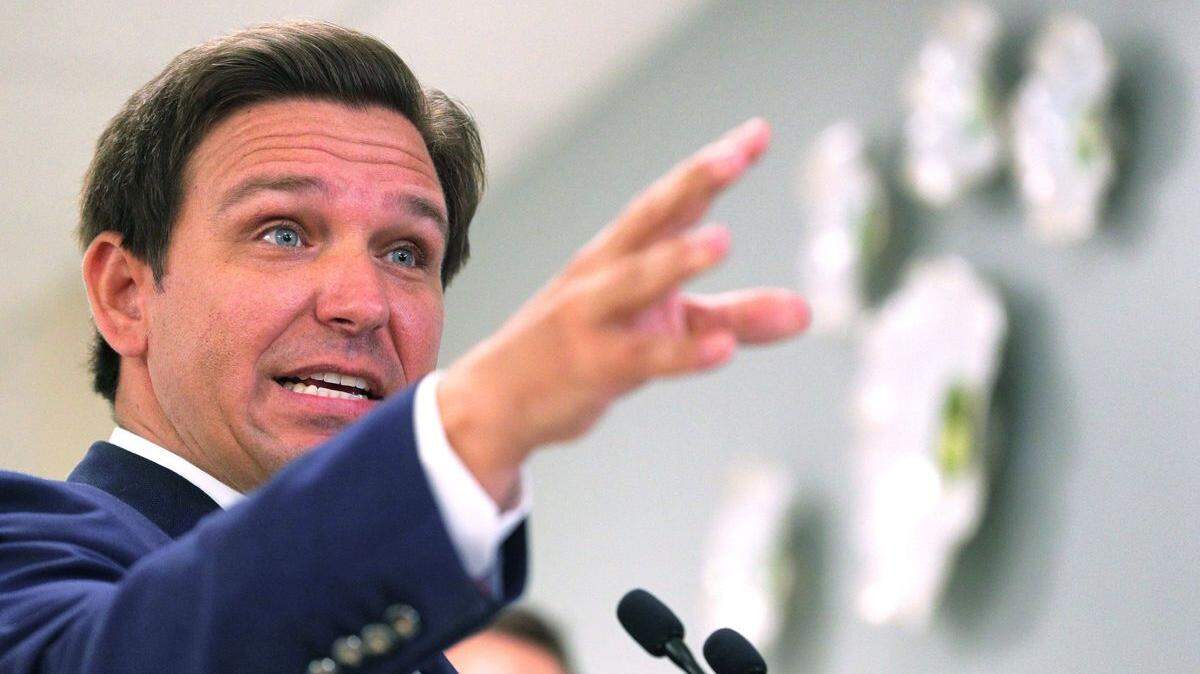
There’s no need for a Selma to Montgomery march or a lunch counter sit-in. White folks have found a new civil-rights leader in Gov. Ron DeSantis, who in a buzzword-filled news conference on Wednesday rolled out his proposed “Stop W.O.K.E. Act.” The phrase stands for “Stop Wrongs Against Our Kids and Employees Act.”
Unlike Martin Luther King or John Lewis, DeSantis doesn’t seek to unify the country behind the call for equal rights. He seeks to divide it by stoking resentment of racial-equity efforts at schools and workplaces, which he equates to critical race theory, the new enemy in the GOP’s culture wars. The theory, taught mostly at law schools, says that racism goes beyond individual actions and is embedded in laws and institutions. It’s been subverted by politicians like DeSantis who describe it as an attempt to admonish white people and make them feel guilty about the country’s not-so-rosy history.
Forget equity training
The W.O.K.E. Act, if approved by the Legislature, will enshrine in Florida law a ban on teaching critical race theory at schools (DeSantis previously banned it with an executive order); defund and prohibit schools that hire critical race theory “consultants” to give racial-equity training to employees; and “protect” employees against “woke” corporations that implement equity training in the workplace. Explaining to that white co-worker why it’s not OK to touch a Black woman’s hair would be considered “hostile.”
It also would allow parents to sue schools that implement so-called critical race theory policies and allow them to recover attorney fees if they prevail. The intent appears to be to scare districts into eliminating any mention of “equity” in their polices and curriculum. Self-censorship, after all, is more effective than government monitoring.
“Equity” is front and center in Miami-Dade County Public Schools’ Strategic Framework and Vision 20/20, the district’s strategic blueprint for the next five years. It is listed among the district’s six core values, along with “excellence” and “joy.”
In a district where the majority of students are minorities, it seems obvious that equity should be a priority. But, according to DeSantis, the use of the word in the training of employees “is just an ability for people to smuggle in their ideology.” So he wants to impose his own ideology to fix this made-up crisis.
His news conference was filled with your typical ideological calls to arms — i.e. “woke ideology” tears “at the fabric of our society and culture,” and it “de-legitimizes” the founding of our country. An unsuspecting spectator would have walked away ready to fight the next Cold War — except this one isn’t against a foreign threat but against fellow citizens.
It’s not patriotism
It’s a cynical, and effective, calculation by a politician with presidential aspirations. It works because it strikes a chord with conservatives who fear their children are being taught the country’s history is evil, who want to believe we live in society in which, according to DeSantis, “you’re treated equally” regardless of race — even though that denies the experience of Black and brown Americans; who want “All men are created equal” to be the highlight in lessons about the U.S. Declaration of Independence, not the fact that women and slaves were less than equal at the time, or that slaves were considered three-fifths of a person in the U.S. Constitution. It’s dangerous rhetoric that conflates patriotism with dismissing the racial ills that continue to plague this nation, guaranteeing those ills will continue — to the advantage of people like DeSantis..
We can dismiss that sentiment as blind patriotism or an attempt to whitewash the darkest periods of our history, but, like everything that demagogues say, there’s a grain of truth in DeSantis’ rhetoric. That’s in our cancel culture, the political correctness that drives people to fear walking on egg shells, the assumption that every white person is an oppressor. It’s in the push to remove not only Confederate monuments — which belong in museums and not in public places where they are celebrated — but also of our Founding Fathers, who owned slaves.
From that grain of truth, no matter how tiny, is born a new movement: Protecting the civil rights — er, fragile sensibilities — of white people. It’s absurd and, unfortunately, effective — as outrage has always been.
BEHIND THE STORY
MOREWhat's an editorial?
Editorials are opinion pieces that reflect the views of the Miami Herald Editorial Board, a group of opinion journalists that operates separately from the Miami Herald newsroom. Miami Herald Editorial Board members are: opinion editor Amy Driscoll and editorial writers Isadora Rangel and Mary Anna Mancuso. Read more by clicking the arrow in the upper right.
What's the difference between an op-ed and a column?
How does the Miami Herald Editorial Board decide what to write about?
The Editorial Board, made up of experienced opinion journalists, primarily addresses local and state issues that affect South Florida residents. Each board member has an area of focus, such as education, COVID or local government policy. Board members meet daily and bring up an array of topics for discussion. Once a topic is fully discussed, board members will further report the issue, interviewing stakeholders and others involved and affected, so that the board can present the most informed opinion possible. We strive to provide our community with thought leadership that advocates for policies and priorities that strengthen our communities. Our editorials promote social justice, fairness in economic, educational and social opportunities and an end to systemic racism and inequality. The Editorial Board is separate from the reporters and editors of the Miami Herald newsroom.
How can I contribute to the Miami Herald Opinion section?
The Editorial Board accepts op-ed submissions of 650-700 words from community members who want to argue a specific viewpoint or idea that is relevant to our area. You can email an op-ed submission to oped@miamiherald.com. We also accept 150-word letters to the editor from readers who want to offer their points of view on current issues. For more information on how to submit a letter, go here.
This story was originally published December 15, 2021 at 4:32 PM.