
Booster who pitched UM stadium in Coral Gables considers other options. Prove this isn’t a pipe dream | Editorial
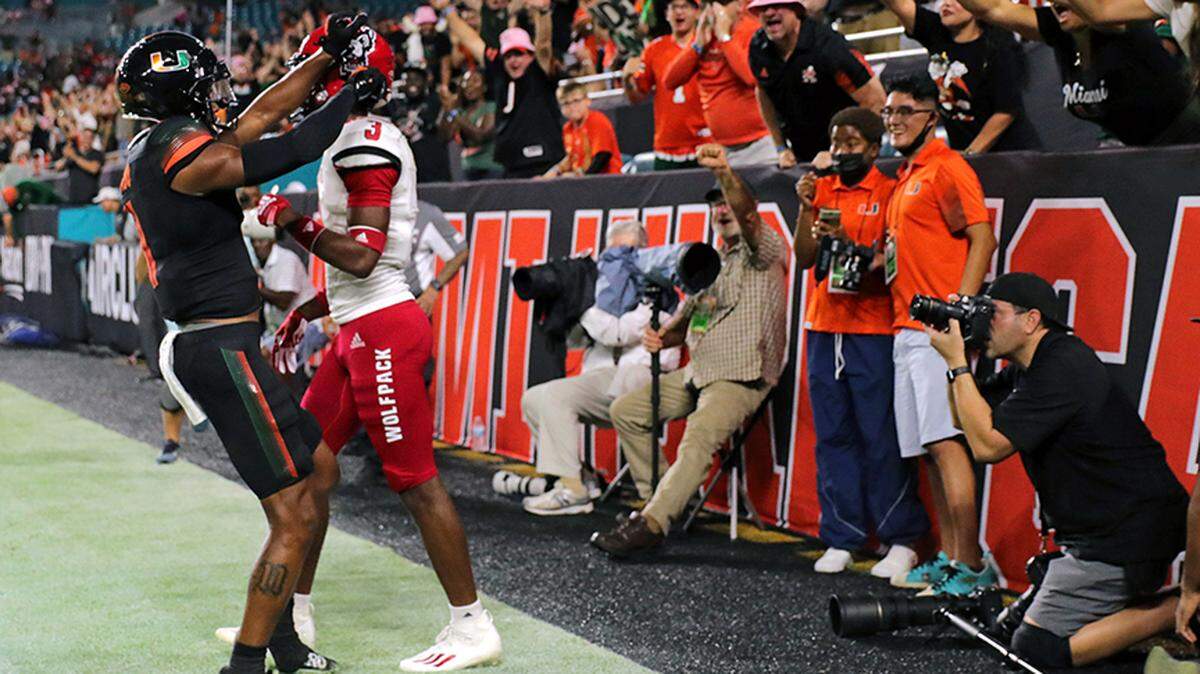
Perhaps the cat was out of the bag too soon, but news that a wealthy booster wants to build a football stadium for the University of Miami in Coral Gables was met with a resounding “Hell no!” from local officials caught off guard.
Proponents are now trying to clear the record after the Herald reported that Coral Gables High School, which has just undergone a $47 million renovation, is a potential site. Panicking parents contacted the school district, prompting Superintendent Alberto Carvalho to draw a strong rebuke and clarify he had not been approached about it. The city of Coral Gables said it is “NOT in favor of a stadium project” and that the “speculative” proposal would not be compatible with surrounding neighborhoods, a spokesman told the Herald.
It’s not shocking that a community in a county burned by empty promises and the Marlins ballpark taxpayer-funded boondoggle would not not jump on the bandwagon immediately after the proposal’s haphazard announcement Sunday night. A tweet by John H. Ruiz, founder of Medicare litigation firm MSP Recovery, officially broke the news after rumors started swirling on college sport blogs.
New UM Athletic Director Dan Radakovich told reporters Thursday he would like to explore the idea of a stadium closer to campus. But it’s odd that, as of Thursday, no university officials had been contacted about Ruiz’s plan, according to Jacqueline Menendez, vice president for communications.
It’s on Ruiz to prove this is more than a pipe dream and disprove skeptics who call it a gimmick.
Ruiz said he means business. He spoke with the Herald Editorial Board Wednesday and was joined by other members of the Miami Orange Bowl Stadium Committee, including his sons Johnny and Alex, who are UM alumni.
They said Coral Gables High is not the only location under consideration and that its 26-acre size might be too small for the proposed stadium’s growing footprint. The committee is also looking at the 268.5-acre Tropical Park and locations in Downtown Miami, but cautioned people not to jump to conclusions.
“I don’t want anybody to think we are focused on a location,” Ruiz said.
If Ruiz can pull this off, it will be a big boost to the Hurricanes, who haven’t had a home stadium since 2008 and currently host home games at the Hard Rock Stadium in Miami Gardens. That’s why many ‘Canes fans are cheering him on. It will be the cherry on top if coach Mario Cristobal and Radakovich can bring back the program’s glory days.
We hope taxpayers don’t end up footing the bill, as they did for the Marlins stadium. Ruiz told the Editorial Board that his committee will “fund this project ourselves” and that large corporations are interested in financing it. He added he might look into entering into a partnership with a local government for land because the county and cities own most large lots available in Miami-Dade.
Ruiz expects “a lot of movement” to happen by Christmas, including the hiring of an architecture firm and the addition of new members to the eight-person committee, which also includes former WSVN-7 News anchor Diana Diaz, a graduate of Coral Gables High and whose daughter also recently graduated from the school. They will launch a website where people can get more information about the project and a podcast, Diaz said.
Seeing that they have been unwillingly pitted against Coral Gables High parents and students, Ruiz’s team is trying to show they also care about the school, saying it would benefit from better facilities and a stronger connection with UM.
Ruiz and his team are working against what they described as the rumor mill on social media. A sports blog reported, based on “a source with knowledge,” that he was looking at other locations to build a new Coral Gables High, sparking parents’ outrage. However, the Herald reported Sunday that the school would stay on the property and be rebuilt into a “state-of-the-art high school.”
Ruiz said those online rumors aren’t true. What his committee is looking at are other locations to build parking nearby. One of the options would be 26 acres underneath the Metrorail.
“I think that the notion that we are tearing down a high school, or whatever, right away is not necessarily a fair one,” he said. “It was just a location we thought of because of the proximity to the university.”
This is Miami, the land of empty promises and where the public is right to be skeptical of grandiose plans. Our advice to Ruiz’s team: Keep the public — and elected and university officials you need on your side — informed.
BEHIND THE STORY
MOREWhat's an editorial?
Editorials are opinion pieces that reflect the views of the Miami Herald Editorial Board, a group of opinion journalists that operates separately from the Miami Herald newsroom. Miami Herald Editorial Board members are: opinion editor Amy Driscoll and editorial writers Isadora Rangel and Mary Anna Mancuso. Read more by clicking the arrow in the upper right.
What's the difference between an op-ed and a column?
How does the Miami Herald Editorial Board decide what to write about?
The Editorial Board, made up of experienced opinion journalists, primarily addresses local and state issues that affect South Florida residents. Each board member has an area of focus, such as education, COVID or local government policy. Board members meet daily and bring up an array of topics for discussion. Once a topic is fully discussed, board members will further report the issue, interviewing stakeholders and others involved and affected, so that the board can present the most informed opinion possible. We strive to provide our community with thought leadership that advocates for policies and priorities that strengthen our communities. Our editorials promote social justice, fairness in economic, educational and social opportunities and an end to systemic racism and inequality. The Editorial Board is separate from the reporters and editors of the Miami Herald newsroom.
How can I contribute to the Miami Herald Opinion section?
The Editorial Board accepts op-ed submissions of 650-700 words from community members who want to argue a specific viewpoint or idea that is relevant to our area. You can email an op-ed submission to oped@miamiherald.com. We also accept 150-word letters to the editor from readers who want to offer their points of view on current issues. For more information on how to submit a letter, go here.
This story was originally published December 10, 2021 at 2:15 PM.