
A threat to shoot up your school in Miami-Dade? Blow it up? Grow up, you irritating little trolls! | Editorial
You know what? We’re tired of the threats, we’re tired of the fraught nerves, the school shutdowns, the police power diverted from other duties.
Threats to shoot up South Florida schools — or blow them up — are not funny.
We know these teens are hormonal and don’t think through consequences. But on this score, they need to grow up, and the legal system, unfortunately, has become the place to accelerate some missing maturity.
It would be great, too, if there were a parental assist. Of course, after the Crumbleys’ huge parenting failure — before and after their son Ethan allegedly shot and killed four students at his Michigan high school last week — some alleged adults need to grow up, too. Daddy bought the kid the gun; Mommy texted the kid warning him not to get caught after he was discovered reading about ammunition on his phone.
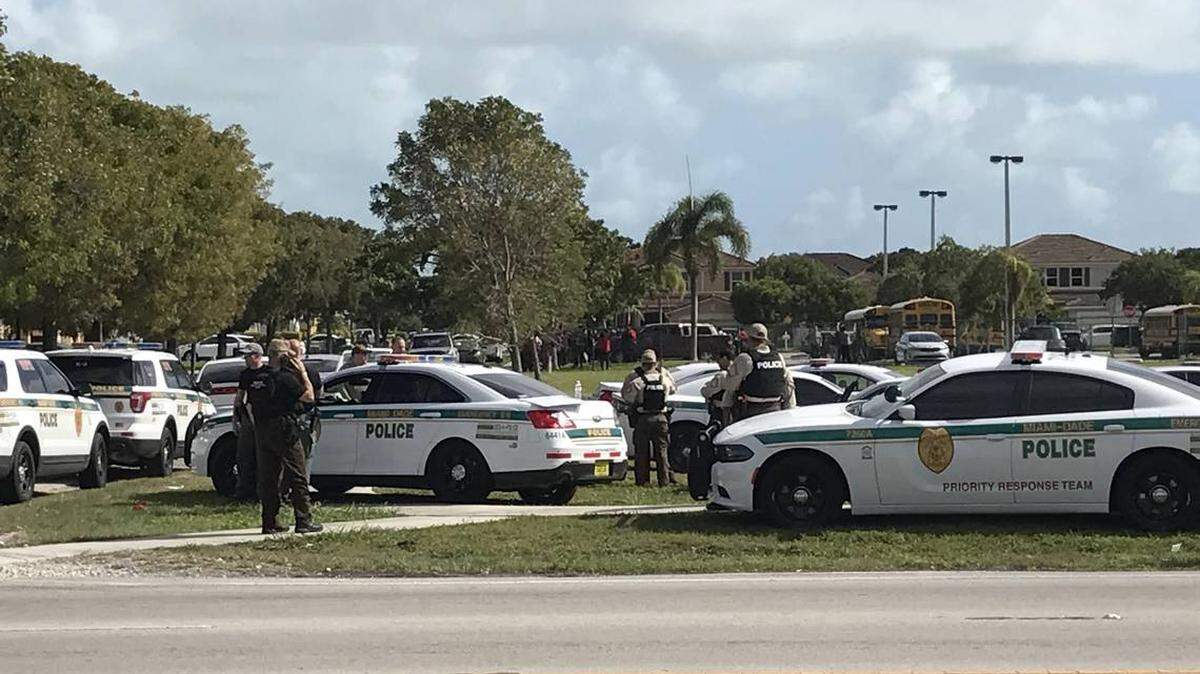
Most recently, in Miami-Dade County, police arrested a 15-year-old student accused of making a threat on social media against Miami Senior High School. Then other kids got a hold of it, and revised it to target other schools. There had been another, and unfounded threat made against South Dade Senior High School on social media.
Friday, in Broward County, students and staffers at Eagle Point Elementary were evacuated after a bomb threat was reported. Deputies identified a person of interest while sweeping the school and monitoring security cameras. Police did not find any explosives, and the building got the all-clear. The day before, Broward Sheriff’s deputies arrested a 17-year-old Marjory Stoneman Douglas High School student, who allegedly made social media threats against the Parkland school already traumatized by a massacre in 2018 in which 17 people died.
Right after that tragedy, threats against schools in Miami-Dade, made on social media soared from about one a week to more than 50 in a single day.
In 2019, Miami-Dade State Attorney Katherine Fernandez Rundle and the school district launched “It’s No Joke,” a campaign to warn students that they will be prosecuted if they make or post an online threat toward a school.
At the time, she said that there had been a “discernible increase” in students making threats; six students were arrested in just the first eight weeks of that school year. State law passed after the Parkland shooting made written threats to kill, do bodily injury or conduct a mass shooting a second-degree felony charge.
Whether such incidents — we’ve seen several more — are a cry for help or a just a bid for attention, any suspect in these cases should get one, the other or both. If mental illness is playing a role, then get that kid evaluated and into therapy. If they’re making costly and disruptive mischief, then, yes, law enforcement is right to step in. The student arrested in Miami-Dade on Monday was charged with a felony count of written threats to kill or do bodily harm. Fine with us.
And if some parents need a smack upside the head to pay more attention to what their kids are doing, then sure, bring on the backhand.
BEHIND THE STORY
MOREWhat's an editorial?
Editorials are opinion pieces that reflect the views of the Miami Herald Editorial Board, a group of opinion journalists that operates separately from the Miami Herald newsroom. Miami Herald Editorial Board members are: opinion editor Amy Driscoll and editorial writers Isadora Rangel and Mary Anna Mancuso. Read more by clicking the arrow in the upper right.
What's the difference between an op-ed and a column?
How does the Miami Herald Editorial Board decide what to write about?
The Editorial Board, made up of experienced opinion journalists, primarily addresses local and state issues that affect South Florida residents. Each board member has an area of focus, such as education, COVID or local government policy. Board members meet daily and bring up an array of topics for discussion. Once a topic is fully discussed, board members will further report the issue, interviewing stakeholders and others involved and affected, so that the board can present the most informed opinion possible. We strive to provide our community with thought leadership that advocates for policies and priorities that strengthen our communities. Our editorials promote social justice, fairness in economic, educational and social opportunities and an end to systemic racism and inequality. The Editorial Board is separate from the reporters and editors of the Miami Herald newsroom.
How can I contribute to the Miami Herald Opinion section?
The Editorial Board accepts op-ed submissions of 650-700 words from community members who want to argue a specific viewpoint or idea that is relevant to our area. You can email an op-ed submission to oped@miamiherald.com. We also accept 150-word letters to the editor from readers who want to offer their points of view on current issues. For more information on how to submit a letter, go here.
This story was originally published December 6, 2021 at 5:05 PM.