
Miami Art Week has arrived. Here’s how to protect yourself against Omicron, in case it’s here, too | Editorial
A new coronavirus variant is discovered just in time for the holidays — and days before Miami-Dade is flooded with tourists from across the globe for Art Week and Art Basel.
It feels like the perfect storm. But is the sky falling? The bottom line is, we don’t know.
We don’t know whether Omicron evades COVID-19 vaccines, causes more serious illness or will outpace the Delta variant. In Florida, cases of COVID-19 have fallen drastically since a devastating summer surge, and community transmission in most of the state is considered low by the Centers for Disease Control and Prevention. Could the new variant change that?
No Omicron cases have been reported in Florida, as of this writing, but it’s very likely the strain is already here, Dr. Aileen Marty, an infectious-disease expert at Florida International University, told the Herald Editorial Board.
President Biden said Monday that Omicron “is a cause for concern, not a cause for panic.” You don’t have to hit the panic button just yet, but it doesn’t hurt to be cautious, especially if you’re headed to the art events happening this week.
You already know what to do: Follow the recommendations public-health officials have been giving us for almost two years. But in case you’ve forgotten:
Load matters
What will get you more drunk, one shot of tequila or 10?
While a mask might not prevent you from getting the virus or the new variant, it will lower the viral load to which you’re exposed, causing less severe illness in many cases, Marty explained. Other factors also influence the severity of an infection, such as a person’s age and co-morbidities.
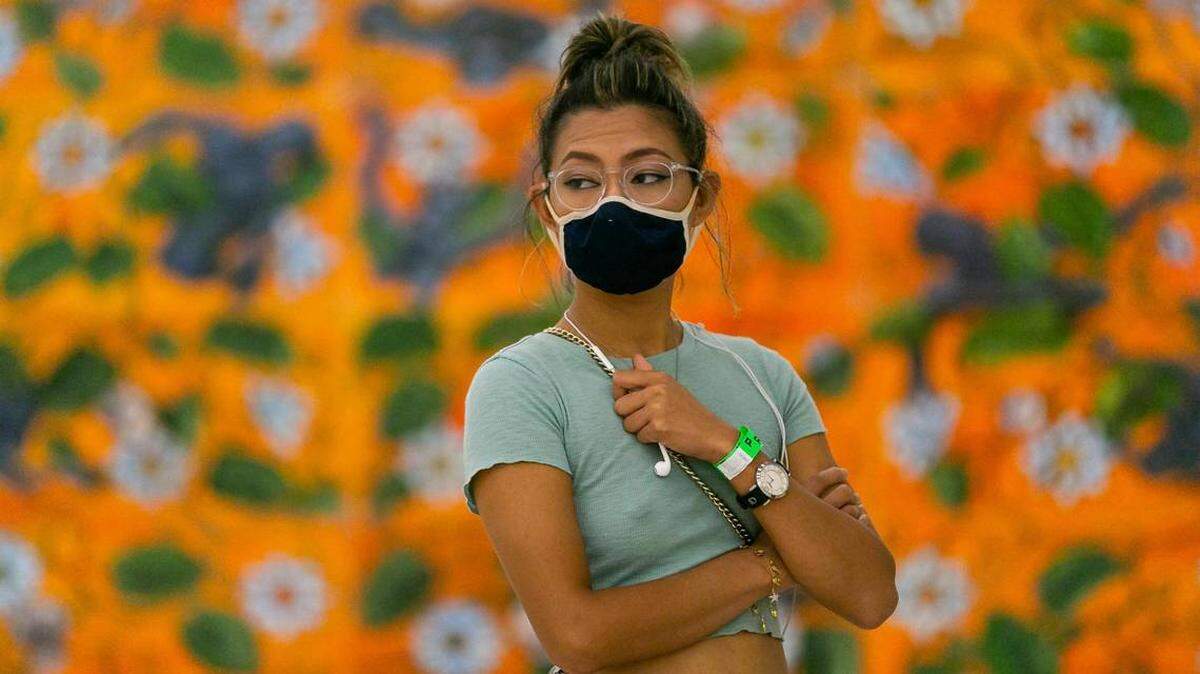
Wear. Your. Mask — Indoors.
Venues do their part
The biggest events happening this week, Art Miami in Downtown Miami and Art Basel in Miami Beach, require proof of either a negative COVID-19 test, vaccination or recovery from a recent infection. Both have a mask requirement.
Miami Beach Mayor Dan Gelber told the Editorial Board he’s not concerned that Art Basel will turn into a possible super-spreader event for the new COVID-19 variant.
The number of art lovers inside the Miami Beach Convention Center will be limited, he said, and the hall is circulating its air conditioning at a faster rate than usual.
“They are not just checking off the boxes,” Gelber said. “They are doing yeoman’s work to make sure the event is safe. Think about it. People have to feel safe to attend; otherwise, the crowds won’t come.”
Let’s hope it all works. But Art Week has several satellite events and, even if all took the same precautions, crowds will also be flooding local restaurants, shops, nightclubs and hotels.
Vaccines, duh
If you haven’t gotten a COVID-19 vaccine at this point, it’s too late for it to take full effect before Art Basel. But get it anyway.
The goal of vaccinations is to create cell memory, Marty said. When a new virus strain attacks the body, B-cells produce antibodies, and some also have memory. Even if they aren’t “fined tuned” to fight the new invader (in this case, Omicron), they might be able to “go back to university” to learn how to provide protection. That might not work for everybody, however, and age is a big factor, she said.
Higher rates of vaccination among children and boosters among adults might also help mitigate a possible winter surge, Dr. Mary Jo Trepka, an infectious-disease epidemiologist at FIU, told the Editorial Board. Florida, however, has fallen behind other states in the number of seniors who have received boosters. Roughly only one-third of them have gotten the extra jab, the Sun Sentinel reported last week.
Is COVID-19 ‘seasonal’?
Gov. DeSantis has long argued there’s not much we can do to affect COVID-19’s seasonal pattern.
“Almost 2 years of data indicate that COVID-19 prevalence fluctuates seasonally in a regional pattern,” the governor’s DeSantis press secretary, Christina Pushaw, told the Editorial Board in an email.
“Florida and the rest of the South see COVID-19 surge in summer, while northern states like Michigan and Minnesota are experiencing similar or worse surges now in late fall, though the Delta variant is still dominant. Last winter, COVID-19 prevalence rose throughout the country, especially in January 2021.”
However while experts are still trying to figure out what causes the virus to surge in waves, using the word “seasonal” normally connotes a pattern similar to the flu, which increases during cold months, Trepka said. COVID has spiked in Florida every few months, she said: March and April of 2020, summer of 2020 and January and summer of 2021.
“We had [a surge] last winter in South Florida. Who’s to say we can’t have it this winter in South Florida?” Trepka said.
Let’s hope not, but this is the time to dust off that mask you haven’t worn in months and book that booster appointment.
BEHIND THE STORY
MOREWhat's an editorial?
Editorials are opinion pieces that reflect the views of the Miami Herald Editorial Board, a group of opinion journalists that operates separately from the Miami Herald newsroom. Miami Herald Editorial Board members are: opinion editor Amy Driscoll and editorial writers Isadora Rangel and Mary Anna Mancuso. Read more by clicking the arrow in the upper right.
What's the difference between an op-ed and a column?
How does the Miami Herald Editorial Board decide what to write about?
The Editorial Board, made up of experienced opinion journalists, primarily addresses local and state issues that affect South Florida residents. Each board member has an area of focus, such as education, COVID or local government policy. Board members meet daily and bring up an array of topics for discussion. Once a topic is fully discussed, board members will further report the issue, interviewing stakeholders and others involved and affected, so that the board can present the most informed opinion possible. We strive to provide our community with thought leadership that advocates for policies and priorities that strengthen our communities. Our editorials promote social justice, fairness in economic, educational and social opportunities and an end to systemic racism and inequality. The Editorial Board is separate from the reporters and editors of the Miami Herald newsroom.
How can I contribute to the Miami Herald Opinion section?
The Editorial Board accepts op-ed submissions of 650-700 words from community members who want to argue a specific viewpoint or idea that is relevant to our area. You can email an op-ed submission to oped@miamiherald.com. We also accept 150-word letters to the editor from readers who want to offer their points of view on current issues. For more information on how to submit a letter, go here.
This story was originally published November 30, 2021 at 2:05 PM.