
Restore Miami’s scooter program — with rules and regulations this time | Editorial
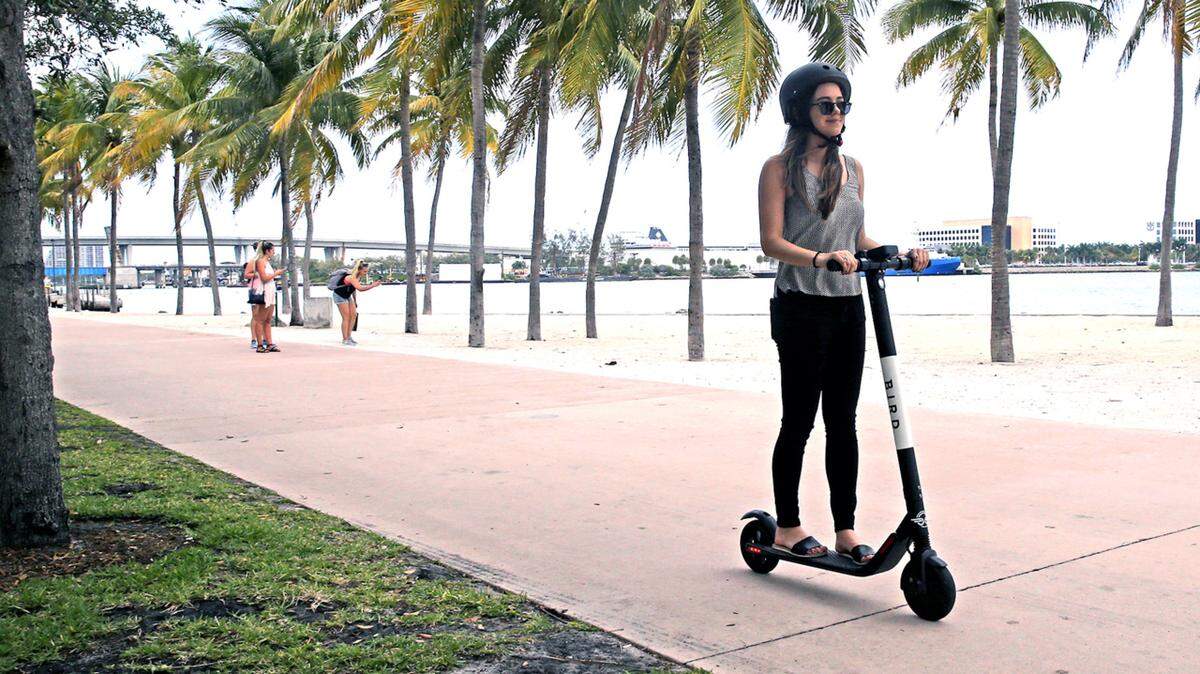
Just about everyone seems to be on the same page, thank goodness: 1. Those two-wheel scooters that commuters — and all sorts of other riders — stand on and ride in downtown Miami are essential to keep people moving; 2. safety is paramount — for scooter riders and the pedestrians, bikers and skateboarders they’re zipping around; 3. rules and regulations to ensure such safety are in everyone’s best interest.
That means it shouldn’t be that hard to get Miami’s pilot scooter program rolling again (sorry), and then make it permanent. It’s an innovative program that keeps Miami better serving its residents and visitors. Other major cities have worked out the kinks. Miami can, too.
Recently, the Miami City Commission, with Commissioner Alex Díaz de la Portilla taking the lead, suspended the program, which currently includes seven companies that provide rental scooters downtown. For him, there need to be some stringent rules in place for the program to continue.
Street hazards
He told the Editorial Board that he’s all for what’s called “micromobility,” but he’s concerned about some riders’ recklessness on busy sidewalks — even veering into the streets where cars whiz by; the number of scooters left scattered on sidewalks; and the lack of training for people who want to just hop on any available scooter.
“God help us if some child, anyone, has an accident,” Díaz de la Portilla told the Editorial Board. “We also need to have micromobility in Miami. But let’s do our due diligence.”
He makes several good points. He’s prepared to make them again at a special meeting scheduled for Monday to hash out the issues as the city proceeds to make the scooter program permanent. He wants any contract with chosen operators to include helmets for scooter riders; slower speeds programmed into scooters; docking stations for unused scooters; and penalties imposed should minors use them.
The pilot program currently operates in Commissioner Ken Russell’s District 2, covering Brickell, downtown and surrounding areas, and it generates 7,000 daily rides. Riders must be at least 18. Russell told the Editorial Board that no fatalities have been reported.
One of the scooter operators, Lyft, blindsided by the program’s suspension, says that it wants to address the same concerns — and operators already are doing so.
Seeking solutions
“In the life of the progam, we have worked with Miami Riders Alliance, a local nonprofit. We formed with the other operators the Mobile Miami Coalition — all seven of the scooter operators — to build a bridge of partnership in tackling some of these questions,” Caroline Sampanaro, a Lyft vice president in charge of transit and micromobility, told the Editorial Board.
The pilot project was first halted in December. “The coalition came together and implemented improvements to keep scooters on the ground,” Sampanaro said.
For instance, “We implemented a program — and ID scan — so we would be able to make sure the person is of age,” she said.
“We’ve hired street safety attendants working to create lower speed zones and no parking zones.”
Many residents are against scooters for the same reasons Díaz de la Portilla wanted to suspend the program: sidewalk clutter and reckless drivers. Can’t blame them.
“The city has had a love-hate relationship with scooters and micromobility in general,” Russell told the Board.
However, Miami can either move forward, or regress. Some cities are fighting scooters just like they fought against Uber, a futile effort.
Miami’s smartest bet is to negotiate a deal with the winning scooter operators that keeps the city from becoming a scooter wasteland, and instead helps ensure that we are indeed the burgeoning tech hub we claim to be.
How can a city that’s worked hard to move away from its car-centric roots kill a program that creates alternatives for commuters?
BEHIND THE STORY
MOREWhat's an editorial?
Editorials are opinion pieces that reflect the views of the Miami Herald Editorial Board, a group of opinion journalists that operates separately from the Miami Herald newsroom. Miami Herald Editorial Board members are: opinion editor Amy Driscoll and editorial writers Isadora Rangel and Mary Anna Mancuso. Read more by clicking the arrow in the upper right.
What's the difference between an op-ed and a column?
How does the Miami Herald Editorial Board decide what to write about?
The Editorial Board, made up of experienced opinion journalists, primarily addresses local and state issues that affect South Florida residents. Each board member has an area of focus, such as education, COVID or local government policy. Board members meet daily and bring up an array of topics for discussion. Once a topic is fully discussed, board members will further report the issue, interviewing stakeholders and others involved and affected, so that the board can present the most informed opinion possible. We strive to provide our community with thought leadership that advocates for policies and priorities that strengthen our communities. Our editorials promote social justice, fairness in economic, educational and social opportunities and an end to systemic racism and inequality. The Editorial Board is separate from the reporters and editors of the Miami Herald newsroom.
How can I contribute to the Miami Herald Opinion section?
The Editorial Board accepts op-ed submissions of 650-700 words from community members who want to argue a specific viewpoint or idea that is relevant to our area. You can email an op-ed submission to oped@miamiherald.com. We also accept 150-word letters to the editor from readers who want to offer their points of view on current issues. For more information on how to submit a letter, go here.
This story was originally published November 26, 2021 at 11:21 AM.