
Florida is the land of second chances for rogue police. Why not for ex-felons, too? | Editorial
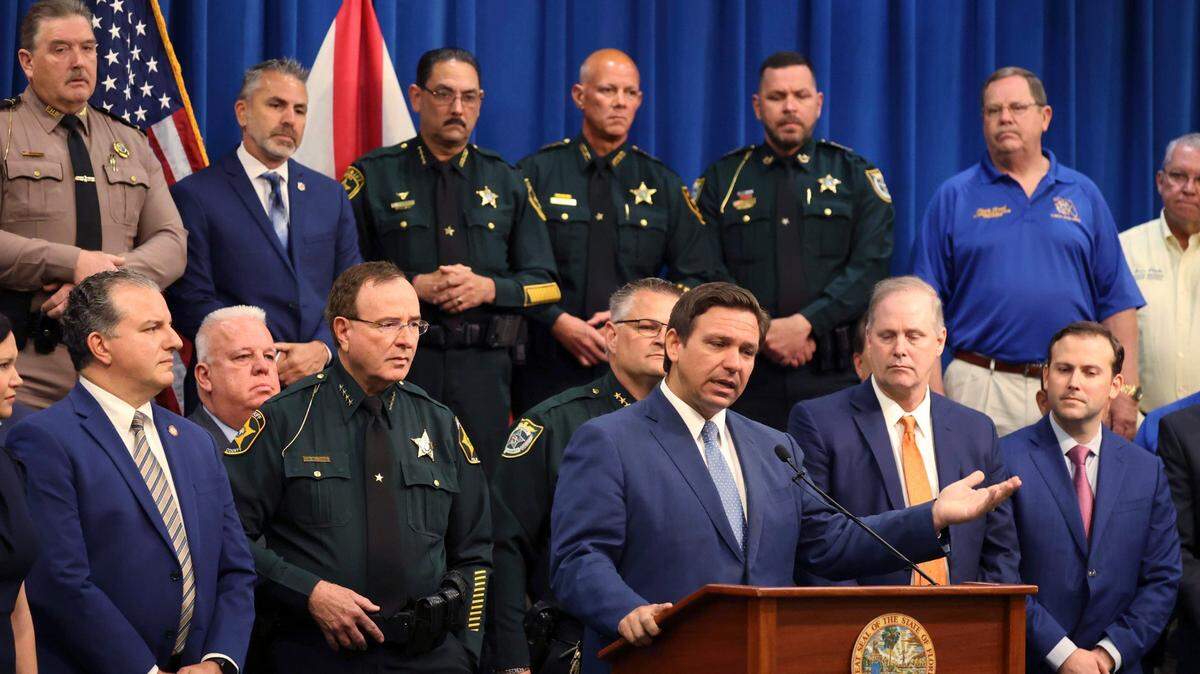
Gov. Ron DeSantis has been publicly trying to lure police officers to Florida from New York or San Francisco with a come-on-down attitude and talk of $5,000 bonuses if “morale is low” in those other cities, which are led — coincidentally, no doubt — by Democrats.
But a story detailing the backgrounds of a dozen former NYPD officers hired by the Lakeland Police Department in Central Florida raises a lot of questions about what sorts of officers are responding to DeSantis’ incentives. As reported by Fresh Take Florida, a news service of the University of Florida College of Journalism and Communications, one of the recently hired officers had been fired as a Walmart security guard, another had three years of experience but wanted more than double his salary and another had been among eight NYPD plainclothes officers accused of handcuffing and beating a man in January 2015 so badly he was left with four broken bones in his face, a dislocated shoulder and cuts and bruises. The city paid $178,000 to settle the case. One other new hire was part of the NYPD’s notorious anti-crime units that were recently disbanded.
We’re all for second chances in many cases. But if Florida is all about clean slates when it comes to police officers (although we believe that the bar must be even higher than for average citizens, since officers have the power to take away a citizen’s liberty), why not the same treatment for ex-felons and the restoration of their voting rights?
The DeSantis administration and GOP-controlled Legislature have fought long and hard to prevent the full implementation of a voter-approved 2018 constitutional amendment that would restore voting rights to about 1.4 million ex-felons. A federal appellate court upheld the position of DeSantis and the Legislature that Floridians with felony convictions must pay all fines before regaining their right to vote — something that most severely restricts the ability of indigent Floridians to have their rights restored.
So why the disparate treatment? We all know the answer to that one, unfortunately. “Backing the blue” is a winning issue for the GOP. But ex-felons with their rights restored might vote for Democrats. Voter suppression seems to be just another winning strategy for the GOP.
BEHIND THE STORY
MOREWhat's an editorial?
Editorials are opinion pieces that reflect the views of the Miami Herald Editorial Board, a group of opinion journalists that operates separately from the Miami Herald newsroom. Miami Herald Editorial Board members are: opinion editor Amy Driscoll and editorial writers Isadora Rangel and Mary Anna Mancuso. Read more by clicking the arrow in the upper right.
What's the difference between an op-ed and a column?
How does the Miami Herald Editorial Board decide what to write about?
The Editorial Board, made up of experienced opinion journalists, primarily addresses local and state issues that affect South Florida residents. Each board member has an area of focus, such as education, COVID or local government policy. Board members meet daily and bring up an array of topics for discussion. Once a topic is fully discussed, board members will further report the issue, interviewing stakeholders and others involved and affected, so that the board can present the most informed opinion possible. We strive to provide our community with thought leadership that advocates for policies and priorities that strengthen our communities. Our editorials promote social justice, fairness in economic, educational and social opportunities and an end to systemic racism and inequality. The Editorial Board is separate from the reporters and editors of the Miami Herald newsroom.
How can I contribute to the Miami Herald Opinion section?
The Editorial Board accepts op-ed submissions of 650-700 words from community members who want to argue a specific viewpoint or idea that is relevant to our area. You can email an op-ed submission to oped@miamiherald.com. We also accept 150-word letters to the editor from readers who want to offer their points of view on current issues. For more information on how to submit a letter, go here.
This story was originally published November 24, 2021 at 3:00 PM.