
Lawmakers are making critical decisions about Florida’s democracy. Where’s the public input? | Editorial
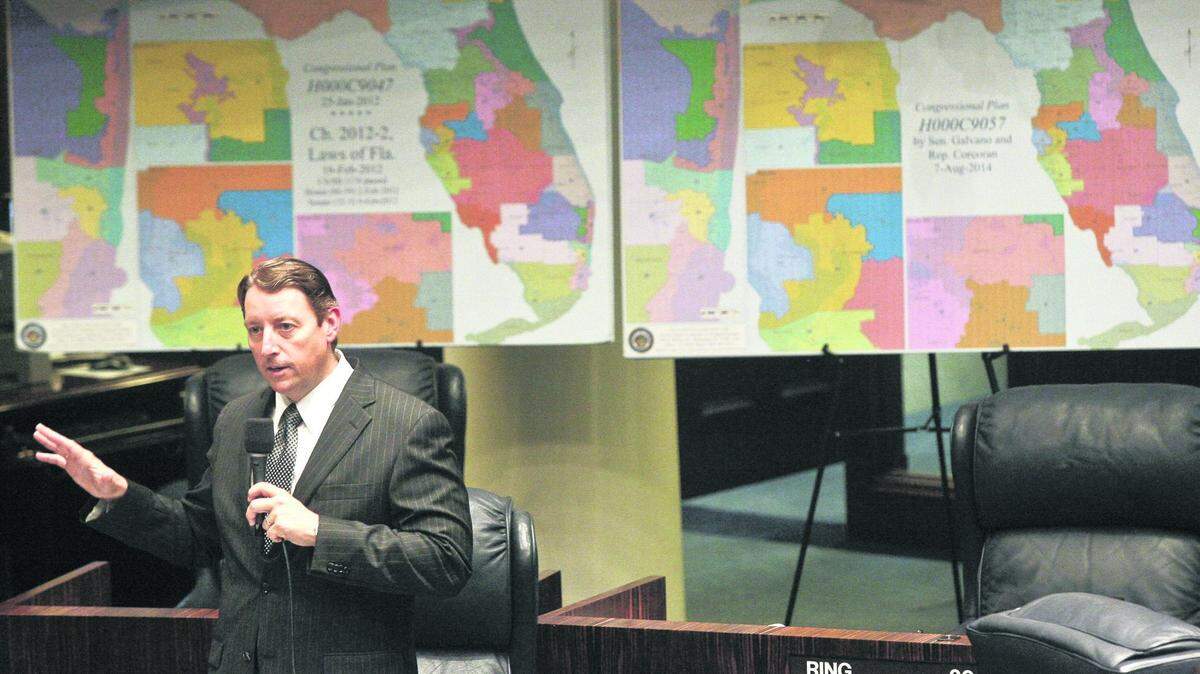
The first round of maps are out in Florida’s redrawing of congressional and state Senate districts and, well, no one’s complaining much. Not on either side.
Surprised? We are, a little.
But we are also wary. Lawmakers have decided to effectively block the public from having much of a voice in the process. GOP leaders say they don’t want to allow anyone to have undue influence — this time. It’s also a mighty handy excuse to keep scrutiny at arm’s length.
The last time Florida’s legislators started this process, a decade ago, it took years in court before Florida emerged with redrawn districts. Lawmakers claimed they had conducted an above-board process, but the courts found the opposite, that they had violated the Constitution by allowing GOP political consultants to conduct a shadow redistricting process that made a mockery of the whole thing.
And that was in spite of the Fair Districts amendments that voters added to the state Constitution in 2010 to stop gerrymandering, when districts are drawn specifically to tilt toward one party.
Watch out for gerrymandering
Republicans have the majority, and there were fears that they would use the remapping as a way to further cement their position through gerrymandering. Initial maps show just one more congressional district for Republicans, in Polk County in Central Florida. But district lines would move in other places, too, including when it comes to Miami-Dade County’s Senate districts.
House maps have not yet been released. There has been some initial bipartisan support for the congressional proposals.
It’s early, of course, and all of this could still be a prelude to a drawn-out war for control. Reapportioning Florida’s 28 congressional districts, 120 state House districts and 40 Senate districts offers a lot of opportunity for hard feelings and allegations of wrongdoing. Redistricting will be a dominant issue in the 2022 legislative session that starts Jan. 11. Maps must be completed before the next election cycle beginning in June.
So far, Republicans seem to be abiding by party leaders, who have told them to stick to maps that will keep them out of court. That’s a good sign.
Public needs bigger role
We still believe, however, that the public must demand more of a role in the process, given the Legislature’s track record. It was just 10 years ago that legislators attempted to pack Black and Hispanic Democrats in Tampa Bay into a single “coalition” district. (The courts rejected it.) Lawmakers should be required to explain these decisions — which can be self-serving, after all — to their constituents throughout the process. After all, it is the voters who will have to live with these decisions for 10 long years until the next redistricting cycle.
Republican leaders have said they don’t have enough time to conduct the kind of public meetings held during the previous redistricting effort. They have mostly ducked suggestions that they could hold virtual meetings with voters to explain the maps. Instead, they are offering a website, FloridaRedistricting.gov, for voters to follow the redistricting process.
One person who is reaching out to voters anyway is Sen. Gayle Harrell, a Stuart Republican, who told the News Service of Florida that she is setting up a Zoom meeting with constituents to hear what they think about redistricting. She’s encouraging other lawmakers to do the same.
She has the right idea, but she’s an outlier, unfortunately. Lawmakers want a smooth redistricting process. But they also need to rebuild trust, and for that to happen, they need to let voters in on the process.
BEHIND THE STORY
MOREWhat's an editorial?
Editorials are opinion pieces that reflect the views of the Miami Herald Editorial Board, a group of opinion journalists that operates separately from the Miami Herald newsroom. Miami Herald Editorial Board members are: opinion editor Amy Driscoll and editorial writers Isadora Rangel and Mary Anna Mancuso. Read more by clicking the arrow in the upper right.
What's the difference between an op-ed and a column?
How does the Miami Herald Editorial Board decide what to write about?
The Editorial Board, made up of experienced opinion journalists, primarily addresses local and state issues that affect South Florida residents. Each board member has an area of focus, such as education, COVID or local government policy. Board members meet daily and bring up an array of topics for discussion. Once a topic is fully discussed, board members will further report the issue, interviewing stakeholders and others involved and affected, so that the board can present the most informed opinion possible. We strive to provide our community with thought leadership that advocates for policies and priorities that strengthen our communities. Our editorials promote social justice, fairness in economic, educational and social opportunities and an end to systemic racism and inequality. The Editorial Board is separate from the reporters and editors of the Miami Herald newsroom.
How can I contribute to the Miami Herald Opinion section?
The Editorial Board accepts op-ed submissions of 650-700 words from community members who want to argue a specific viewpoint or idea that is relevant to our area. You can email an op-ed submission to oped@miamiherald.com. We also accept 150-word letters to the editor from readers who want to offer their points of view on current issues. For more information on how to submit a letter, go here.
This story was originally published November 23, 2021 at 7:30 AM.