
Florida Democrats have a rare chance to block bad vaccine-mandate law. Don’t blow it! | Editorial
Republican lawmakers are pushing to fine businesses that impose COVID-19 vaccine mandates up to a whooping $50,000 per violation. But why and how those employers might end up facing penalties could be kept a secret.
The point, lawmakers say, is to protect the identity of workers who file complaints against companies that fail to offer certain exemptions to those mandates — for anything from religious beliefs to an “expected pregnancy.”
But Republicans have crafted a bill that’s so broad — “unconstitutionally broad,” according to open-government advocates who spoke to the Herald — that it seems geared more toward protecting the government itself from public scrutiny.
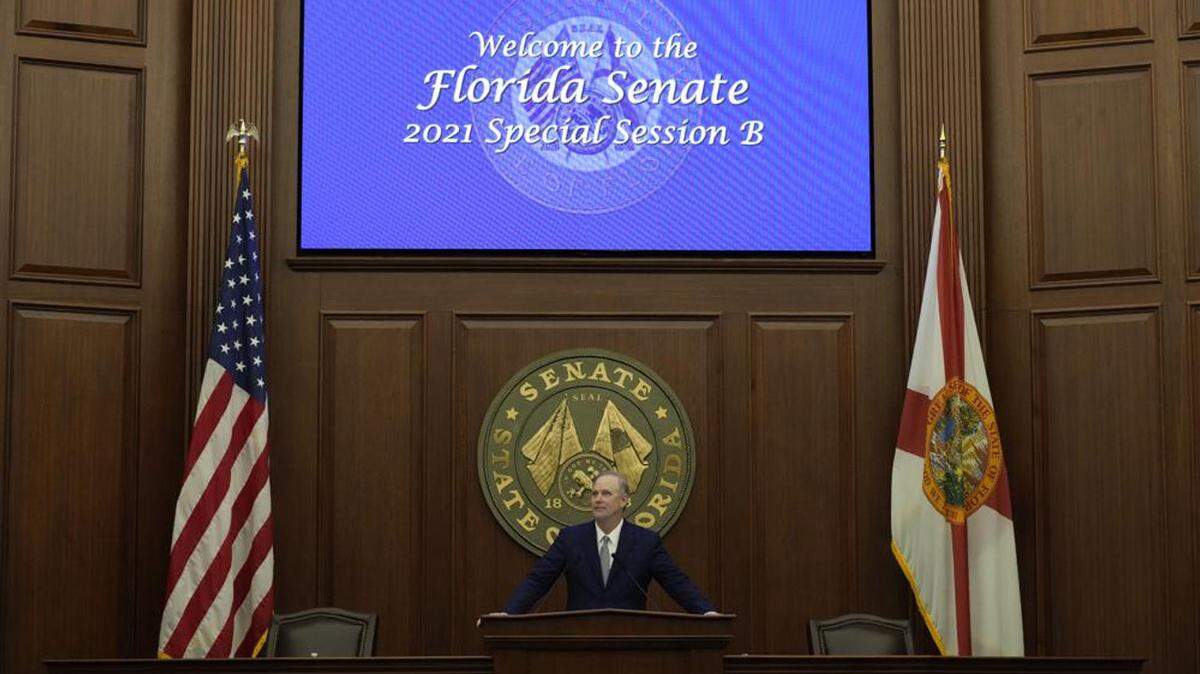
Under Senate Bill 4B and House Bill 3B, being considered during this week’s special legislative session, complaints and investigations regarding employers’ COVID-19 vaccination mandates would be exempt from Florida’s public record disclosure laws — at least until the investigation is completed and, in some cases, indefinitely.
Left in the dark
That means Floridians wouldn’t know the names of companies under investigation and what political ties they might have. They might not know if a big donor to Gov. DeSantis got preferential treatment, or whether Florida’s attorney general took complaints about Christians being denied religious exemptions more seriously than for other religions.
Investigations would be made public once they are completed or no longer active, but there’s a loophole large enough to drive an 18-wheeler through. Investigations would remain secret if disclosure jeopardizes the “integrity of another active investigation,” such as another employee complaint, or reveals a worker’s medical information or religious belief.
In other words, we can expect very little public access if this legislation is approved by the end of the special session on Thursday. What a way to keep taxpayers in the dark regarding a process that’s been highly politicized, with DeSantis using his opposition to employer mandates as a weapon against President Biden and a tool to raise his profile — and funds — ahead of the 2024 presidential primaries.
However, the Democratic minority in Tallahassee has the rare chance to stop this bad legislation — and they should grab it. Public-records exemptions require approval of two-thirds of both houses. In the Senate, that will only happen if they can get their caucus to stand united — that, in itself, would be a feat — and not cave in to the political horse-trading going on behind the scenes. Florida’s Democratic lawmakers have had little ability to block against some of Republicans’ most egregious legislative restrictions on Floridians’ basic rights. They shouldn’t squander this opportunity to stop yet another one in its tracks.
Too broad
If the point of this legislation is to protect the identity of an employee who files a complaint so they don’t face retaliation, why not craft a narrow bill that does just that? Why then keep the company’s name a secret as well? Neither the House speaker nor the Senate president could explain why, the Herald/Times Tallahassee Bureau reported on Monday.
Perhaps the answer lies in the fact that the legislation would enshrine into law a practice that’s been pervasive during the pandemic: the lack of transparency by state agencies and the slow-walking — or straight-up ignoring — of public records requests.
Last year, as the pandemic began to take hold in Florida, the DeSantis administration didn’t answer public-records requests for specifics of contact tracing in Florida and wouldn’t disclose the number of deaths at specific eldercare facilities.
After DeSantis all but declared Florida had beat COVID-19 in June, the Florida Department of Health stopped releasing daily COVID-19 numbers, as it did early in the pandemic, switching to weekly reports. For 105 days this summer, as the delta variant wreaked havoc, the state stopped disclosing the number of deaths per county, the Tampa Bay Times reported.
More recently, after releasing to the Orlando Sentinel the names of 100 companies under investigation for potentially violating the state’s vaccine passport ban, the DOH refused to release a subsequent list despite numerous requests from the Herald/Times.
So forgive us for not trusting that our lawmakers have the best intentions with this latest attack on the public’s right to know.
BEHIND THE STORY
MOREWhat's an editorial?
Editorials are opinion pieces that reflect the views of the Miami Herald Editorial Board, a group of opinion journalists that operates separately from the Miami Herald newsroom. Miami Herald Editorial Board members are: opinion editor Amy Driscoll and editorial writers Isadora Rangel and Mary Anna Mancuso. Read more by clicking the arrow in the upper right.
What's the difference between an op-ed and a column?
How does the Miami Herald Editorial Board decide what to write about?
The Editorial Board, made up of experienced opinion journalists, primarily addresses local and state issues that affect South Florida residents. Each board member has an area of focus, such as education, COVID or local government policy. Board members meet daily and bring up an array of topics for discussion. Once a topic is fully discussed, board members will further report the issue, interviewing stakeholders and others involved and affected, so that the board can present the most informed opinion possible. We strive to provide our community with thought leadership that advocates for policies and priorities that strengthen our communities. Our editorials promote social justice, fairness in economic, educational and social opportunities and an end to systemic racism and inequality. The Editorial Board is separate from the reporters and editors of the Miami Herald newsroom.
How can I contribute to the Miami Herald Opinion section?
The Editorial Board accepts op-ed submissions of 650-700 words from community members who want to argue a specific viewpoint or idea that is relevant to our area. You can email an op-ed submission to oped@miamiherald.com. We also accept 150-word letters to the editor from readers who want to offer their points of view on current issues. For more information on how to submit a letter, go here.