
Muzzling UF professors. Threatening ‘woke corporations.’ Is this Florida’s GOP now? | Editorial
There’s nothing the Republican Party despises more today than liberal university professors, “woke” corporations (that is, until it’s fundraising time) and easy access to voting. And the party has not been shy about using the levers of Florida’s government to target and muzzle the things they don’t like.
Not even our university system has escaped Republicans’ quest, under the leadership of Gov. Ron DeSantis, to use taxpayer-funded institutions as political tools. Efforts to undermine academic freedom, often the canary in the coal mine when democracies crumble, should scare Floridians of all party affiliations.
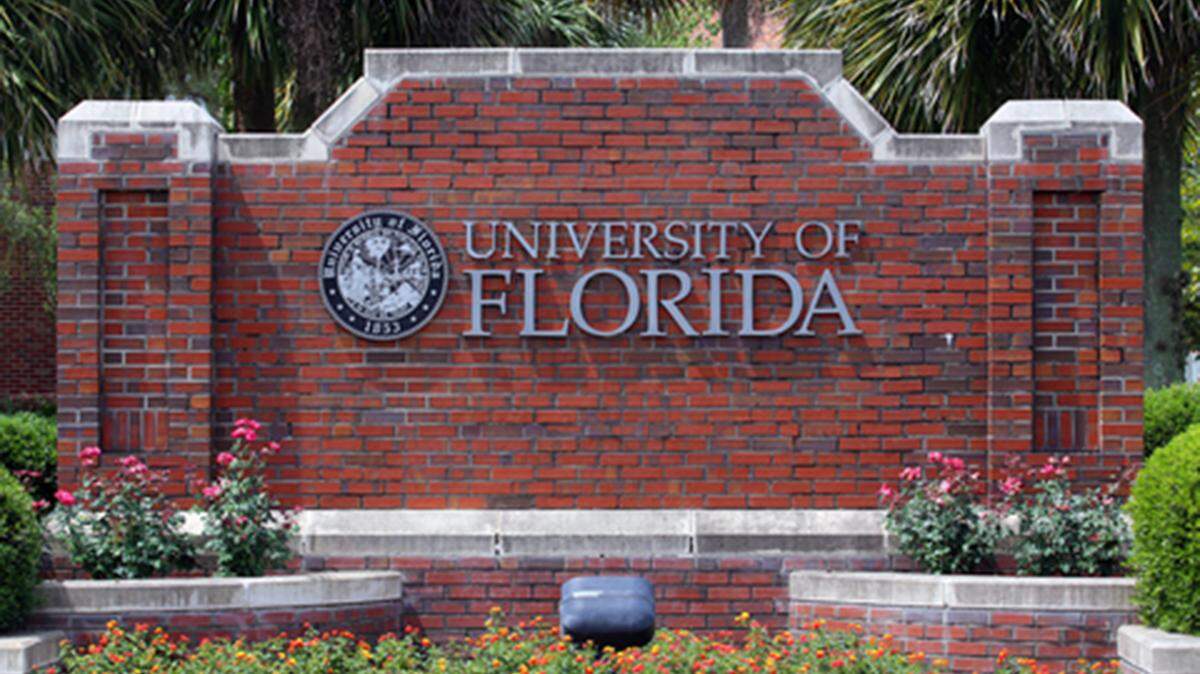
The University of Florida has barred three professors from continuing to serve as expert witnesses in a lawsuit against the state over a new law that restricts voting access, the Herald reported. We don’t believe it’s a coincidence that two of those professors wrote an op-ed in the Tampa Bay Times last month accusing Republican lawmakers of shielding data about the state’s redistricting process from the public.
The professors were allowed to testify in previous lawsuits, Politico reported. What’s changed?
Conflict of interest?
UF told one of the faculty members that testifying could “pose a conflict of interest to the executive branch of the State of Florida.” Whose interests are they really challenging? Perhaps those of the party that controls most appointments to the school’s Board of Trustees. UF might have violated “academic freedom” and “undue political influence” standards of the university’s accreditor, the Southern Association of Colleges and Schools’ Commission on Colleges, which told the Herald on Monday it will investigate the case.
This is another blow to the credibility of Florida’s flagship university. Its fast-tracking of Surgeon General Joseph Ladapo to a professorship position, as reported by the Tallahassee Democrat, raised questions of how much the university values pleasing a petulant governor over academics. Ladapo, whom DeSantis appointed surgeon general in September, has questioned COVID-19 vaccines and refused to wear a mask inside the office of a state senator who has breast cancer. His hiring by UF’s College of Medicine happened with the help of a top DeSantis donor who serves as chair of the Board of Trustees, the Tallahassee Democrat reported.
Taxpayers will foot the bill for all of this: $512,000 a year that Ladapo is expected to earn between his state job and professorship.
This weaponization of a taxpayer-funded institution isn’t surprising. Republicans across the country are using their control of state governments for election audits and other means to justify Donald Trump’s lies about elections being stolen. Florida is one of many GOP-run states that passed laws this year to make it harder for people to vote by mail, a method that, not coincidentally, was used predominantly by Democratic voters in 2020.
An American ‘coup’
Parties in power want to remain in power — that’s as old as America. But, for the first time, we have to worry that if Republicans control Congress in 2024 they might not certify presidential election results if a Democrat wins. Call that a coup a l’americaine.
Meanwhile, they are making sure university professors, whom conservatives accuse of indoctrinating unsuspecting students, know that there’s a target on their backs. The Florida Legislature passed a law this year that requires higher-education institutions to administer a survey to ensure “intellectual freedom and viewpoint diversity” — a Trojan horse for knowing the political leanings of faculty — and allows students to record professors without their consent and use their statements in a civil or criminal case. Republican lawmakers and DeSantis have suggested budget cuts could be looming if they don’t like the survey results. Talk about big-government intrusion into free speech.
“Corporate wokeness” also is on the GOP’s blacklist. Large businesses have clashed with Republicans over COVID-19 vaccine mandates in the workplace and voting-access laws. DeSantis made a not-so-veiled threat to companies that criticize the GOP last week at a Florida Chamber of Commerce event, the Herald reported.
“I may look under the hood and not like some things,’’ he warned. “I got a podium. I got cameras that will follow me around. Maybe I’ll go talk about that a little bit. And so, I think it’s something that’s very damaging.”
DeSantis said most Republican voters “hate corporations now,” but he didn’t mention his political committee has raked in millions in campaign contributions from them.
You know what else Republican voters and politicians hate? Government using its power to retaliate and control speech. But today, many are willing to rationalize such un-American acts as long as they get their way.
BEHIND THE STORY
MOREWhat's an editorial?
Editorials are opinion pieces that reflect the views of the Miami Herald Editorial Board, a group of opinion journalists that operates separately from the Miami Herald newsroom. Miami Herald Editorial Board members are: opinion editor Amy Driscoll and editorial writers Isadora Rangel and Mary Anna Mancuso. Read more by clicking the arrow in the upper right.
What's the difference between an op-ed and a column?
How does the Miami Herald Editorial Board decide what to write about?
The Editorial Board, made up of experienced opinion journalists, primarily addresses local and state issues that affect South Florida residents. Each board member has an area of focus, such as education, COVID or local government policy. Board members meet daily and bring up an array of topics for discussion. Once a topic is fully discussed, board members will further report the issue, interviewing stakeholders and others involved and affected, so that the board can present the most informed opinion possible. We strive to provide our community with thought leadership that advocates for policies and priorities that strengthen our communities. Our editorials promote social justice, fairness in economic, educational and social opportunities and an end to systemic racism and inequality. The Editorial Board is separate from the reporters and editors of the Miami Herald newsroom.
How can I contribute to the Miami Herald Opinion section?
The Editorial Board accepts op-ed submissions of 650-700 words from community members who want to argue a specific viewpoint or idea that is relevant to our area. You can email an op-ed submission to oped@miamiherald.com. We also accept 150-word letters to the editor from readers who want to offer their points of view on current issues. For more information on how to submit a letter, go here.
This story was originally published November 2, 2021 at 1:12 PM.