
Carollo unfit to serve again on Miami Commission. District 3 voters have a better choice | Editorial
Joe Carollo’s behavior was abominable. His timing, however, impeccable.
As residents in Miami’s District 3 vote Nov. 2 for a commissioner to represent them, Commissioner Carollo’s irresponsible and destructive behavior on his way to firing then-Police Chief Art Acevedo should be fresh in their minds.
And they should say, “No more!” Four more years of Carollo, basically, is four more years of him running the city — possibly, into the ground.
The prospect of the Barnum & Bailey spectacle — with a sideshow of character assassination — that he orchestrated this month from the dais in going after Acevedo is precisely the reason the Editorial Board did not recommend him in 2017. At that time, we said: “Fresh in our minds, too, are Carollo’s battles in the city of Doral, where for months the business of running the city was hijacked by feuds between then-Mayor Luigi Borgia and Carollo, the city manager until he was fired in 2014.
“Despite Carollo’s institutional knowledge when it comes to Miami, the Board is loath to see this former commissioner and mayor who panders so blithely on some residents’ fervent fears of communism; someone who is quick to point the finger, pick a fight, and drag a city through the mud with him, reintroduced to the dais.
“Voters should move on, not regress.”
We didn’t need a crystal ball four years ago, and don’t need one now. During his four decades in municipal leadership, the Acevedo fiasco was simply more of the same from this commissioner. At times, his policy proposals have been on target. For instance, Miami voters should be grateful that they get a say in whether city-owned waterfront property gets developed, and by who — as per the Carollo Amendment.
Still popular
But this commissioner’s missteps are colossal, costly and regressive. As proof, his move to basically criminalize homelessness — this, in a city with effective advocacy and service organizations that should be partners. Instead, Carollo suggests jail. It’s a recommendation that will fix nothing. Then there are those 50 large aluminum dog and cat statues costing taxpayers almost $1 million, destined to sit and stay in Maurice Ferré Park downtown. It was the brainchild of his wife’s friend in Colombia. Carollo, as chair of the Bayfront Park Management Trust, rammed it through a compliant board — though not without some pushback. Still, there was no debate, no public input — and no bids.
Carollo remains a powerhouse in his district and — in light of Miami’s weak mayor — throughout the city, unfortunately. He no doubt speaks for many in his district who justifiably abhor communism, but his knee-jerk quickness to exploit that fear rarely protects their interests, only his.
Carollo made a brief, and late, appearance during the Editorial Board’s District 3 candidate interviews. He informed us that he did not want the Board’s “endorsement.” We gladly will accommodate his request.
Again, voters have a chance to move on — and they should.
There are three other candidates in the District 3 commission race: Miguel C. Soliman, Quinn Smith and Andriana Oliva. All of them know the district well.
This is Soliman’s second run for the City Commission, having also sought a seat on the County Commission.
A general contractor, he, like others in the race, is concerned about the lack of affordable and low-income housing in the district and wants to use existing programs to push developers of high-end residences to build more for middle-and working-class people.
Drug sales
Crime, too, ranks high on his list of priorities. He told the Editorial Board that drug dealing in Little Havana, which he said goes on undisturbed on the corner of the street where he lives, is spilling over into the residential Roads and Shenandoah neighborhoods. “I see it,” he told the Board. We wonder if Carollo does, too.
Smith also is well-versed in the district’s challenges — with progressive ideas to tackle them. In Little Havana, he told the Board, the streets are a “mess” and affordable housing too scarce. (Again, we wonder if the incumbent knows this.) In the Roads and Shenandoah, residents are concerned with good government and quality-of-life issues — more trees and more speed bumps for safer streets, for instance.
Smith says that the city is on track to recover financially from the pandemic’s hit. Property values are “exploding,” he said, but with rents increasing, “The average person isn’t really benefiting from the recovery.”
“We need to have bolder action on this,” Smith said. “Programs are good, but the city needs to increase incomes.” He suggests income supplements for certain residents — seniors, for instance. In addition, he wants to increase the number of jobs in construction and tourism, for instance, with links to climate change and resilience built in.
Smith, though, impressive, brings a concern — one of judgment: He and the law firm that he founded have done work for the Venezuelan government, a repressive regime with the authoritarian Nicolas Maduro in charge. No, that does not make him a communist or a socialist. We asked, and he said he was neither. We have no reason to doubt him. What Smith is, however, is a businessman, whose firm practices international law. It’s worked for other governments — Guatemala, the Dominican Republic, Moldova, among them.
“That’s what we do,” he said. “We have represented the Venezuelan government and some of the companies that are owned by the country.” And, he said, rightly, it’s what some other Miami law firms do, too. It’s not an aberration, nor illegal.
Smith says he hasn’t done work “of any substance” for Venezuela in a year and won’t do any more work for the country and its entities in the future.
As for how it plays on the campaign trail, “It depends a lot on who I’m talking to,” Smith told the Board. “People have different kinds of questions. Clients don’t define a lawyer.” He points to Venezuelan-American colleagues who support him.
“For other people, it’s important to apologize, and so I do,” Smith said. “I have no problem apologizing for the concerns that people have.”
We applaud this gesture and that he has confronted this challenge head-on. For the Board, however, his work for Venezuela remains a problem — and a deal-breaker. There is no other way to spin that Smith and his firm were willing to work on behalf of a government that is starving its people, denying them the basic freedoms and human rights that most Americans hold dear and driving millions of people from their country.
We would be just as disturbed had this work been done on a behalf of, say, South Africa, before the end of apartheid.
We wish Smith, whose firm is successful enough to have offices in Washington, D.C., and London, had just said “No” when Venezuela called. But he didn’t. As a result, we just can’t say “Yes” to his candidacy.
Fresh vision
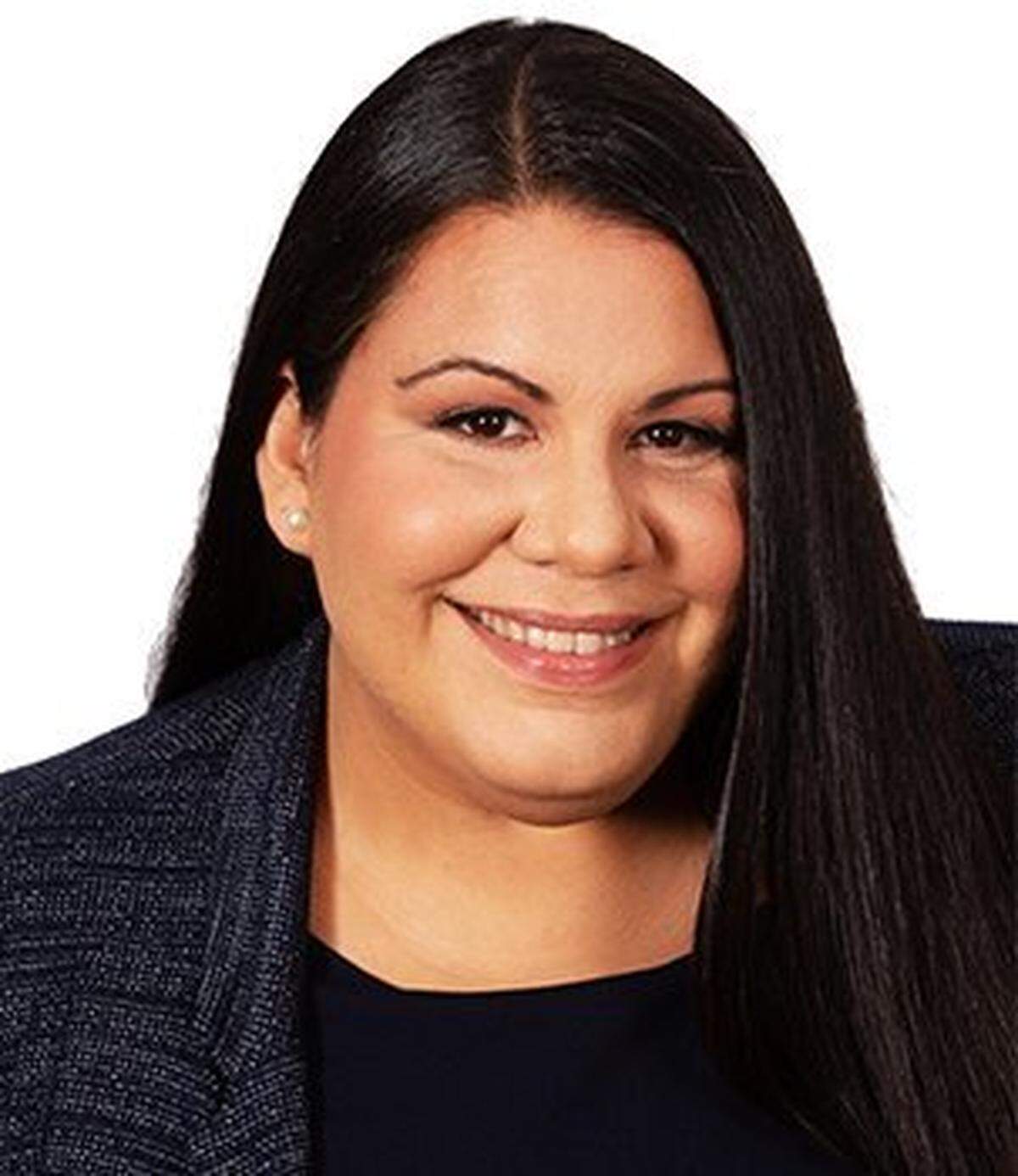
Andriana Oliva is our choice for District 3 commissioner. She owns a communications agency that focuses on cultural events, social enterprise and the non-profit community. (She has worked with the five-year 10 Days of Connection community-engagement initiative, of which the Miami Herald is a co-founder.)
“I donate a lot of services, giving back and connecting,” she told the Board. We think that her focus on working directly with entities that are on the ground, getting their hands dirty, working with residents in overlooked communities, rather than courting the wealthy or the tech sector laudable.
She, too, wants the district cleaned up — there is too much garbage, too much illegal dumping. In addition to being a health hazard to residents, she says that clogged storm drains in the area also drive garbage into the bay.
She would encourage the city to “think smartly” about workforce housing and to definitely include residents’ voices. “We need community feedback. No parking, yes parking? Green spaces?” She envisions smart partnerships with, for instance, Public Land for Good, a coalition of more than 30 organizations that advocate for using vacant public land to build affordable housing. It’s a worthy idea.
And Oliva wants more than the elite “bros” to benefit from Miami’s tech surge, by providing wider opportunities and resources for education. “Not all work in the technology field is related to coding necessarily, so what other skills and training can we give our community so that they can have a fighting chance in this new market that’s coming down here?” she asks.
Oliva says that she is seeking this commission seat on her own and that she has not, as rumored, been recruited to run by Bill Fuller, owner of the Ball & Chain music venue — and a target of Joe Carollo’s ire.
“I have been wanting to run for office for 10-plus years. “I was not put up by Fuller,” Oliva told the Board. “I’m running on my own to help the community I was raised in — where I did my communion.”
Oliva has the practical vision that this district needs. The Miami Herald Editorial Board recommends ANDRIANA OLIVA for Miami Commission District 3.
BEHIND THE STORY
MOREWho decides the political endorsements?
In advance of local and state elections, Miami Herald Editorial Board members interview political candidates, as well as advocates and opponents of ballot measures. The Editorial Board is composed of experienced opinion journalists and is independent of the Herald’s newsroom. Members of the Miami Herald Editorial Board are: Amy Driscoll, editorial page editor; and editorial writers Isadora Rangel and Mary Anna Mancuso. Read more by clicking the arrow in the upper right.
What does the endorsement process look like?
The Miami Herald Editorial Board interviews political candidates to better understand their views on public policy and how their policies will affect their constituents. Board members do additional reporting and research to learn as much as possible about the candidates before making an endorsement. The Editorial Board then convenes to discuss the candidates in each race. Board members seek to reach a consensus on the endorsements, but not every decision is unanimous. Candidates who decline to be interviewed will not receive an endorsement.
Is the Editorial Board partisan?
No. In making endorsements, members of the Editorial Board consider which candidates are better prepared to represent their constituents — not whether they agree with our editorial stances or belong to a particular political party. We evaluate candidates’ relevant experience, readiness for office, depth of knowledge of key issues and understanding of public policy. We’re seeking candidates who are thoughtful and who offer more than just party-line talking points.
This story was originally published October 25, 2021 at 6:00 AM.