
Why are we paying people to abuse youths at Florida’s juvenile detention centers? | Editorial
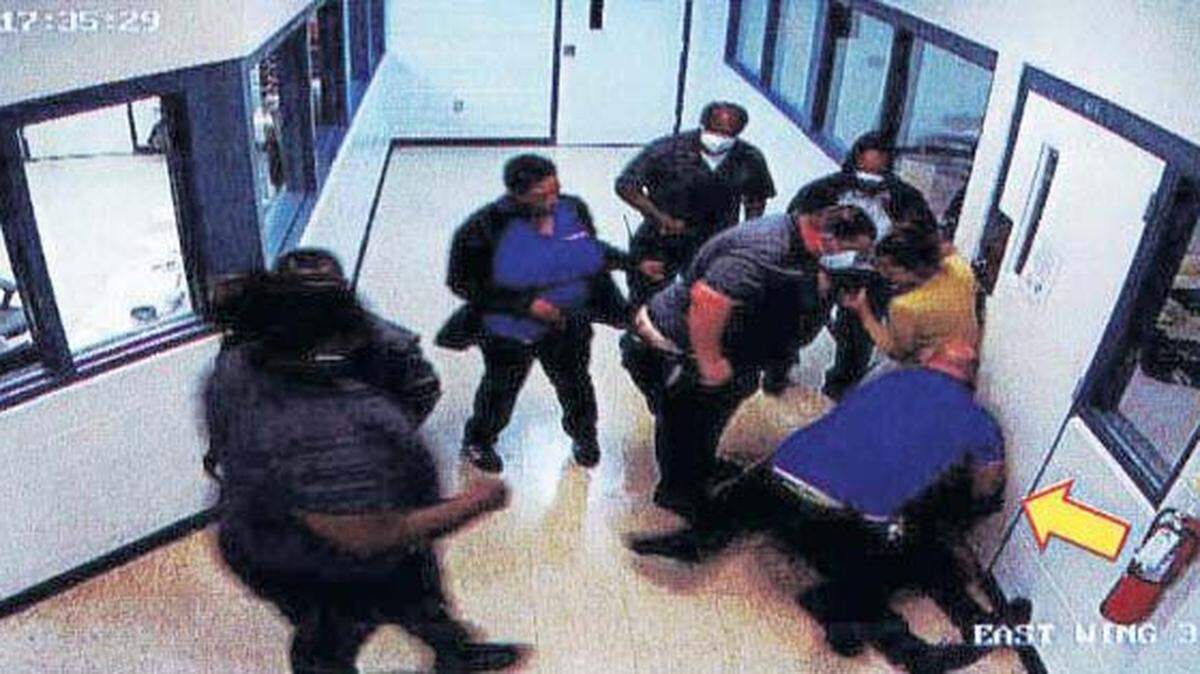
At-risk teens in Florida have been sexually abused, threatened, beaten and choked — all while in state custody, all in the name of punishment. One guard at a juvenile detention center broke a boy’s jaw.
Our tax dollars at work.
When the teens tried to report the mistreatment they were suffering at an Okeechobee detention center run by TrueCore Behavioral Solutions, they were barred from doing so, a Department of Juvenile Justice (DJJ) investigation found.
Trapped, one desperate group of 20 teenage boys at the Okeechobee Juvenile Offender Correctional Center staged a riot in August 2020, violently taking over the detention facility, endangering their own lives and those of staff members. Video footage shows them tossing furniture, smashing light fixtures, throwing chairs at staff members and breaking down doors. A group was later charged, but those charges were dropped.
Miami Herald reporters dug into state Department of Juvenile Justice records and revealed, in an investigation called “Riot without Repercussions” on Sunday’s front page, that in the months leading up to the riot, the boys, ages 13 through 21, reported being threatened, beaten, jumped and choked by staff.
Riot a plea for help
All those allegations were deemed “inconclusive” or “unsubstantiated” when staff denied them to investigators, and the cases were closed with no action taken.
Some teens later said they participated in the 20-hour riot because it was the only way to call attention to the constant abuse they were suffering.
Strange way to reform at-risk teens, Florida.
Incredibly, TrueCore still is a central player in Florida’s largely privatized juvenile- network. It runs nine other facilities and holds contracts with the state totaling $350 million.
This year, at one of those facilities in Miami-Dade, a TrueCore staffer was arrested on a charge of sexually abusing a female detainee.
Enough is enough. DJJ needs to get its head out of the sand, stop protecting politically connected contractors and, instead, do its utmost to protect the troubled youths in its care from such horrendous brutality.
We understand that many of these teens in detention are not an easy group to discipline. But mistreatment and abuse is another matter, and so deeply wrong given their young, tattered lives.
TrueCore came under the spotlight after the riot. A DJJ probe found that one staff member allegedly broke a youth’s jaw in a camera-free observation cell where youths say perceived troublemakers were taken with special staff for punishment. Some youths who reported being isolated just for asking to report abuse to the state’s child-abuse hot-line said they were coerced into not doing so, either through threats or bribes in the form of coveted snacks.
After an investigation by the inspector general found “possibly systemic problems,” DJJ quietly replaced TrueCore as the facility’s operator.
DJJ’s statement
Then DJJ Secretary Simone Marstiller — who now heads the state Agency for Health Care Administration — issued a statement at the time of the detention riot, the Herald reports:
“The Florida Department of Juvenile Justice (DJJ) is entrusted with the welfare and safekeeping of the youth who reside within our programs. … These incidents, along with the allegations of misconduct and abuse at the program, are appalling and unacceptable. … “Our contracted providers must ensure no harm befalls the youth in our care, and should they fail to meet that responsibility, DJJ will take action to remove youth from an unsafe environment.”
In a statement to the Herald, a TrueCore representative said: “Many of the children entrusted in our care have a multitude of challenges, and we take immense pride in the trauma-responsive rehabilitation and education which our programs provide to them.
“Unfortunately, events have occurred at the facilities of TrueCore, as well as other providers, which sometimes overshadow the success achieved.”
The lesson from last year’s riot at Okeechobee seems unlearned.
Take this seriously
DJJ must do a better job of holding the private providers accountable for the way they treat troubled teens. DJJ usually signs a contract and hands over the operation to a private company. It conducts annual surveys of the facility, then other inspections that are supposed to be a surprise. Neither are enough to capture systemic problems.
When the detainees do get their complaints heard by the outside world, DJJ will investigate, but seldom verifies the alleged wrongdoing, and cases are closed.
DJJ has to root out providers who mistreat kids, sometimes for years. No taxpayer should want to fund any part of that scenario. The oversight system must improve dramatically.
The worst providers should not simply be allowed to change their names, fire or relocate administrators, and otherwise remain in business. The department needs to better track the types of misconduct occurring throughout the system.
In 2017, the Miami Herald published an investigative series into the treatment of youth at detention centers called “Fight Club.” Little has changed. At the time, DJJ seemed incredulous about the Herald’s findings — then did nothing to stop it.
It’s past time for DJJ to ferret out the abuse that at-risk kids endure in its detention facilities, do what is necessary to stop it — and not make believe it’s not happening.
BEHIND THE STORY
MOREWhat's an editorial?
Editorials are opinion pieces that reflect the views of the Miami Herald Editorial Board, a group of opinion journalists that operates separately from the Miami Herald newsroom. Miami Herald Editorial Board members are: opinion editor Amy Driscoll and editorial writers Isadora Rangel and Mary Anna Mancuso. Read more by clicking the arrow in the upper right.
What's the difference between an op-ed and a column?
How does the Miami Herald Editorial Board decide what to write about?
The Editorial Board, made up of experienced opinion journalists, primarily addresses local and state issues that affect South Florida residents. Each board member has an area of focus, such as education, COVID or local government policy. Board members meet daily and bring up an array of topics for discussion. Once a topic is fully discussed, board members will further report the issue, interviewing stakeholders and others involved and affected, so that the board can present the most informed opinion possible. We strive to provide our community with thought leadership that advocates for policies and priorities that strengthen our communities. Our editorials promote social justice, fairness in economic, educational and social opportunities and an end to systemic racism and inequality. The Editorial Board is separate from the reporters and editors of the Miami Herald newsroom.
How can I contribute to the Miami Herald Opinion section?
The Editorial Board accepts op-ed submissions of 650-700 words from community members who want to argue a specific viewpoint or idea that is relevant to our area. You can email an op-ed submission to oped@miamiherald.com. We also accept 150-word letters to the editor from readers who want to offer their points of view on current issues. For more information on how to submit a letter, go here.
This story was originally published October 17, 2021 at 7:00 AM.