
So, Florida schools need feds’ $2.3 billion, after all? We thought so, Gov. DeSantis | Editorial
Until Wednesday, Florida was the only state in the nation leaving billions of federal COVID-19 relief dollars for education on the table. The reason? School districts didn’t express a desire for that money, according to the governor’s office.
The Biden administration on Monday said the state had missed deadlines in June, July and August to submit plans on how to spend money from the American Rescue Plan signed by the president. That happened because, “No district has articulated a need for funding that cannot be met with currently available resources,” Gov. Ron DeSantis’ spokeswoman Christina Pushaw said in a statement to the Herald/Times on Monday.
Pushaw was referring to the first two rounds of federal funding that already have been allocated. But the state could not receive the third round — worth $2.3 billion — without submitting a plan to the Biden administration.
Now a 342-page plan has materialized, just two days after the U.S. Department of Education sent a letter to Florida warning that the state’s “failure to meet its responsibilities is delaying the release of essential” resources. The Associated Press reported the plan was submitted late Wednesday.
We’re puzzled. Did school districts suddenly change their minds about wanting to tap into those $2.3 billion? Or was the answer from DeSantis’ office pure smoke and mirrors?
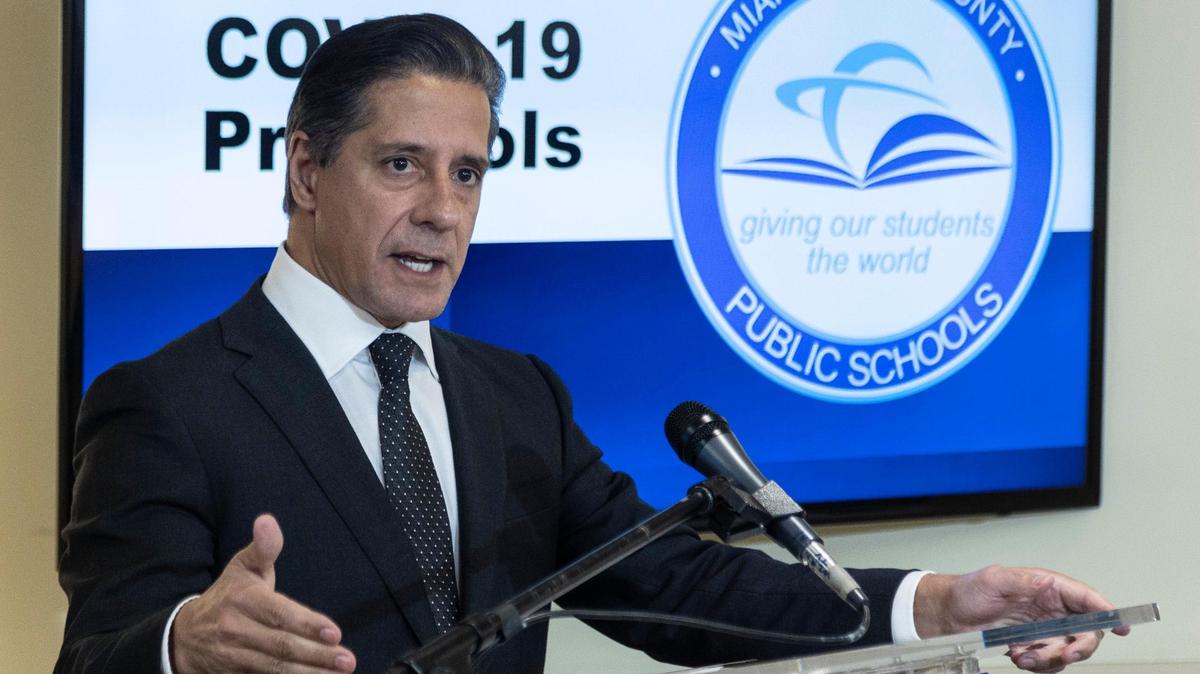
The narrative pushed by the governor didn’t hold water in Florida’s largest school district in Miami-Dade. Superintendent Alberto Carvalho told the Herald Editorial Board the obvious: Public schools need that money in one of the counties hardest hit by COVID. He added that officials from many districts asked the Florida Department of Education during several routine calls when the application process for the funds would begin.
After taking questions from the Editorial Board, Carvalho decided to make his desire for those dollars known in a more formal way: He sent a letter on Wednesday to Education Commissioner Richard Corcoran. That was just hours before Florida shipped its plan for the $2.3 billion to D.C., and it’s unclear whether the letter pushed the state to move faster.
Of course, the Editorial Board had some questions, too, querying not only the Miami-Dade school district, but also the Florida Department of Education. FDOE had its own version of the facts that rebutted the scathing letter from the federal government and, at the same time, undermined the narrative that districts weren’t interested in the money.
The FDOE said that, “Florida has NEVER missed any deadline” and that it “communicated well in advance” with the federal government that it wouldn’t be able to meet a June deadline because it “needed additional time” to gather and analyze end-of-year student achievement data. The federal government noted in its letter that Florida also missed deadlines it was expected to meet in July and August after conversations with its federal counterparts. Florida refuted that by providing an Aug. 2 email that showed the state telling the U.S. Department of Education that it anticipated sharing the plan in August with the State Board of Education, not that the plan would be submitted by then.
Perhaps this was just a big misunderstanding between the federal government, Florida and school districts — though it’s hard to believe that when we’re talking about DeSantis and the Biden administration, which are each other’s favorite political punching bags.
Miami-Dade’s share of the $2.3 billion is $1.05 billion to be split with charter schools, which are public but run by private entities. Traditional public schools get $823 million that the district plans to use to accelerate student learning, address mental health, make infrastructure improvements to prepare for a potential new wave of the coronavirus and staff retention, Carvalho said. These are much needed.
The good news is that, with a little push, things are getting done. The FDOE said a process “will be set up to allow districts to request” the third round of federal dollars, but didn’t say when.
How about sooner rather than later?
BEHIND THE STORY
MOREWhat's an editorial?
Editorials are opinion pieces that reflect the views of the Miami Herald Editorial Board, a group of opinion journalists that operates separately from the Miami Herald newsroom. Miami Herald Editorial Board members are: opinion editor Amy Driscoll and editorial writers Isadora Rangel and Mary Anna Mancuso. Read more by clicking the arrow in the upper right.
What's the difference between an op-ed and a column?
How does the Miami Herald Editorial Board decide what to write about?
The Editorial Board, made up of experienced opinion journalists, primarily addresses local and state issues that affect South Florida residents. Each board member has an area of focus, such as education, COVID or local government policy. Board members meet daily and bring up an array of topics for discussion. Once a topic is fully discussed, board members will further report the issue, interviewing stakeholders and others involved and affected, so that the board can present the most informed opinion possible. We strive to provide our community with thought leadership that advocates for policies and priorities that strengthen our communities. Our editorials promote social justice, fairness in economic, educational and social opportunities and an end to systemic racism and inequality. The Editorial Board is separate from the reporters and editors of the Miami Herald newsroom.
How can I contribute to the Miami Herald Opinion section?
The Editorial Board accepts op-ed submissions of 650-700 words from community members who want to argue a specific viewpoint or idea that is relevant to our area. You can email an op-ed submission to oped@miamiherald.com. We also accept 150-word letters to the editor from readers who want to offer their points of view on current issues. For more information on how to submit a letter, go here.
This story was originally published October 7, 2021 at 1:31 PM.