
Florida ignores judge’s mask ruling, but expects us to follow DeSantis’ edicts | Editorial
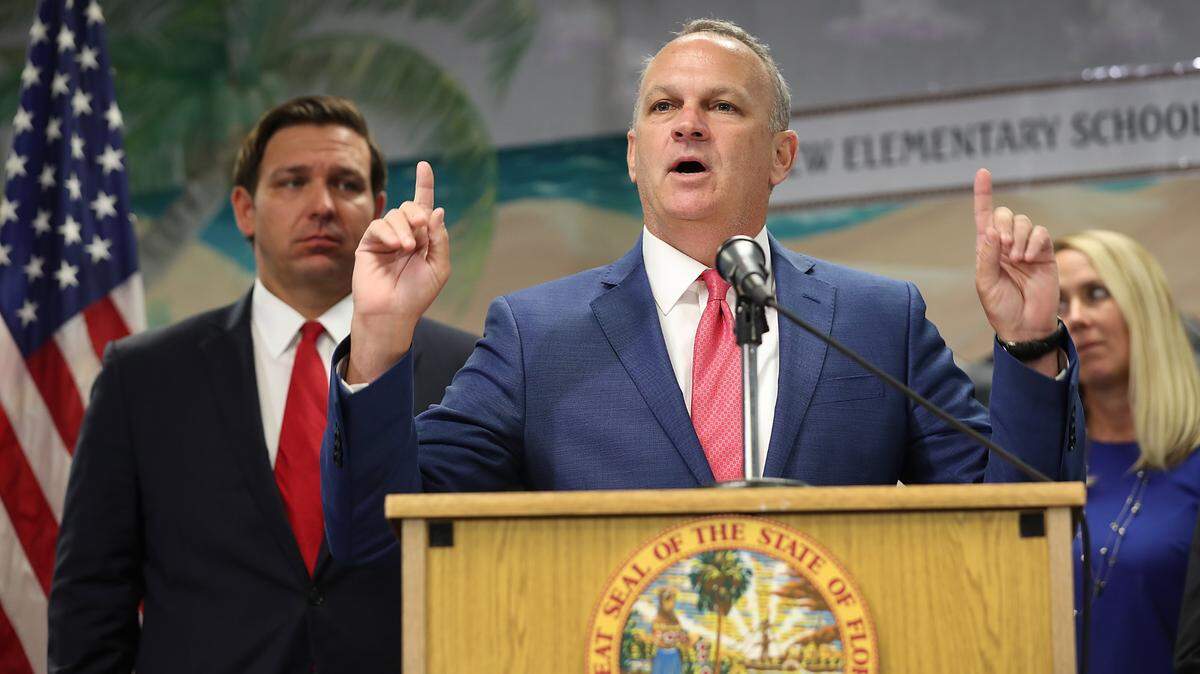
First, it was the disregard for local school boards’ decisions on whether to require masks. Now, the state is showing the same contempt for the courts.
Education Commissioner Richard Corcoran announced Monday he has begun withholding money from two school districts despite a judge’s ruling that they can enforce temporary mask mandates. Judge John C. Cooper concluded on Friday that Gov. Ron DeSantis does not have the authority to ban these mandates.
Cooper’s ruling didn’t seem to matter in Corcoran’s decision to punish school boards in Broward and Alachua, the first to pass mandates — Miami-Dade and nine others have followed. In fact, he didn’t even mention the ruling in his statement, in which he wrote — clueless as to the irony — that, “Elected officials cannot pick and choose what laws they want to follow.”
Corcoran’s posture is emblematic of the DeSantis administration: arrogant, authoritative and detached from the reality that the rest of the state doesn’t always have to fall in line with their deadly approach to COVID-19.
It’s unclear whether Corcoran himself could face any consequences. But he is a lawyer, and his decision goes against professional ethics, Charles Gallagher, the lead attorney representing the parents who sued the state, told the Herald Editorial Board.
Corcoran in contempt?
Cooper issued a verbal ruling on Friday, which lasted more than two hours, so the plaintiffs’ attorneys spent the weekend putting it into writing. The defense also has a chance to respond. Although Gallagher believes the oral ruling is binding and enforceable, he said that he will wait until it’s finalized to file a motion of contempt against Corcoran if he doesn’t change course.
“They are flirting with contempt, or are already in contempt,” Gallagher told the Board.
The state is expected to file an appeal to Cooper’s ruling, likely immediately after it’s final, asking the First District Court of Appeal to stay the ruling. That will trigger a petition from the plaintiffs to allow the ruling, and mask mandates, to remain in place, Gallagher said. A decision on that could be made with or without a hearing, the Herald reported. So why couldn’t Corcoran wait for the court proceedings to run their course?
The Florida Department of Education told Politico Florida that the sanctions against Broward and Alachua happened on Thursday, the day before Cooper’s ruling. However, the districts weren’t notified until Monday, the day Corcoran issued his statement. Something isn’t adding up here.
Corcoran’s action speaks volumes about a state government that, during the pandemic, has concentrated power in the hands of the governor and the Legislature. DeSantis, under a law passed this year, can cancel emergency orders by a city or county if he “determines that such order unnecessarily restricts individual rights or liberties.” That has left local governments with little they can do to protect their constituents from COVID.
Misguided edicts
The concept of local control, which Republicans fiercely defended in the past, has been replaced by my-way-or-the-highway edicts from the governor and his bureaucrats. Democratic-leaning parts of the state, such as South Florida, appear to be the target.
That’s dangerous when a misguided governor is at the helm. While Florida battles the worst wave of COVID-19 since the beginning of the pandemic, DeSantis has turned to fringe medical experts. Among those is a California psychiatrist who equated masks with “child abuse” and has promoted parasite drug ivermectin as an alternative to widespread vaccination against the coronavirus. Misinformation about the drug has led people to seek a version meant for farm animals.
Four school districts in counties that voted for Donald Trump now have enacted masks mandates. Even in some conservative communities, school officials aren’t willing to risk the deaths of children and staff to please the governor and GOP pundits. Corcoran’s decision to withhold school-board members’ salaries has had little impact in changing their minds, and that’s making the governor look weak.
If DeSantis is anything like his mentor Donald Trump, he will make even worse decisions to avoid any sign of weakness. No court ruling will change that MO.
BEHIND THE STORY
MOREWhat's an editorial?
Editorials are opinion pieces that reflect the views of the Miami Herald Editorial Board, a group of opinion journalists that operates separately from the Miami Herald newsroom. Miami Herald Editorial Board members are: opinion editor Amy Driscoll and editorial writers Isadora Rangel and Mary Anna Mancuso. Read more by clicking the arrow in the upper right.
What's the difference between an op-ed and a column?
How does the Miami Herald Editorial Board decide what to write about?
The Editorial Board, made up of experienced opinion journalists, primarily addresses local and state issues that affect South Florida residents. Each board member has an area of focus, such as education, COVID or local government policy. Board members meet daily and bring up an array of topics for discussion. Once a topic is fully discussed, board members will further report the issue, interviewing stakeholders and others involved and affected, so that the board can present the most informed opinion possible. We strive to provide our community with thought leadership that advocates for policies and priorities that strengthen our communities. Our editorials promote social justice, fairness in economic, educational and social opportunities and an end to systemic racism and inequality. The Editorial Board is separate from the reporters and editors of the Miami Herald newsroom.
How can I contribute to the Miami Herald Opinion section?
The Editorial Board accepts op-ed submissions of 650-700 words from community members who want to argue a specific viewpoint or idea that is relevant to our area. You can email an op-ed submission to oped@miamiherald.com. We also accept 150-word letters to the editor from readers who want to offer their points of view on current issues. For more information on how to submit a letter, go here.
This story was originally published September 1, 2021 at 1:25 PM.