
With 2020 Census in hand, Florida lawmakers have one job: Don’t screw it up again | Editorial
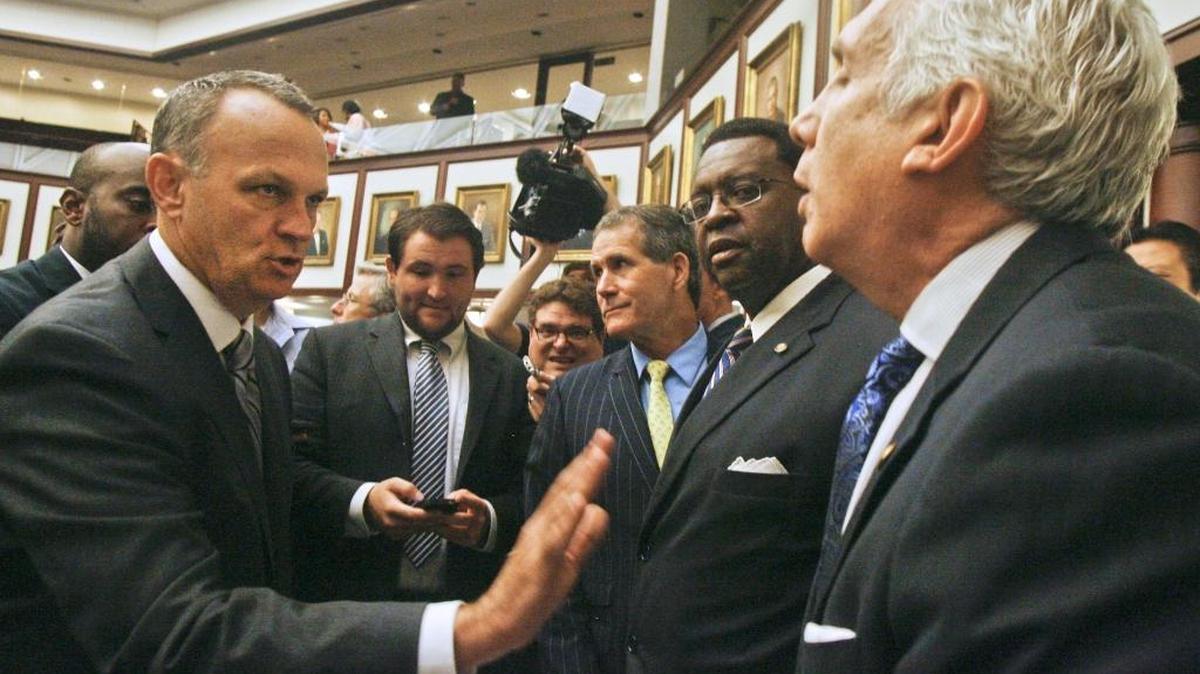
It’s like asking children not to stick their hand in the cookie jar. There’s a strong likelihood they are going to do it, no matter how much they’re warned of the consequences.
But we’ll say it anyway: Lawmakers, don’t mess up Florida’s redistricting process — again.
Of course, we’re not Pollyanna, assuming that the Legislature won’t try to redraw Florida’s congressional and legislative seats to benefit the party that’s in control of the process — in this case, Republicans.
The Legislature set a bad precedent the last time it reconfigured the state’s maps for Congress, the Florida House and Senate after the 2010 Census. They will start that process again after receiving 2020 Census numbers, released Thursday, that are expected to give Florida a new congressional seat for a total of 28 thanks to the state’s population growth.
The point of redistricting is to reflect population changes in each district and make sure communities are adequately represented. But the process last time wasn’t just bad — it was shameful.
GOP political operatives subverted the process, drew their own maps and schemed to have them submitted by regular people, under fake names, through a portal set up to receive public input. They made a mockery of the citizens who attended meetings across the state set up by Florida House and Senate leaders who vowed to listen to Floridians on how to provide the fairest representation of their communities.
Those operative-drawn maps were adopted and remained in use for the 2012 and 2014 election cycles. It was only after the League of Women Voters and other civic groups sued that the courts threw out the maps, the Herald reported this week.
This time around, Florida House Speaker Chris Sprowls and Senate President Wilton Simpson warned legislators in a statement “to take care to insulate themselves from interests that may intentionally or unintentionally attempt to inappropriately influence the redistricting process,” the Herald reported.
We’ll see whether the admonition was performative or sincere.
Legislators must understand that court battles are expensive for the taxpayers who have to foot the bill to defend lawmakers’ indefensible actions. Also, they are bound by the state Constitution, to which voters added in 2010 the Fair Districts amendments. Those measures ban legislators from drawing districts to benefit incumbents or a political party and required them to follow geographic and political boundaries, drawing districts that were reasonably compact in design. Some of the districts drawn in 2012 looked more like slithering pythons cutting across several communities with the clear intent of packing as many voters with similar characteristics — race or voter registration, for example — into one single district, therefore diluting their representation.
There’s great incentive for Republicans to stick their hand into the cookie jar again when they pass new district maps next year.
Democrats hold a slim majority in the U.S. House of Representatives and any small shift in Florida could alter the power balance on Capitol Hill.
The Florida GOP knows how much power it holds in its hands and it hasn’t been shy in wielding it. Gov. Ron DeSantis has opted to leave unfilled the late U.S. Rep. Alcee Hastings’ seat, covering Broward and Palm Beach counties, for more than nine months. Hastings died in April. But instead of calling for a quick special election to fill that reliably Democratic district, DeSantis is making voters wait until January 2022. The intent seems to be to make U.S. House Democrats’ lives harder. Without that reliable Democratic vote, they can can afford only two defections within their ranks to pass bills.
Meanwhile, 800,000 people, most of them Black, who live in District 20 will have neither representation in Congress, nor an advocate for federal funds, until after the January election. Not surprisingly, when the GOP lost one of its congressmen, Bill Young, who died in 2013, things moved more quickly. He was replaced in just over five months.
It’s already difficult to imagine fair districts emerging out of what already isn’t a fair fight.
The one glimmer of hope is that, thanks to our infamy, more people are watching Florida’s redistricting process — and they seem ready to lawyer up again. The National Democratic Redistricting Committee is hiring a Florida director to monitor the process and how state leaders listen to communities, the Herald reported.
Ellen Freidin, founder of the FairDistricts Florida Movement, told the Herald that she hopes Republicans will work to “earn back that trust.”
Unfortunately, redistricting in Florida seems to be less about earning trust and more about hoarding more power.
BEHIND THE STORY
MOREWhat's an editorial?
Editorials are opinion pieces that reflect the views of the Miami Herald Editorial Board, a group of opinion journalists that operates separately from the Miami Herald newsroom. Miami Herald Editorial Board members are: opinion editor Amy Driscoll and editorial writers Isadora Rangel and Mary Anna Mancuso. Read more by clicking the arrow in the upper right.
What's the difference between an op-ed and a column?
How does the Miami Herald Editorial Board decide what to write about?
The Editorial Board, made up of experienced opinion journalists, primarily addresses local and state issues that affect South Florida residents. Each board member has an area of focus, such as education, COVID or local government policy. Board members meet daily and bring up an array of topics for discussion. Once a topic is fully discussed, board members will further report the issue, interviewing stakeholders and others involved and affected, so that the board can present the most informed opinion possible. We strive to provide our community with thought leadership that advocates for policies and priorities that strengthen our communities. Our editorials promote social justice, fairness in economic, educational and social opportunities and an end to systemic racism and inequality. The Editorial Board is separate from the reporters and editors of the Miami Herald newsroom.
How can I contribute to the Miami Herald Opinion section?
The Editorial Board accepts op-ed submissions of 650-700 words from community members who want to argue a specific viewpoint or idea that is relevant to our area. You can email an op-ed submission to oped@miamiherald.com. We also accept 150-word letters to the editor from readers who want to offer their points of view on current issues. For more information on how to submit a letter, go here.