
Evictions are about to soar. But there’s help — and Miami-Dade needs to take the lead | Editorial
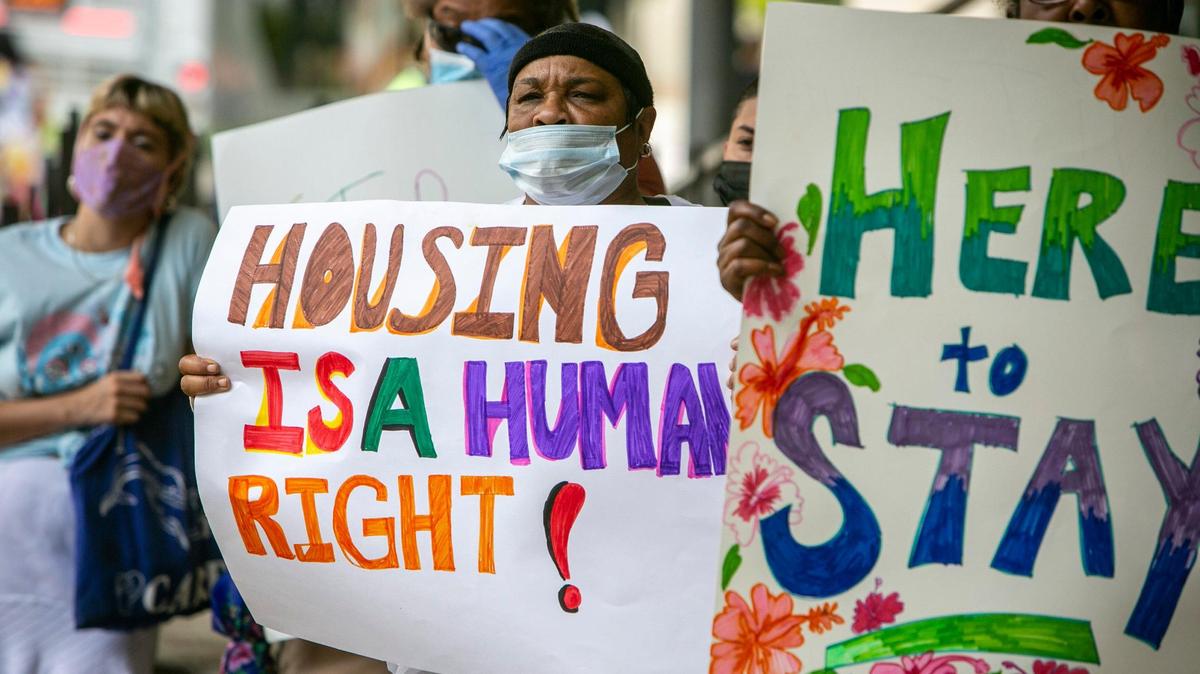
“Avalanche.” “Free-for-all.”
Those are the dire words housing and economic experts are using to describe what’s likely to happen in Miami-Dade County starting on Saturday, when the federal, pandemic-driven moratorium on evictions is set to end. We’ll see an avalanche of evictions, they say, and a free-for-all in court when landlords are finally able to press their cases against tenants who have fallen behind on the rent.
We can see this housing disaster coming at us. The county must be ready to help, now.
Some 188,000 Miami-Dade County renters will be at high risk of being forced out of their homes. Nationally, as many as 11 million renters may be in the same position.
The impacts will be felt beyond those specific landlords and tenants. People without financial resources who are forced to move may become homeless. They may have to move far from jobs or schools or transportation or family or support systems. Evicted residents will be thrust into a overheated housing market competing with out-of-towners from places like New York and San Francisco who are used to paying as much as 19% more than Miami residents for housing. And while landlords may have little trouble finding new tenants after an eviction, the net effect will be a middle-class Miami that continues to be hollowed out.
Landlords vs. tenants
We’re sympathetic to landlords, many of whom have been unable to collect the rent they’re owed for many months. That’s not right or fair, and that loss of income can play havoc with a small business or a retirement budget. Some evictions that weren’t linked to the pandemic have continued. But this community also needs to look out for renters if it hopes to sustain a vibrant core. The average increase in Miami rental costs already is outstripping the national average. The end of the moratorium, which had to come eventually, is likely to make a critical situation even worse.
It’s not as if this isn’t a well-known issue. Miami-Dade and state leaders have long been aware that South Florida has an affordable-housing problem. That’s been exacerbated by the pandemic-led influx of money from other, higher-priced markets to the north. Legislators, who had the opportunity this year to help South Florida through the state’s affordable-housing fund, the Sadowski Trust Fund, instead did the opposite. They passed a law that permanently divvied up the fund, mostly for other purposes.
Realtor groups have now mounted a well-funded campaign to put the issue on the ballot statewide in 2022. We hope it gets on the ballot, and that lawmakers are forced to confront their own ill-advised actions.
But this latest disaster won’t wait till 2022. So what can we do now?
Assistance is available
Miami-Dade County should step up its efforts to reach both tenants and landlords to guide them toward help. Congress has allocated federal money to help landlords and tenants. There are county and state programs that may blunt the worst of this — money to help with rent or relocation, legal help in court or an explanation of tenants’ rights. Several cities, including Miami and Hialeah, have rental-relief programs.
One website, Axishelps.org, has a list of resources, including application deadlines for Miami-Dade residents in English, Spanish and Creole. Legal Services of Greater Miami, at legalservicesmiami.org, offers self-help resources online and gives free civil legal assistance to those who qualify. But you have to know about these programs to apply.
Miami-Dade leaders haven’t been able to do enough to fix the county’s long-term affordable housing problem. But this is something they can do — now: Make it a top priority to raise awareness countywide about the housing avalanche that’s about to hit us all.
BEHIND THE STORY
MOREWhat's an editorial?
Editorials are opinion pieces that reflect the views of the Miami Herald Editorial Board, a group of opinion journalists that operates separately from the Miami Herald newsroom. Miami Herald Editorial Board members are: opinion editor Amy Driscoll and editorial writers Isadora Rangel and Mary Anna Mancuso. Read more by clicking the arrow in the upper right.
What's the difference between an op-ed and a column?
How does the Miami Herald Editorial Board decide what to write about?
The Editorial Board, made up of experienced opinion journalists, primarily addresses local and state issues that affect South Florida residents. Each board member has an area of focus, such as education, COVID or local government policy. Board members meet daily and bring up an array of topics for discussion. Once a topic is fully discussed, board members will further report the issue, interviewing stakeholders and others involved and affected, so that the board can present the most informed opinion possible. We strive to provide our community with thought leadership that advocates for policies and priorities that strengthen our communities. Our editorials promote social justice, fairness in economic, educational and social opportunities and an end to systemic racism and inequality. The Editorial Board is separate from the reporters and editors of the Miami Herald newsroom.
How can I contribute to the Miami Herald Opinion section?
The Editorial Board accepts op-ed submissions of 650-700 words from community members who want to argue a specific viewpoint or idea that is relevant to our area. You can email an op-ed submission to oped@miamiherald.com. We also accept 150-word letters to the editor from readers who want to offer their points of view on current issues. For more information on how to submit a letter, go here.
This story was originally published July 26, 2021 at 5:14 PM.