
These Miami Republicans can help GOP move past Trump’s ‘Build the wall’ on immigration | Editorial
In a not-so-distant past, Republicans looked at immigration reform beyond the chants of “Build the wall.”
But ever since Donald Trump radicalized the party’s base on this issue, few in the GOP have dared to utter the terms “compassion” and “pathway to legalization” for immigrants in the country illegally.
There once was hope that Miami’s homegrown talent would lead the nation toward bipartisan immigration reform that strengthens border security and also recognizes that deporting an estimated 11 million immigrants not only is impractical but also destroys families. But then U.S. Sen. Marco Rubio walked away from his own bipartisan reform bill in 2013 and never looked back at this hot-button issue.
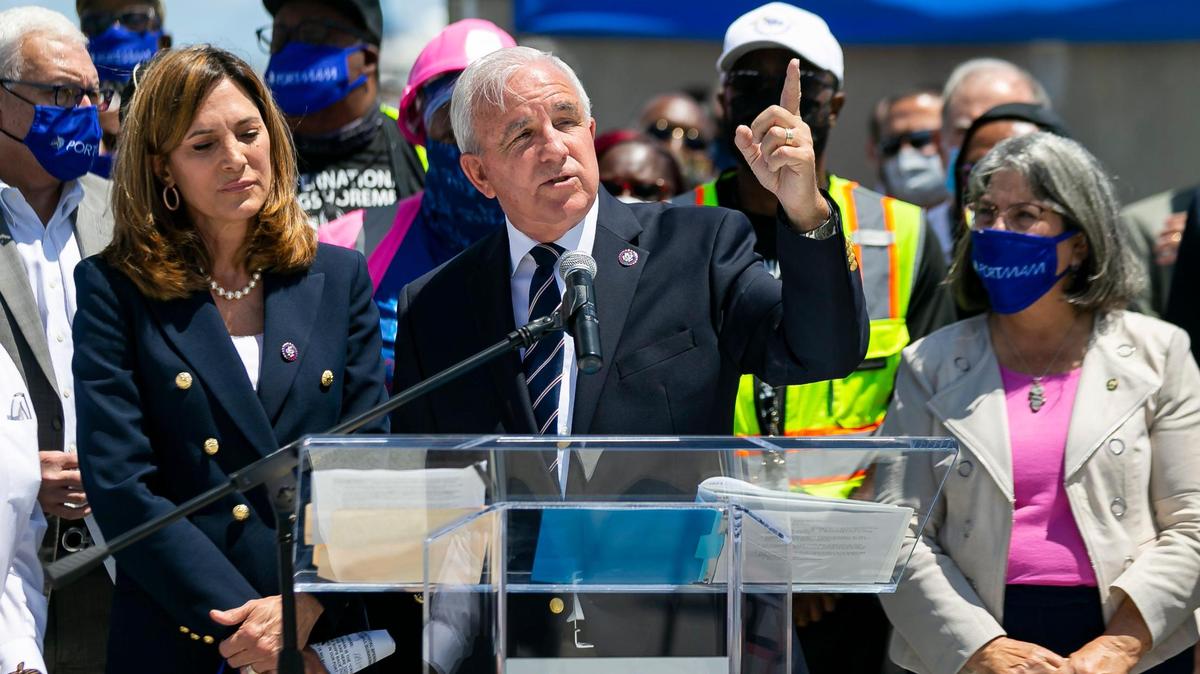
Now, as Politico reported this week, two Miami Republicans, freshmen U.S. Reps. Maria Elvira Salazar and Carlos Gimenez, are emerging as new voices on the issue. They are advocating for a “more welcoming immigration strategy” than the hardline stance promoted by Trump, arguing that it will help the GOP expand the inroads it made with Latino voters last year. They support legalizing undocumented immigrants but offer a harder path than what President Biden and Democrats have proposed.
That’s a start.
But they are outliers in a party where a large part of its electorate still fall in line with Trump. Can they bring the rest of the GOP along? Unfortunately, it’s unlikely but their efforts are commendable.
Not every Republican in Congress has the ability of being able to stray from Trump’s grip on this issue. While many congressional districts are gerrymandered and lean heavily in favor of one party, Salazar and Gimenez represent truly competitive districts that until last year were held by Democrats. Salazar’s District 27, covering areas like Miami Beach, Little Havana and Coral Gables, voted for Joe Biden.
It’s in their best interest to present themselves as independent-minded Republicans if they want to win reelection when their districts are redrawn ahead of 2022.
Broken promises
It’s also in Congress’ best interest to allow Salazar and Gimenez a seat at the table. Democrats and Republicans have kicked the can down the road for far too long. We won’t forget Barack Obama’s broken promise of passing immigration reform in his first year in office, when Democrats controlled the House and Senate.
Democrats now hold slim majorities in the U.S. House and Senate and passing any major reform without buy-in from Republicans will prove difficult.
No immigration reform will be worth it unless it addresses the southern border crisis, gives immigrants who entered the country illegally a chance if they have have paid their dues (i.e. paying taxes, passing a background check) and provides relief for people on Temporary Protected Status, which is granted to immigrants from countries like Haiti and Venezuela dealing with violence, political unrest or natural disaster. The latter is urgent given the U.S. Supreme Court’s unanimous ruling on Monday that immigrants on TPS here illegally do not qualify for green cards.
Salazar, Gimenez and Miami-Dade’s other GOP U.S. Rep. Mario Diaz-Balart were among the nine House Republicans who voted for a bill in March to protect Dreamers who were brought to the country illegally when they were younger and provide a potential route to citizenship for TPS recipients. But, as the Herald reported, that legislation has little chance of passing the U.S. Senate.
Despite voting for the bill, Salazar warned the legislation proposed by Democrats didn’t do enough to address the crisis at the southern border and led a group of Republicans pushing for an alternative called the Dignity Act. Her proposal also would protect Dreamers; allow immigrants currently in the U.S. to apply for legal status, and later citizenship, if they clear certain hurdles; expand visas for agricultural workers; boost border security and implement mandatory E-Verify, a controversial federal program that checks the immigration status of workers.
Gimenez, the former mayor of Miami-Dade County, is offering a less sweeping solution that would allow immigrants to pursue a pathway to citizenship by applying through their country of origin but without having to return to that country, Politico reported. He said in January he wanted immigrants to “get in line” for citizenship but it’s unclear what that means given there’s not one single “line” because immigrants apply through different categories based on employment and family ties. The Editorial Board contacted his office for more details about his proposal, but an assistant did not provide any.
“I’m offering dignity,” Salazar told ABC News in March. “What I’m offering is the art of the possible. I’m offering to bring those people out of the shadows. The ones with (Temporary Protected Status) and everybody who’s been here for more than five years, and does not have a criminal record... and then, if they want to become Americans after 10 years, they could do so.
“What I am offering is what the Hispanic community wants.”
Salazar and Gimenez, both Cuban Americans, are smart to know what their constituents want. Republicans and Democrats should be smart and listen to them.
BEHIND THE STORY
MOREWhat's an editorial?
Editorials are opinion pieces that reflect the views of the Miami Herald Editorial Board, a group of opinion journalists that operates separately from the Miami Herald newsroom. Miami Herald Editorial Board members are: opinion editor Amy Driscoll and editorial writers Isadora Rangel and Mary Anna Mancuso. Read more by clicking the arrow in the upper right.
What's the difference between an op-ed and a column?
How does the Miami Herald Editorial Board decide what to write about?
The Editorial Board, made up of experienced opinion journalists, primarily addresses local and state issues that affect South Florida residents. Each board member has an area of focus, such as education, COVID or local government policy. Board members meet daily and bring up an array of topics for discussion. Once a topic is fully discussed, board members will further report the issue, interviewing stakeholders and others involved and affected, so that the board can present the most informed opinion possible. We strive to provide our community with thought leadership that advocates for policies and priorities that strengthen our communities. Our editorials promote social justice, fairness in economic, educational and social opportunities and an end to systemic racism and inequality. The Editorial Board is separate from the reporters and editors of the Miami Herald newsroom.
How can I contribute to the Miami Herald Opinion section?
The Editorial Board accepts op-ed submissions of 650-700 words from community members who want to argue a specific viewpoint or idea that is relevant to our area. You can email an op-ed submission to oped@miamiherald.com. We also accept 150-word letters to the editor from readers who want to offer their points of view on current issues. For more information on how to submit a letter, go here.
This story was originally published June 11, 2021 at 6:00 AM.