
It’s a shame Miami’s Republican lawmakers in Congress jumped on the conspiracy-theory train | Editorial
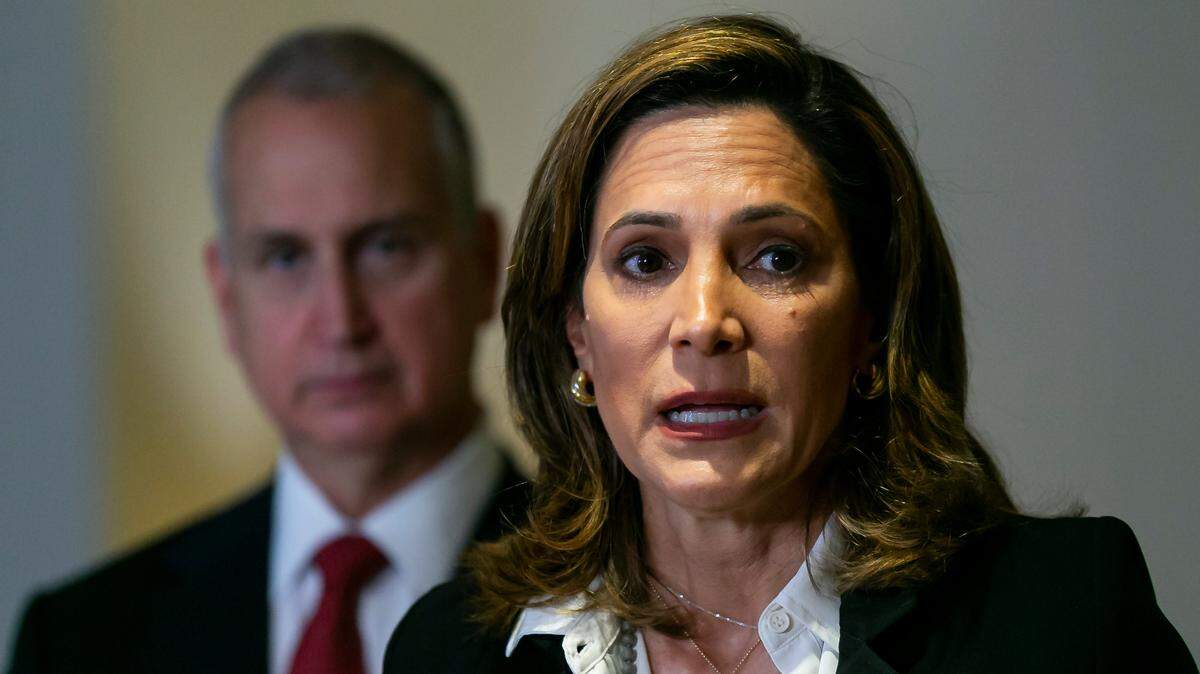
The least we can expect from the people we elect to Congress is that they tell the truth about basic facts, such as who won the 2020 presidential election.
That commitment to the truth is no longer part of the job description of Miami-Dade Republican U.S. Reps. Mario Diaz-Balart and Maria Elvira Salazar. Both spread false information about the election results during appearances on Spanish talk radio in January.
A new media monitoring report published Wednesday by organizations such as Florida Rising and Miami Freedom Project showed just how widespread conspiracy theories were on Spanish-language radio in the lead-up, and aftermath, of the Jan. 6 Capitol riots, the Miami Herald’s Lautaro Grinspan reported. Among such misinformation was that thousands of dead people and noncitizens voted in the election.
These conspiracy theories were fueled by Donald Trump himself and a cabal of Republican fawners, who didn’t blink an eye — and didn’t seem to try, or want, to fact-check claims of widespread fraud — before perpetuating them.
Salazar repeated a false narrative about the integrity of the vote in Pennsylvania. She made her remarks on a radio-show appearance on Jan. 11, after it became well established that lies about widespread fraud during the 2020 elections fueled rioters who disrupted Congress’ certification of election results.
“How is it possible that in Pennsylvania there are 200,000 more votes on Election Day than there were [voters] in the electoral rolls? That’s not possible,” she said, as reported in the Herald.
If anyone should know the basics of fact-checking, it should be Salazar. She’s a former TV journalist who worked for major Spanish-language networks such as Univision. She appeared to be citing a repeatedly debunked conspiracy theory based on incomplete data. Of course, Trump himself also shared this misinformation on Twitter.
Diaz-Balart, who voted to de-certify Pennsylvania’s Electoral College results, also zeroed in on that state’s results. The day after the Jan. 6 attacks, he told a radio talk show host that changes made to Pennsylvania’s election policies were “absolutely unconstitutional.” That argument was rejected by courts in the past and contested by constitutional law scholars, the Herald reported.
Did Salazar and Diaz-Balart just fail to do their due diligence and truly believe what they said? That’s possible, given that many Republicans still believe Trump won the elections.
Are they lying in order to secure the votes of their easily manipulated target audience?
Or did they see the writing on the wall: Republicans who don’t fall in line with the former president will be fed to the lions à la Liz Cheney?
We might never know their true intentions. But we know the outcome of their actions: Many in their party have not accepted Joe Biden as a legitimate president, making the country’s political polarization even worse and leading to violence.
BEHIND THE STORY
MOREWhat's an editorial?
Editorials are opinion pieces that reflect the views of the Miami Herald Editorial Board, a group of opinion journalists that operates separately from the Miami Herald newsroom. Miami Herald Editorial Board members are: opinion editor Amy Driscoll and editorial writers Isadora Rangel and Mary Anna Mancuso. Read more by clicking the arrow in the upper right.
What's the difference between an op-ed and a column?
How does the Miami Herald Editorial Board decide what to write about?
The Editorial Board, made up of experienced opinion journalists, primarily addresses local and state issues that affect South Florida residents. Each board member has an area of focus, such as education, COVID or local government policy. Board members meet daily and bring up an array of topics for discussion. Once a topic is fully discussed, board members will further report the issue, interviewing stakeholders and others involved and affected, so that the board can present the most informed opinion possible. We strive to provide our community with thought leadership that advocates for policies and priorities that strengthen our communities. Our editorials promote social justice, fairness in economic, educational and social opportunities and an end to systemic racism and inequality. The Editorial Board is separate from the reporters and editors of the Miami Herald newsroom.
How can I contribute to the Miami Herald Opinion section?
The Editorial Board accepts op-ed submissions of 650-700 words from community members who want to argue a specific viewpoint or idea that is relevant to our area. You can email an op-ed submission to oped@miamiherald.com. We also accept 150-word letters to the editor from readers who want to offer their points of view on current issues. For more information on how to submit a letter, go here.
This story was originally published June 3, 2021 at 12:55 PM.