
Forgive us, but the heady prospect of Miami as a crypto hub makes us a little queasy | Editorial
Of course, Miami is embracing cryptocurrency.
This is a city built on a rose-colored vision of tourism and an unending attraction for the Next Big Thing. We’re what you might call “open-minded” here. Virtual currency? Sounds good to us.
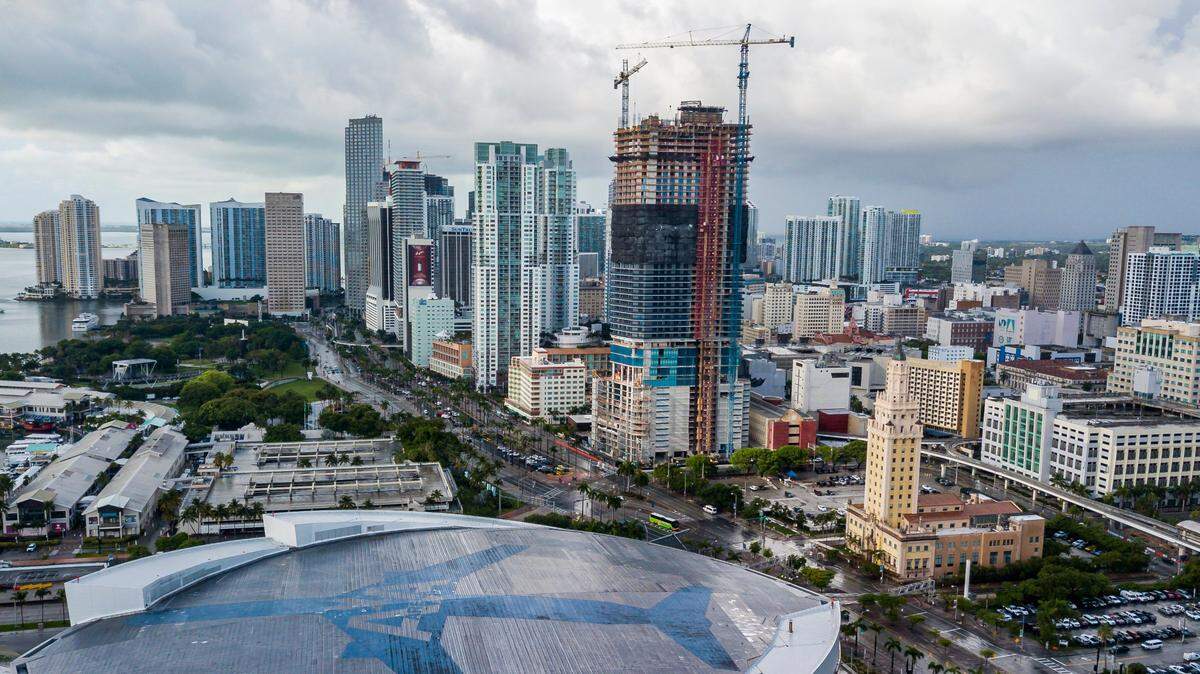
And we’re doing it in a big way, because that’s Miami, too. We’re about to host what may be the largest cryptocurrency conference the world has ever seen this week. It’s sold out. Twitter CEO Jack Dorsey is speaking. So is legendary pro skater Tony Hawk. At the same time, we’re busy scraping the American Airlines name off our landmark downtown arena and slapping the name of a cryptocurrency exchange across it in a 19-year naming rights deal for a previously little-known company called FTX.
It’s an exciting time. It’s scary, too. To those of us without a Bitcoin to our names, it feels kind of unreal.
Don’t get us wrong. We hope cryptocurrency — and the flashing neon welcome mat we’ve set out for the tech industry — elevate this city to new prosperity. We’d love it if this heady new world has real staying power, especially if it can provide the fuel for the gritty, unglamorous things this city needs, like affordable housing, ways to combat sea level rise and better transportation. We hope virtual currency and the underlying blockchain technology provide scads of jobs in this community. Just don’t blame us for being a bit wary.
Because Miami has history, folks. We’ve been a smugglers’ paradise, the epicenter of the cocaine trade, a mecca for money laundering, ground zero for mortgage fraud, home to the biggest Medicare black market in the United States. When the “frothy” housing bubble burst in 2007, Miami’s overheated market got hurt badly.
These days, Miami is a grown-up city with plenty to offer. We don’t need to be dazzled by every high-flying tech company that comes along. This time around, we’d like to hear less about potential and more about proof.
Here’s one example: Axios and LinkedIn reported that Miami’s tech workforce grew faster in the past year than that of any other major metro area, though the absolute size of the workforce remains small. Overall, that’s good news.
But there are also niggling worries that trigger us a little. Cypto may not be quite as hot as it once was. Adam B. Levine, a managing editor at online crypto publication CoinDesk, told Miami Herald reporter Rob Wile that while he thinks Miami’s rising status in the crypto world is “real,” he noted that some of that comes from being a party town that was “open” when other cities were shut down for the COVID-19 pandemic. Other cities are opening up now.
And the price of a single Bitcoin, meanwhile, has fallen from more than $60,000 in April to under $40,000.
“Crypto goes through this every couple of years,” Levine told the Herald. “There are signs this cycle may be different — but it’s not so different because you have a lot of opportunities coming out of the woodwork, and while some of those are good, a lot are bad and turn out to be scams. . . . In the past, Miami has been associated with that, too.”
That’s our point. As Miami Mayor Francis Suarez continues to push Miami as a crypto hub, we hope he’s studied our history. We worry about going through another boom-and-bust cycle or a wave that crashes and takes us all down with it. If we’re staking the city’s future on this, please, let’s not repeat the past.
BEHIND THE STORY
MOREWhat's an editorial?
Editorials are opinion pieces that reflect the views of the Miami Herald Editorial Board, a group of opinion journalists that operates separately from the Miami Herald newsroom. Miami Herald Editorial Board members are: opinion editor Amy Driscoll and editorial writers Isadora Rangel and Mary Anna Mancuso. Read more by clicking the arrow in the upper right.
What's the difference between an op-ed and a column?
How does the Miami Herald Editorial Board decide what to write about?
The Editorial Board, made up of experienced opinion journalists, primarily addresses local and state issues that affect South Florida residents. Each board member has an area of focus, such as education, COVID or local government policy. Board members meet daily and bring up an array of topics for discussion. Once a topic is fully discussed, board members will further report the issue, interviewing stakeholders and others involved and affected, so that the board can present the most informed opinion possible. We strive to provide our community with thought leadership that advocates for policies and priorities that strengthen our communities. Our editorials promote social justice, fairness in economic, educational and social opportunities and an end to systemic racism and inequality. The Editorial Board is separate from the reporters and editors of the Miami Herald newsroom.
How can I contribute to the Miami Herald Opinion section?
The Editorial Board accepts op-ed submissions of 650-700 words from community members who want to argue a specific viewpoint or idea that is relevant to our area. You can email an op-ed submission to oped@miamiherald.com. We also accept 150-word letters to the editor from readers who want to offer their points of view on current issues. For more information on how to submit a letter, go here.
This story was originally published June 2, 2021 at 6:08 PM.