
Two decades ago, Miami-Dade did what Florida still has failed to do: Grant LGBTQ rights | Editorial
Florida is a state of paradoxes when it comes to LGBTQ rights.
As thousands flock to South Florida to celebrate Pride Month, Gov. Ron DeSantis signs into law an unnecessary bill to ban transgender women from sports. He chose to do so on Tuesday, the first day of Pride Month, in a Christian school in Jacksonville. The next day, he vetoed state funding for mental health counseling for the survivors of the mass shooting at Pulse, a gay nightclub in Orlando where 49 were massacred, and for the creation of housing for homeless LGBTQ youth.
While the Miami-Dade Commission has taken such steps as creating an LGBTQ Advisory Board to promote the county “as an LGTBQ-inclusive and friendly community,” lawmakers in Tallahassee spent a significant part of this year’s legislative session making Florida look hostile to the community. And it’s a bad look.
Many hours were spent debating that anti-trans legislation as if it were a top priority for a state dealing with a global pandemic. Mean-spirited lawmakers called trans women “males” and treated them as a threat to women’s sports, despite the fact that only a handful of trans athletes have played varsity sports over the past six years.
While state laws continue to treat the LGBTQ community as misfits, Miami-Dade has been the stage of some of the nation’s most important achievements — and, unfortunately, setbacks — in the fight for equality.
Miami-Dade progressive
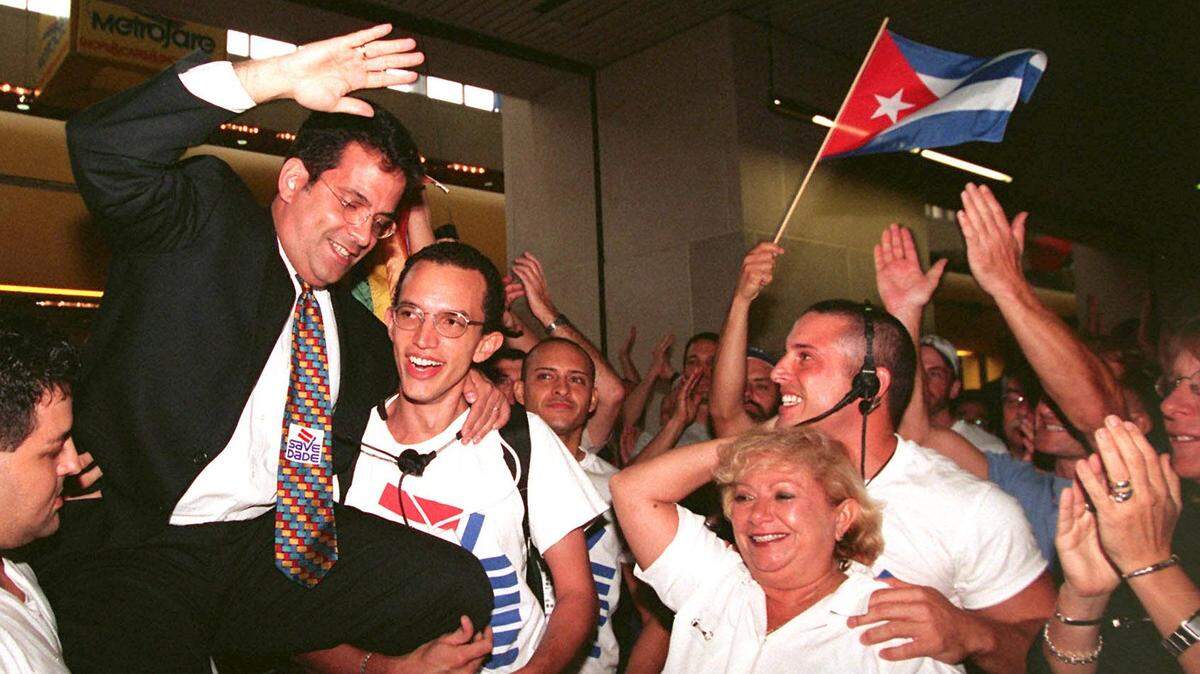
In 1998, the County Commission passed, by a 7-6 vote, an ordinance prohibiting discrimination based on sexual orientation in housing, employment, credit and finance and public accommodations such as parks and businesses. That was after decades of advocacy following the repeal of a similar law in the 1970s. In 2014, the commission expanded the ordinance to protect transgender people, this time with a 8-3 vote.
What Miami-Dade did almost 23 years ago — Miami Beach, Miami and Broward and Monroe counties, among other communities, have also passed similar protections — has yet to happen at the state level.
Sixty-percent of Floridians live in cities and counties with “human-rights ordinances,” according to Equality Florida. But the Legislature has yet to pass a law to give state protections to those who identify as gay, lesbian, bisexual, transgender and queer.
The same disappointment can be extended to Congress, where the Equality Act is waiting for a Senate vote after it was approved by the U.S. House of Representatives. Miami U.S. Reps. Carlos Gimenez, Maria Elvira Salazar and Mario Diaz-Balart, all Republicans, voted against it.
That’s shameful coming from the people representing a place that’s know worldwide for celebrating its LGBTQ community.
In the Legislature, a bill called the Florida Competitive Workforce Act has been introduced several times, garnering an unprecedented number of co-sponsors from both parties. However, it’s never been a priority of Republican leaders in the House and Senate, who decide which bills get heard and advanced.
Lawmakers’ hypocrisy
Their priority has been instead to chip away at the rights of trans youth, who, with higher depression and suicide rates, are among our most vulnerable populations. What better way to show where the GOP’s priorities lie than the fact one of the most powerful lawmakers in the Senate, budget chairwoman Kelli Stargel of Lakeland, was the sponsor of the bill signed by DeSantis.
Do lawmakers truly believe they are addressing a real problem or are they just appeasing their conservative base?
The answer is likely the latter. Behind the scenes, many Republicans talk about having LGBTQ relatives and friends, Miami Gardens Democratic Sen. Shevrin Jones, who’s gay, told the Editorial Board.
“Everybody has a family member who’s LGBTQ,” Jones said.
Where Florida is today on LGBTQ rights is where Miami-Dade was in the 1970s.
Singer Anita Bryant, best known as a spokeswoman for Florida’s orange juice, led an ugly and bigoted campaign to overturn Dade County’s groundbreaking gay rights ordinance. She succeeded when voters repealed the ordinance in 1977.
Bryant, who equated gay rights with “rights to corrupt children,” saw her career derail after becoming an anti-gay lightning rod. She will be forever remembered for being on the wrong side of history.
That’s a good lesson for our lawmakers at the state and federal levels.
Talking about your LGBTQ relatives behind the scenes is easy. Doing the right thing by taking a public stand for their rights would be an act of principle — something that, so far, has not been in evidence in the Republican Legislature.
BEHIND THE STORY
MOREWhat's an editorial?
Editorials are opinion pieces that reflect the views of the Miami Herald Editorial Board, a group of opinion journalists that operates separately from the Miami Herald newsroom. Miami Herald Editorial Board members are: opinion editor Amy Driscoll and editorial writers Isadora Rangel and Mary Anna Mancuso. Read more by clicking the arrow in the upper right.
What's the difference between an op-ed and a column?
How does the Miami Herald Editorial Board decide what to write about?
The Editorial Board, made up of experienced opinion journalists, primarily addresses local and state issues that affect South Florida residents. Each board member has an area of focus, such as education, COVID or local government policy. Board members meet daily and bring up an array of topics for discussion. Once a topic is fully discussed, board members will further report the issue, interviewing stakeholders and others involved and affected, so that the board can present the most informed opinion possible. We strive to provide our community with thought leadership that advocates for policies and priorities that strengthen our communities. Our editorials promote social justice, fairness in economic, educational and social opportunities and an end to systemic racism and inequality. The Editorial Board is separate from the reporters and editors of the Miami Herald newsroom.
How can I contribute to the Miami Herald Opinion section?
The Editorial Board accepts op-ed submissions of 650-700 words from community members who want to argue a specific viewpoint or idea that is relevant to our area. You can email an op-ed submission to oped@miamiherald.com. We also accept 150-word letters to the editor from readers who want to offer their points of view on current issues. For more information on how to submit a letter, go here.
This story was originally published June 4, 2021 at 6:00 AM.