
UM, the wall of silence won’t work. We need more transparency on law school dean firing | Editorial
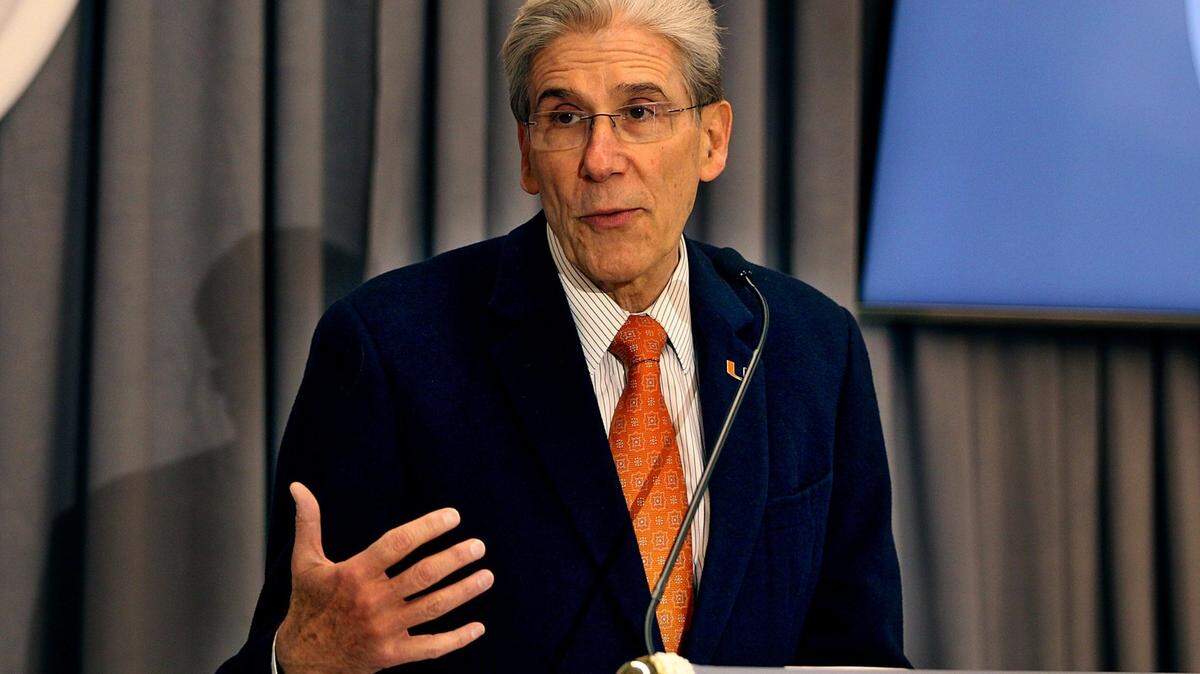
The furor over the firing of the University of Miami’s law school dean is getting worse. Faculty members and graduates are demanding answers. We think they deserve them.
UM President Julio Frenk abruptly dismissed Anthony Varona as dean last week - a decision he announced in an email without following the usual policy of notifying faculty first. That led to days of fallout: a vice-dean resigned in protest, UM’s Faculty Senate unanimously approved a resolution denouncing Frenk’s move and a group of about 60 UM law school alumni sent a letter to administrators criticizing the firing and asking for a meeting.
The Executive Committee of the Association of American Law Schools Section on Minority Groups even stepped in, calling for an “independent and credible investigation” into the firing. One prominent Miami attorney and UM law school alum, Tod Aronovitz, sent a separate letter to Frenk, which was shared with the Miami Herald, calling the firing of a well-liked dean without even conferring with the faculty “a historic act of arrogance.”
Despite that cascade of criticism, Frenk’s reasons for dismissing Varona, a leader in the LGBTQ community and the law school’s first Hispanic dean, have remained frustratingly murky. In his email announcement on May 25, Frenk alluded to an issue with fundraising, noting that “the current capital campaign — which will culminate in four short years — presents a rapidly narrowing window of opportunity to mobilize significant resources on behalf of Miami Law.”
But that’s all he has said. When a Miami Herald reporter on Friday reached Peter Howard, the assistant vice president of communications and public relations at UM, Howard wouldn’t talk, either. He simply pointed back to the original message Frenk sent last week.
“That contains all of the information you need,” Howard said.
That sort of high-handed attitude isn’t helpful in this heated environment and it’s not the kind of thing we expect from a civic heavy-hitter like the UM. UM is a much-loved institution that has long been a driving force in everything from medical research to business to marine science. Its Hurricanes football program is a mainstay of Miami. It’s not just a university, it’s a community leader. It needs to act like one.
We understand that UM is a private institution. It can fire employees. We don’t have a right to know why. And lawsuit threats — it’s a law school, after all — are already flying. That puts UM in a defensive posture, like it or not.
We also know fundraising and law school national rankings and the passing rate for the Florida Bar exam all have to be central to any dean’s job.
This dean, though, has been in his job since August 2019, meaning he has held the position mostly during the pandemic, which has to be considered an extenuating factor.
As the outcry continues, the fractures between UM and the community are widening. It’s time for the university to stop waiting for the storm to blow over and deal with this controversy as directly as possible.
The wall of silence isn’t working.
BEHIND THE STORY
MOREWhat's an editorial?
Editorials are opinion pieces that reflect the views of the Miami Herald Editorial Board, a group of opinion journalists that operates separately from the Miami Herald newsroom. Miami Herald Editorial Board members are: opinion editor Amy Driscoll and editorial writers Isadora Rangel and Mary Anna Mancuso. Read more by clicking the arrow in the upper right.
What's the difference between an op-ed and a column?
How does the Miami Herald Editorial Board decide what to write about?
The Editorial Board, made up of experienced opinion journalists, primarily addresses local and state issues that affect South Florida residents. Each board member has an area of focus, such as education, COVID or local government policy. Board members meet daily and bring up an array of topics for discussion. Once a topic is fully discussed, board members will further report the issue, interviewing stakeholders and others involved and affected, so that the board can present the most informed opinion possible. We strive to provide our community with thought leadership that advocates for policies and priorities that strengthen our communities. Our editorials promote social justice, fairness in economic, educational and social opportunities and an end to systemic racism and inequality. The Editorial Board is separate from the reporters and editors of the Miami Herald newsroom.
How can I contribute to the Miami Herald Opinion section?
The Editorial Board accepts op-ed submissions of 650-700 words from community members who want to argue a specific viewpoint or idea that is relevant to our area. You can email an op-ed submission to oped@miamiherald.com. We also accept 150-word letters to the editor from readers who want to offer their points of view on current issues. For more information on how to submit a letter, go here.
This story was originally published June 1, 2021 at 1:42 PM.