
Posing as patriots, DeSantis and the GOP don’t want children to learn about racism | Editorial
It’s a Marxist infiltration in our classrooms meant to turn unsuspecting young minds into anti-America militants.
We’re not talking about the Red Scare of the 1950s, and the enemy is not the communist Soviet Union.
It’s 2021, and the enemies are our own teachers, college professors and the “woke crowd” whose mission is to make white people feel guilty about being white. They follow a subversive bogeyman called “critical race theory.”
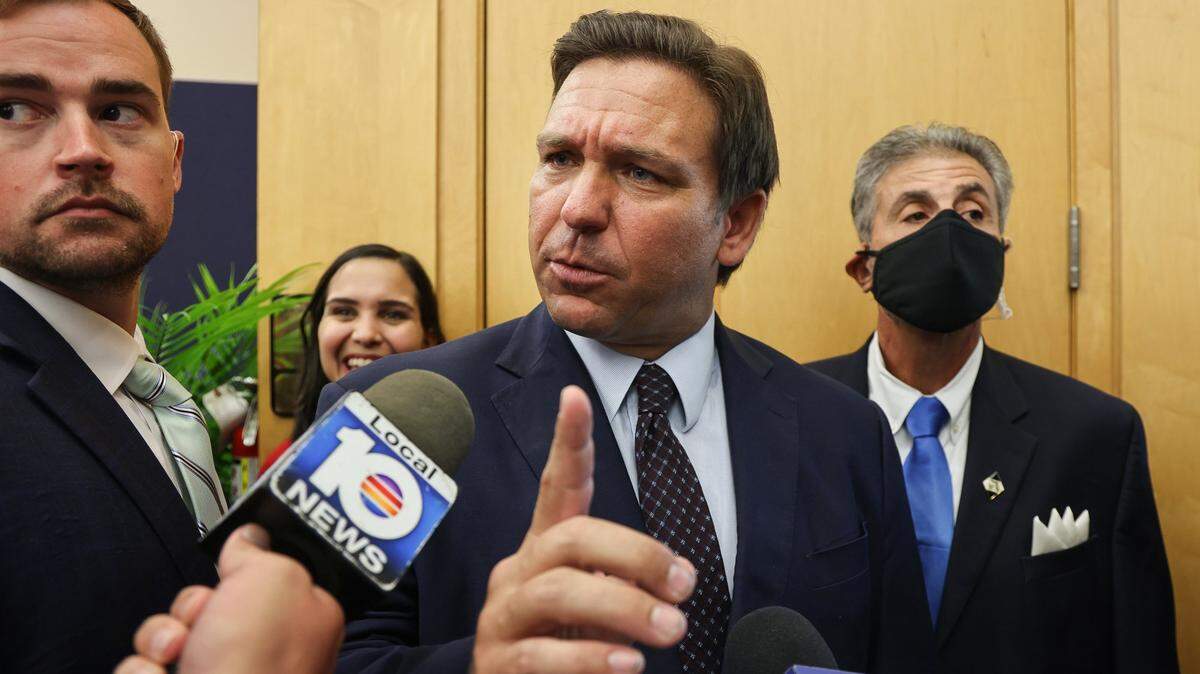
At least that’s what you’ll believe if you listen to Gov. Ron DeSantis, Sen. Marco Rubio and Florida Commissioner of Education Richard Corcoran.
Republicans’ new call to arms is to stop schools from teaching critical race theory, an academic movement that started in the 1970s that recognizes that racism has been embedded in everyday life and in institutions. Few people had heard about this term until it started popping up in Donald Trump’s rants against anti-bias workplace training last year.
As most of what Trump says flows south to his devotees, Florida conservatives began rallying against it, too, especially after George Floyd’s death and calls from Black Floridians that we change how we teach history and how white people think about their role in perpetuating racism.
This backlash is behind a group of parents who sent a letter to Coconut Grove’s Carrollton School of the Sacred Heart blasting the private school’s racial equity policies as “anti-Catholic indoctrination.” Among those parents were Coral Gables Mayor Vince Lago and former Florida House Speaker Jose Oliva from Miami.
Because what’s more subversive than asking white people to think critically about how they fit into race relations in this country?
Distorted patriotism
DeSantis said at a March news conference that critical race theory has “no room in our classrooms” because it is “teaching kids to hate their country and to hate each other.” He said he banned it from schools even though it was never necessarily part of the state’s curriculum, PolitiFact reported.
Corcoran announced this month a proposed Department of Education rule that bans teachers from supplying students information beyond the state’s standards. That all sounds benign, but his true intention is to prevent teachers from talking about things such as “systemic racism” and “white privilege” because that is “liberal crazy stuff,” as he said in a recent speech in Michigan.
Rubio, in a Wednesday interview to Fox News, said a University of Central Florida graduate program in social justice promotes “neo-Marxism” and anti-American ideas and that, “Faculty in a lot of these universities, frankly, are filled with just nutty, crazy people.”
Under their distorted notion of patriotism, only American greatness should be taught in schools — the uncomfortable stuff about slavery, segregation and police brutality should be only a footnote so our students, especially those who aren’t Black, don’t feel bad about them.
What’s critical race theory?
The theory is that racism is not just individual prejudice against a person of color but part of our legal system and policies. It was spearheaded in the 1970s by a Harvard Law School professor who was frustrated that landmark civil-rights laws and court rulings fell short from creating true equality. He argued that practices that discriminated against Black people. remained embedded in our laws and institutions.
Rubio isn’t entirely wrong. Some neo-Marxists were part of the movement, but “far from every scholar was a Marxist, so the label is overly broad,” according to PolitiFact.
Critical race theory has its merits and flaws. Some of the political left have taken the principles of this academic theory too far in the name of “wokeness.”
But DeSantis, Rubio and Corcoran aren’t trying to have an intellectual debate about an academic theory. They are trying to stop schools from teaching students to think critically. What they are doing is the equivalent of conservatives pushing terms like “reverse racism” and All Lives Matter.
All lives do matter. But it’s Black lives that, for far too long, have been undervalued and under assault.
BEHIND THE STORY
MOREWhat's an editorial?
Editorials are opinion pieces that reflect the views of the Miami Herald Editorial Board, a group of opinion journalists that operates separately from the Miami Herald newsroom. Miami Herald Editorial Board members are: opinion editor Amy Driscoll and editorial writers Isadora Rangel and Mary Anna Mancuso. Read more by clicking the arrow in the upper right.
What's the difference between an op-ed and a column?
How does the Miami Herald Editorial Board decide what to write about?
The Editorial Board, made up of experienced opinion journalists, primarily addresses local and state issues that affect South Florida residents. Each board member has an area of focus, such as education, COVID or local government policy. Board members meet daily and bring up an array of topics for discussion. Once a topic is fully discussed, board members will further report the issue, interviewing stakeholders and others involved and affected, so that the board can present the most informed opinion possible. We strive to provide our community with thought leadership that advocates for policies and priorities that strengthen our communities. Our editorials promote social justice, fairness in economic, educational and social opportunities and an end to systemic racism and inequality. The Editorial Board is separate from the reporters and editors of the Miami Herald newsroom.
How can I contribute to the Miami Herald Opinion section?
The Editorial Board accepts op-ed submissions of 650-700 words from community members who want to argue a specific viewpoint or idea that is relevant to our area. You can email an op-ed submission to oped@miamiherald.com. We also accept 150-word letters to the editor from readers who want to offer their points of view on current issues. For more information on how to submit a letter, go here.
This story was originally published May 29, 2021 at 2:30 PM.