
Migrants are dying at sea off Florida. Why is Biden’s Cuba policy still on the back burner? | Editorial
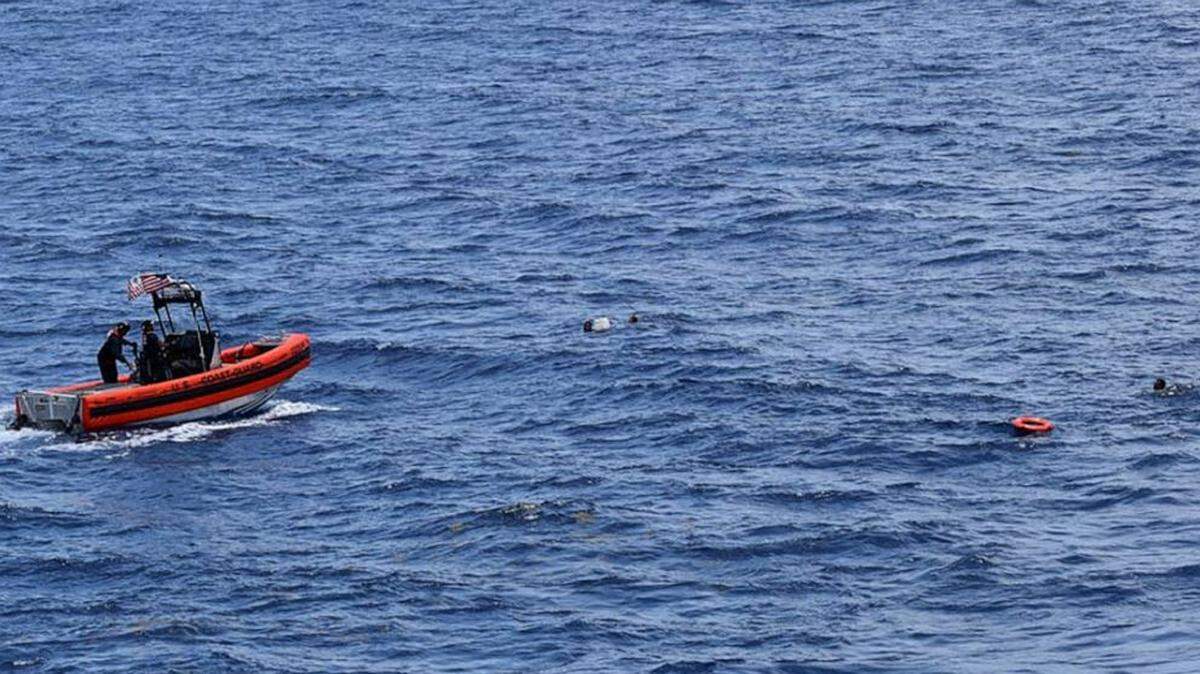
A boat loaded down with migrants from Cuba capsized off the coast of Key West Wednesday evening. At least two are dead and perhaps as many as 10 others are, too.
How many times have we read similar, tragic words? Watched video of the U.S. Coast Guard searching for survivors? Learned of the terrible fate of Cubans who risked everything for a new life in this country — and lost?
President Biden indicated in March that a Cuba policy shift is not a top priority for his administration, though it is reviewing its position. But the deaths this week are an urgent reminder of the suffering just 90 miles from our coast and the simmering conditions there that could build to another migration crisis. The Cuban economy is contracting — it shrank by 11 percent last year — COVID cases are rising and Trump-era sanctions are still in place.
Biden can’t put Cuba on the back burner forever.
There has been a worrying uptick in migration efforts already. In addition to Wednesday’s capsized boat, the Coast Guard found a group of about a dozen people on a raft off Marathon on May 22, with one man dead. Earlier this spring, authorities found three Cubans who had been stranded on an island in the Bahamas for 33 days, surviving on coconuts, rats, conch and snails. Another incident involved six men and two pregnant women aboard a raft made of Styrofoam and metal rods and apparently powered by a car engine.
The number of Cuban migrants found by the Coast Guard since October is in the hundreds, not the thousands, but that’s still more than in the entire previous fiscal year. And those are just the people authorities find. No doubt there are many others who have escaped detection, returned to Cuba — or died.
The last two U.S. administrations have changed relations with Cuba. The United States no longer has the “wet-foot, dry-foot” policy that, for years, allowed Cubans who set foot on U.S. soil to stay and apply for permanent residency after a year. The Obama administration lifted that. When Donald Trump entered the White House, he tightened the U.S. trade embargo on Cuba and re-designated the island nation as a state sponsor of terrorism, one of his last foreign-policy decisions.
But Biden pledged during his campaign to “promptly reverse the failed Trump policies that have inflicted harm on the Cuban people and done nothing to advance democracy and human rights.” In March, 80 Democratic members of the U.S. House of Representatives — no one from South Florida, notably — sent a letter to the president urging him to consider “engagement and normalization” with Cuba.
There are indications that the Biden administration may relax restrictions on U.S. travel and remittances to Cuba and seek to grant 20,000 visas a year to Cuban migrants. But it has also said it wants to see concrete political or economic moves by the Cuban government before making larger changes.
That’s imperative. As Biden knows firsthand because he was vice president, Obama’s opening to Cuba failed to move the regime anywhere near democracy. Any new policy should include input from Cuban Americans in Miami, Florida and elsewhere.
But, as politically difficult a topic as this is to tackle, this situation can’t drag on forever. A new Cuba policy may not be the fix that stops migration. However, the migrants who died on Wednesday fled Cuba for a reason.
And Biden can’t pretend to not know what that reason is.
BEHIND THE STORY
MOREWhat's an editorial?
Editorials are opinion pieces that reflect the views of the Miami Herald Editorial Board, a group of opinion journalists that operates separately from the Miami Herald newsroom. Miami Herald Editorial Board members are: opinion editor Amy Driscoll and editorial writers Isadora Rangel and Mary Anna Mancuso. Read more by clicking the arrow in the upper right.
What's the difference between an op-ed and a column?
How does the Miami Herald Editorial Board decide what to write about?
The Editorial Board, made up of experienced opinion journalists, primarily addresses local and state issues that affect South Florida residents. Each board member has an area of focus, such as education, COVID or local government policy. Board members meet daily and bring up an array of topics for discussion. Once a topic is fully discussed, board members will further report the issue, interviewing stakeholders and others involved and affected, so that the board can present the most informed opinion possible. We strive to provide our community with thought leadership that advocates for policies and priorities that strengthen our communities. Our editorials promote social justice, fairness in economic, educational and social opportunities and an end to systemic racism and inequality. The Editorial Board is separate from the reporters and editors of the Miami Herald newsroom.
How can I contribute to the Miami Herald Opinion section?
The Editorial Board accepts op-ed submissions of 650-700 words from community members who want to argue a specific viewpoint or idea that is relevant to our area. You can email an op-ed submission to oped@miamiherald.com. We also accept 150-word letters to the editor from readers who want to offer their points of view on current issues. For more information on how to submit a letter, go here.
This story was originally published May 28, 2021 at 1:24 PM.