
We’d like to see Florida lawmakers survive on $275 a week in unemployment benefits | Editorial
We can’t say lawmakers are doing nothing to fix Florida’s inefficient-by-design, anti-worker unemployment system.
The delays, system crashes and the desperation of laid-off workers who couldn’t get their applications through last year were too egregious to ignore.
The proposals gaining traction in the Legislature are what Tallahassee likes to call a “step in the right direction.” It’s what allows lawmakers to say they fixed the issue — until the next crisis occurs. Luckily, they have time to pass more substantive before the legislative session concludes at the end of April.
There’s a bill (Senate Bill 1948) to improve the CONNECT unemployment-benefits portal by moving it to a cloud-based storage system that can easily be increased when claims spike and also to create more accountability in the Department of Economic Opportunity. And the House and Senate reached an agreement last week to replenish the unemployment trust fund and provide tax relief to businesses at taxpayers’ expense.
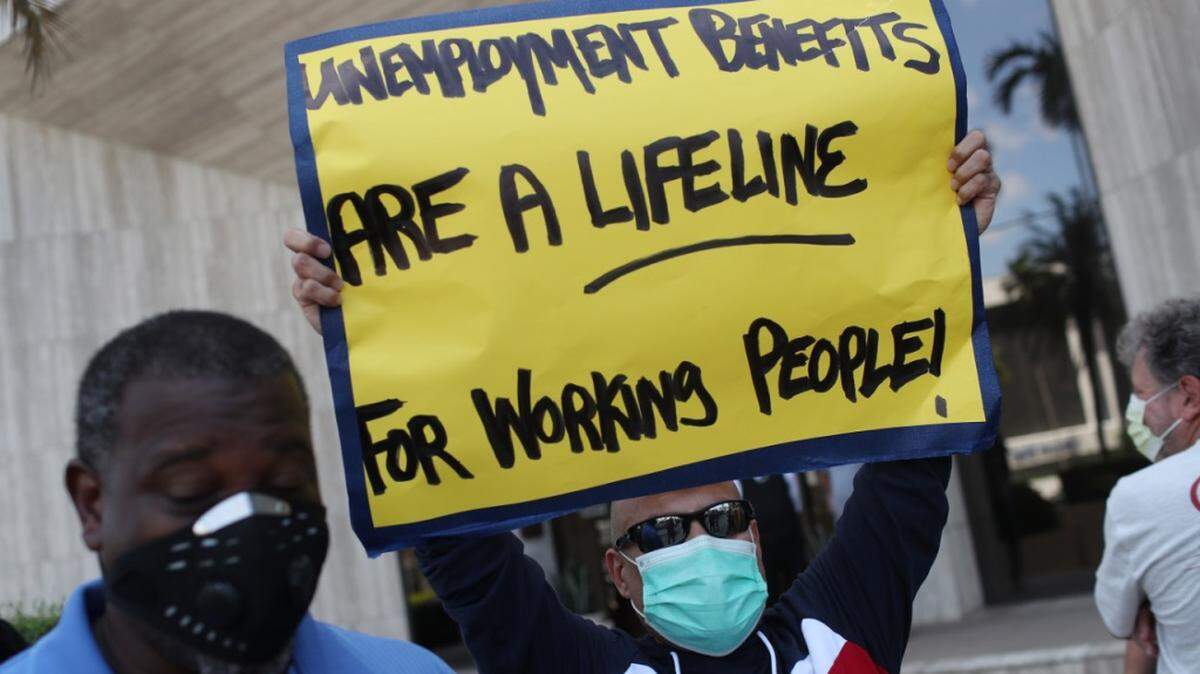
But there’s an elephant in the room still waiting to be addressed: Florida’s unemployment payments are among the lowest in the nation — up to $275 per week for a maximum of 12 weeks. The system was designed by former Gov. Rick Scott to make it hard to collect benefits. Unfortunately, it’s been a smashing success: Only 11 percent of unemployed Floridians received benefits from 2015 and 2019, the second-worst in the nation, federal data show. Florida also ranked second-worst at paying benefits on time (thank Hawaii for sparing us the No. 1 spot).
You might scrape by on $275 a week, or the $254 that workers receive on average, in rural Florida. But that money — that’s if you can get it — won’t keep you fed and housed in South Florida.
There’s no shortage of proposals to fix this issue, but most of them are from Democrats and won’t go anywhere in the GOP-controlled Legislature. For example, a bill filed by Miami-Dade Sen. Annette Taddeo would raise maximum weekly benefits to $600 and extend their duration to 26 weeks while removing work-search requirements and helping gig and self-employed workers during a state of emergency. Another Democratic bill would raise benefits to $500 and require the state to provide alternative methods to apply for assistance beyond online and by mail.
Luckily, there’s some Republican appetite for addressing this issue. Sen. Jason Brodeur, of Sanford, filed SB 1906 to raise minimum benefits from $32 to $100, and maximum benefits from $275 to $375. The House is against raising benefits, and Brodeur’s bill hasn’t been scheduled for a hearing, which is normally a bad sign, but he told the Tampa Bay Times/ Herald Tallahassee Bureau that he expects it to be heard — and it should be.
In an ideal world, Miami-Dade’s legislative delegation, the largest in the state with 24 lawmakers from both parties, would use their influence to push Brodeur’s proposal (his approach is much more realistic and palatable to lawmakers and Floridians than what Democrats are proposing). After all, Greater Miami is the seventh least affordable large metro area in the world, so this shouldn’t be a partisan issue.
It’s only fair that lawmakers would spend as much energy helping workers as they are helping employers by rolling back an unemployment tax increase. Under the agreement reached between the House and Senate, consumers would foot the bill for that tax break when shopping online.
The plan is to mandate out-of-state online retailers to collect sales taxes and use the revenue to replenish the unemployment trust fund. Technically, that tax already exists, but consumers are responsible for collecting it in an honor system that results in the state leaving an estimated $1 billion on the table each year.
It’s undeniable that small and mid-sized businesses need tax relief after being hit hard by COVID-19, but the plan would also help corporations that have seen record profits during the pandemic.
If the state is asking consumers to foot the bill, it could at least assure them that if they fall on hard times there will be a stronger safety net.
This story was originally published March 18, 2021 at 5:30 PM.